

Wall Socket Controls & Sensors price list
Last updated Saturday, Oct 17, 2026





View 11 Offers
Loading...
Last updated Saturday, Oct 17, 2026
Smart wall socket controls can turn an ordinary appliance into a more convenient, manageable part of your home. With the right plug, switch, or sensor, you can control lights, fans, heaters, and other devices from an app, set schedules, monitor energy use, or use voice commands. But which type should you choose?
The reference products cover several useful categories, including Wi-Fi smart plugs, Zigbee outlets, an in-wall automation module, a smart circuit breaker, and a propane fume detector. They are not all designed for the same job. Think of your electrical system as a road network: some devices are simple destinations, while others act like traffic controllers or safety checkpoints.
ZoneOffer is a comparison site, so the prices and product details below are presented to help you compare listings. ZoneOffer is not a store, and product information, pricing, and availability should be checked on the relevant listing before purchase.
A smart wall socket control is a device that adds remote or automated control to an appliance or electrical circuit. Depending on the model, you may be able to switch power on or off with a phone app, create a timetable, monitor electricity use, or connect the device to a voice assistant.
Some products plug directly into an existing outlet. Others are installed behind a wall switch, connected to a circuit breaker, or paired with a separate hub. That difference matters. A plug-in socket is usually the simplest route, while an in-wall module or breaker may require more careful installation and electrical knowledge.
The products in this comparison use different ecosystems. Several work with Smart Life or Tuya Smart, while others are designed for eWeLink, Alexa, Google Assistant, or Zigbee hubs. Compatibility is not a minor detail; it is the foundation of a smooth setup.
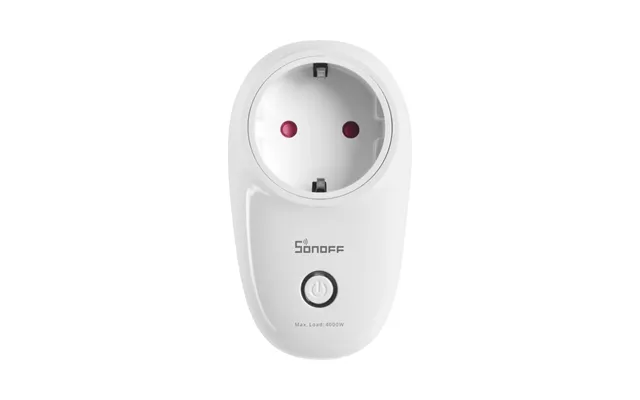
The Sonoff S26R2TPF is an EU-standard Wi-Fi socket listed with a price of $20.36 from Banggood.com. It supports remote control through the eWeLink app, along with schedules, countdown timers, and scenes.
Its listed specifications include a rated current of 16 amps, an AC voltage range of 100 to 240 volts, and a rated power of 4,000 watts. The product description also identifies flame-retardant ABS construction, overload protection, and surge protection.
This model may suit shoppers who want a straightforward app-controlled plug with voice control through Alexa and Google Assistant. However, its European standard should be carefully checked against the outlets and electrical requirements in your home.
The Sonoff S60 Type F smart plug appears in two Banggood.com listings at different prices: $35.99 and $19.99. Both listings describe a Wi-Fi plug with power monitoring, overload protection, timer functions, and smart scenes.
The product uses a Type E/F plug format and is listed with a 16-amp maximum load and 4,000-watt maximum load. It supports Alexa, Google Home, and IFTTT, while the listed Wi-Fi connection operates on the 2.4 GHz band.
Power monitoring is the headline feature here. Instead of simply asking whether a device is on or off, you can use the socket to track electricity consumption. That can help you spot appliances that quietly use energy when you are not paying attention.
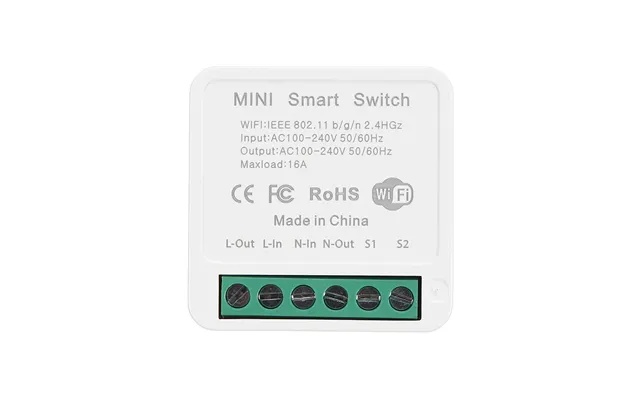
The Geekcreit 16A Mini Smart Wi-Fi DIY Switch is listed at $14.68 from Banggood.com. Unlike a conventional plug-in adapter, this compact module is designed to fit inside many mounting boxes, switches, and wall sockets.
The listing describes two-way control, meaning you can continue using the existing manual switch after installation while also controlling the connected light or appliance through the Smart Life app. It also supports Alexa and Google Home voice commands.
Other listed functions include schedules, relay-status settings after a power failure, group control, and smart scenes. The product description states a maximum power range of 1,800 to 3,450 watts, so you should confirm the intended load and installation requirements before using it.
This is a useful option when you want a cleaner, built-in appearance rather than a plug that extends from the outlet. Still, in-wall electrical work is different from plugging in a device. If you are not comfortable identifying wires and working safely, professional installation is the sensible choice.
Wi-Fi plugs are often the easiest way to experiment with home automation. You plug the socket into an existing outlet, connect it to a compatible app, and then plug in the appliance. There is no need to replace the wall outlet itself.
The Sonoff S26R2TPF, Sonoff S60, and BlitzWolf BW-SHP6 Pro all illustrate this approach. They provide app-based control, and their listings describe timer or scheduling features. The Sonoff models add power monitoring, while the BlitzWolf model focuses on remote control, timing, and energy monitoring.
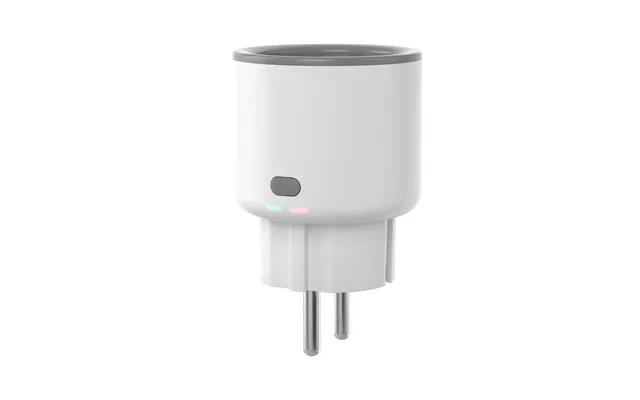
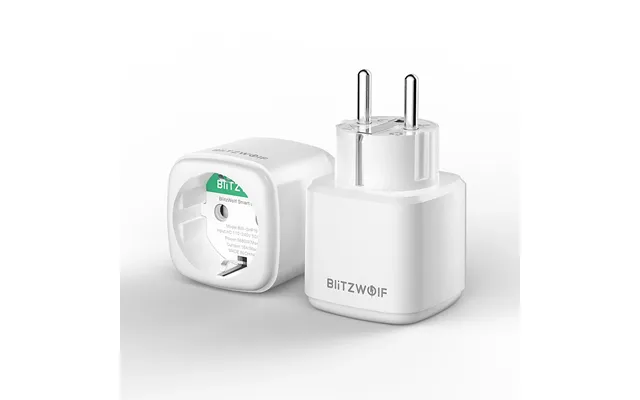
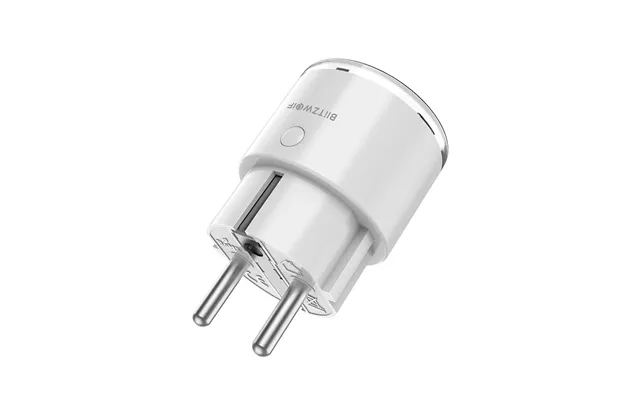
The BlitzWolf BW-SHP6 Pro is listed at $29.99 from Banggood.com. It is described as a 15-amp EU smart plug with a maximum power rating of 3,450 watts, a 2.4 GHz Wi-Fi connection, and voice support for Amazon Alexa and Google Assistant. Its listing also identifies fireproof V-0 material.
One important note in the listing is that the BlitzWolf app has stopped updating, with Tuya Smart or Smart Life recommended instead. The same listing says the BW-SHP6 Pro cannot be flashed with Tasmota, although it continues to work with Alexa and Google Assistant.
Choose a Wi-Fi model when you want a relatively direct setup and do not want to purchase a separate hub. Wi-Fi plugs are especially practical for lamps, fans, and other devices that benefit from a simple on-and-off command.
Before buying, check the plug standard, supported wireless band, app ecosystem, and electrical rating. A smart plug is not a universal adapter. A model with a European plug format may not be suitable for a standard US outlet without additional considerations, and the reference data does not confirm US compatibility for the EU models.
Zigbee smart sockets communicate through a Zigbee network rather than connecting directly to your home Wi-Fi in the same way as a basic Wi-Fi plug. The trade-off is that a compatible Zigbee gateway or hub is required for the referenced products.
The BlitzWolf BW-SHP13, BlitzWolf BW-SHP15, and NEO Tuya Zigbee smart socket all require or specify a Tuya-compatible Zigbee gateway. This extra piece of equipment adds a step, but it can also make sense for shoppers building a broader smart-home system around one hub.
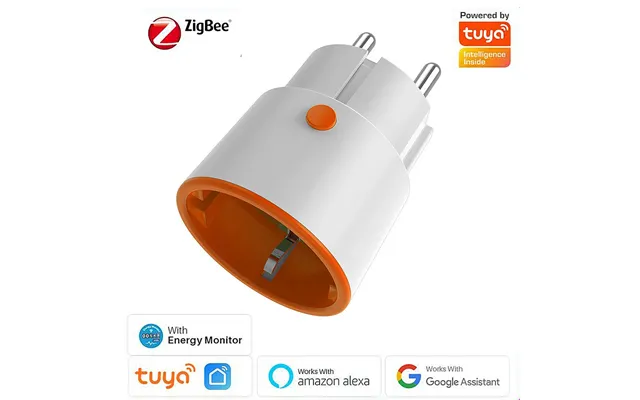
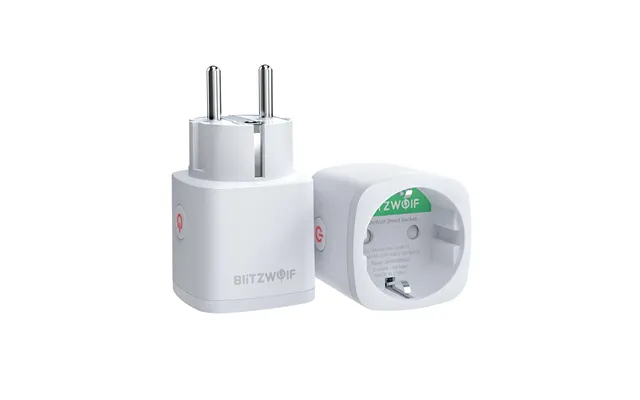
The BlitzWolf BW-SHP13 is listed at $21.99 from Banggood.com. It is a Zigbee 3.0 EU plug with electricity metering, app control, timers, and compatibility with Amazon Alexa and Google Home.
The listing specifies a 16-amp maximum current and a 110-to-250-volt AC input range. It also identifies flame-retardant V-0 class ABS and PC materials. A Tuya Zigbee 3.0 gateway is required, and the listing points to compatible gateway and sensor products.
The BlitzWolf BW-SHP15 is another Zigbee 3.0 EU plug, listed at $39.99 from Banggood.com. It supports Tuya Smart and Smart Life app control, voice control through Amazon Alexa and Google Assistant, and a listed maximum current of 16 amps.
The product description gives an input range of 110 to 240 volts and identifies flame-retardant V-0 class ABS and PC construction. Like the BW-SHP13, it requires a compatible Tuya Zigbee 3.0 gateway.
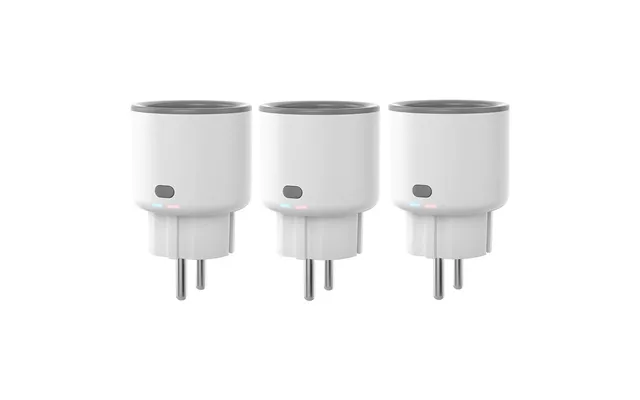
The NEO smart socket is listed at $25.99 from Banggood.com. It is described as a 16-amp EU plug with a voltage range of 85 to 240 volts, standby consumption of 0.5 watts, power metering, scheduling, delayed tasks, and app-based remote control.
The listing also describes scene creation, family sharing, and voice control through Amazon Alexa and Google Home. A Tuya Zigbee hub is required. Its stated wireless distance is about 180 feet, but actual performance can depend on the home environment and network layout.
Zigbee is worth considering if you want several compatible sensors and controls to work together. The reference data mentions Zigbee light and door sensors alongside the smart sockets. That opens the door to scenes such as turning a device on after a condition is detected, although the exact automation rules depend on the hub and app you use.
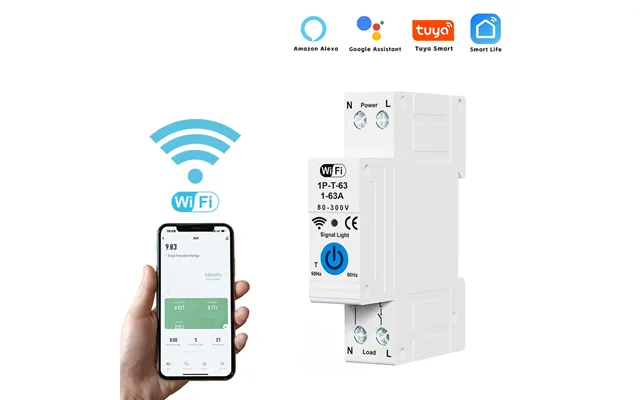
The Rmdzt-1PNL 63A Smart Wi-Fi Circuit Breaker is listed at $29.00 from Banggood.com under the RMshebei brand. It is designed for a different role from a plug-in socket: the listing describes Wi-Fi remote control, on-and-off operation, timing functions, voice control, and short-circuit protection.
The product can be managed through the Tuya or Smart Life app, according to the listing. Scheduling may help automate connected equipment, while remote control provides a way to manage the circuit without physically reaching the breaker.
A smart breaker is not a casual plug-in accessory. It interacts with the electrical system at the circuit level, so installation and suitability deserve particular attention. The listing provides a 63-amp designation, but that does not by itself confirm that it is appropriate for every panel, circuit, building, or local electrical requirement.
Ask yourself what you actually need. If you want to control one lamp, a plug may be enough. If you need to manage an entire circuit, a breaker may be more relevant. Those are very different tools, much like using a light switch versus controlling the main valve for a whole section of plumbing.
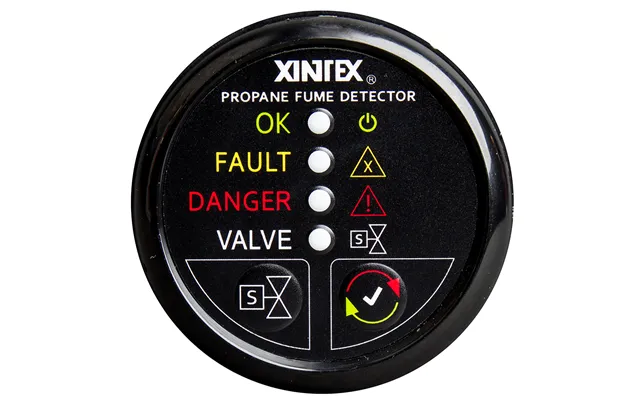
The Fireboy-Xintex P-1BS-R propane fume detector is listed at $378.12 from The Twister Group. It includes a plastic sensor, solenoid valve, black bezel display, LEDs, a silence and test button, and a solenoid valve control button.
The description says the solenoid valve automatically closes when the detector responds, while a 68-decibel alarm sounds and a red LED lights at 20 percent of the lower explosive limit. It is listed for 9-to-30-volt DC operation, with reverse-polarity protection and a current draw of 55 milliamps nominal and 725 milliamps maximum at 12 volts DC.
The stated operating temperature range is from minus 40 to 185 degrees Fahrenheit. This is a safety-focused product rather than a general smart outlet. It may be relevant where propane fume detection and automatic valve control are required, but its installation should be approached with the seriousness appropriate to gas-related equipment.
Unlike a smart plug, this detector is not primarily about convenience or energy scheduling. It is closer to a smoke alarm in spirit: its value comes from monitoring a potentially dangerous condition and responding to it.
Start with the electrical rating. The listings reference current, voltage, and maximum power, but these figures should be matched to the appliance and the outlet or circuit. A higher number does not automatically make a product suitable for every use.
Next, examine the plug format. Many of the referenced smart sockets are EU or Type E/F models. If you are shopping for a US home, do not assume that a European-format plug will directly fit a standard US wall outlet. The reference data does not establish that these products are US plug compatible.
Then consider the control method. Wi-Fi products generally connect through an app and home network. Zigbee products require a compatible hub. In-wall modules need physical installation. Smart breakers involve circuit-level work. Which setup fits your comfort level and current equipment?
Finally, look at the features you will genuinely use. Power monitoring can be valuable if you want to understand consumption. Scheduling is helpful for predictable routines. Voice control is convenient when your hands are full. Scenes are useful when several actions need to happen together.
A Wi-Fi smart plug is usually the most direct category to investigate. The Sonoff S26R2TPF, Sonoff S60, and BlitzWolf BW-SHP6 Pro all list remote control and timing functions. Compare their plug format, app requirements, electrical ratings, and power-monitoring features.
The Sonoff S60, BlitzWolf BW-SHP6 Pro, BlitzWolf BW-SHP13, BlitzWolf BW-SHP15, and NEO socket listings describe energy or power monitoring. This can help you identify patterns rather than relying on guesswork. Is an appliance using power continuously? Does a schedule reduce unnecessary operation? Monitoring gives you data to investigate.
The Geekcreit mini DIY switch is designed for installation behind or within a wall switch or socket arrangement. Its two-way control and relay-status settings make it more flexible than a basic plug, but the installation is also more involved.
The Zigbee models are the natural candidates when you already use, or plan to build, a Tuya-compatible Zigbee network. The BW-SHP13, BW-SHP15, and NEO socket listings all identify hub requirements, so include the gateway in your planning.
The Fireboy-Xintex detector is the specialized choice in this comparison. It is not interchangeable with a smart socket, and its purpose is detection and solenoid control rather than appliance scheduling.
Before connecting any device, read the product instructions and verify the electrical requirements. Make sure the socket, switch, breaker, or detector is intended for the voltage, current, plug style, and environment where you plan to use it.
For app-based products, confirm the required app before setup. The listings reference eWeLink, Smart Life, Tuya Smart, Alexa, Google Assistant, Google Home, and IFTTT. A product can have excellent features on paper, but those features are less useful if the device does not fit your existing ecosystem.
For Zigbee products, remember the hub. The BW-SHP13, BW-SHP15, and NEO listings state that a compatible Zigbee gateway is required. Buying the socket without accounting for the gateway can leave you with an incomplete setup.
For in-wall switches and circuit breakers, use appropriate caution. If you are unsure about wiring, circuit identification, grounding, or local requirements, consult a qualified electrician. Convenience is valuable, but safe installation comes first.
The listed prices range from $14.68 for the Geekcreit mini smart switch to $378.12 for the Fireboy-Xintex propane fume detector. The large difference reflects their different purposes rather than a simple ranking from “better” to “worse.”
Among the smart sockets and switches, the Geekcreit model is listed at $14.68, the Sonoff S60 listings show $19.99 and $35.99, the Sonoff S26R2TPF is listed at $20.36, and the BlitzWolf BW-SHP13 is listed at $21.99. The NEO socket is listed at $25.99, the Rmdzt smart breaker at $29.00, and the BlitzWolf BW-SHP6 Pro at $29.99.
The BlitzWolf BW-SHP15 is listed at $39.99. These figures are comparison information from the reference listings, not guarantees of current pricing. For the Sonoff S60, the two listed prices also show why checking the individual listing matters before making a decision.
Value depends on the task. Paying less for a basic timer may be sensible if you only need scheduled switching. Paying more for power monitoring or Zigbee integration may make sense if you want deeper automation. The best product is the one that solves your actual problem without adding unnecessary complexity.
The smart wall socket category includes simple Wi-Fi plugs, energy-monitoring outlets, Zigbee devices, in-wall switches, circuit breakers, and specialized safety sensors. For quick appliance control, compare the Sonoff and BlitzWolf Wi-Fi options. For hub-based automation, examine the BlitzWolf and NEO Zigbee models. For built-in control, consider the Geekcreit module, while the Rmdzt breaker serves a circuit-level role. The Fireboy-Xintex detector belongs to the safety-monitoring category. Before buying, confirm plug format, electrical ratings, app support, hub requirements, and installation needs. A careful comparison now can make your smart-home setup feel less like a puzzle and more like a well-organized control panel.