

Thermal Imaging Cameras price list
Last updated Saturday, Oct 17, 2026




View 6 Offers
Loading...
Last updated Saturday, Oct 17, 2026
Thermal imaging cameras turn invisible heat into a visual map. Instead of guessing whether a circuit is overheating, a machine is running unevenly, or a surface has an unusual temperature pattern, you can see the difference on a screen. That makes these tools useful for home projects, electrical checks, mechanical testing, building inspections, marine monitoring, and many other applications.
The products in this guide cover several levels of performance. Some connect directly to an Android phone, while others are standalone handheld imagers with built-in screens, storage, alarms, and temperature tracking. Prices in the supplied comparison data range from $66.59 to $1,301.12, giving you options for occasional checks as well as more demanding work.
A thermal imaging camera detects infrared energy and translates temperature differences into colors. Think of it as a visual translator for heat. A normal camera shows what an object looks like, while a thermal camera helps reveal what is happening beneath the surface or inside a system.
Most of these devices let you view a live thermal image, identify a center-point temperature, and locate the hottest or coldest area. Depending on the model, you may also be able to adjust emissivity, select different color palettes, save images, monitor temperature changes, or inspect readings on a computer.
It is important to remember that thermal imaging shows surface temperatures rather than providing a direct view through walls or solid materials. Still, an unexpected hot or cold area can act like a warning light, pointing you toward a possible issue that deserves closer investigation.
Resolution is one of the clearest differences between the cameras in this selection. The UNI-T UTI120S offers 120 x 90 thermal resolution, while the BSIDE HX3 provides 240 x 240. The MUSTOOL M2 and HTI HT-203U-I both provide 256 x 192 infrared resolution.
Higher resolution can make temperature patterns easier to interpret, especially when you are examining smaller components or comparing nearby surfaces. However, resolution is not the only factor that matters. Measurement range, focus, software, temperature tracking, and the physical design can be just as important for the way you plan to work.
Consider the hottest and coldest surfaces you expect to measure. The UNI-T UTI120S covers approximately -4°F to 752°F, based on its listed -20°C to 400°C range. The BSIDE HX3 covers approximately -4°F to 1,022°F, based on its listed -20°C to 550°C range.
The HTI HT-203U-I offers a similar approximately -4°F to 1,022°F range. The MUSTOOL M2 is listed at approximately 41°F to 1,112°F, based on its stated 5°C to 600°C range. These figures can make a major difference if you are inspecting high-temperature equipment rather than ordinary household surfaces.
A phone-connected camera can be compact and convenient. The Geekcreit infrared thermal imaging camera connects through USB Type-C to compatible Android phones and supports Android versions listed in the reference data. Its listed price is $66.59, making it the lowest-priced option in this comparison.
The MUSTOOL M2 is also designed for Android use and supports OTG. It combines a thermal sensor with a visible-light camera and image fusion, which can help you understand exactly where a heat pattern appears in the real-world scene. In contrast, standalone models such as the UNI-T UTI120S and BSIDE HX3 include their own displays and controls.
Which format is better? If you already carry an Android phone and want a lightweight inspection tool, an attachment may suit you. If you want a self-contained device that does not depend on a phone screen, a handheld imager may feel more dependable in the field.
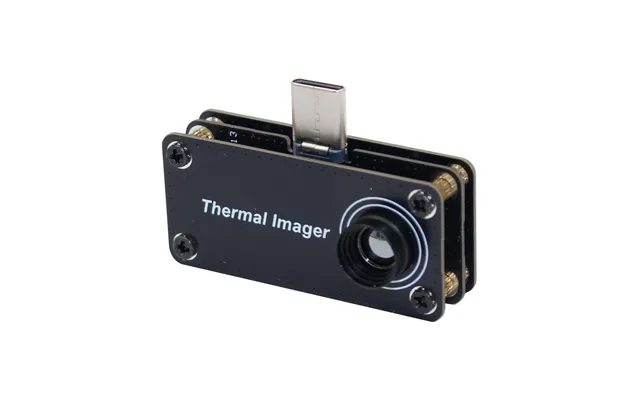
The Geekcreit infrared thermal imaging camera is a compact phone-connected option listed at $66.59 from Banggood.com. It uses a USB Type-C interface and is designed for Android mobile phones. The reference data also notes support for saving pictures locally, although compatibility can depend on the individual phone.
The companion interface includes several useful controls. You can view maximum, minimum, and center temperatures, choose a pseudo-color palette, and adjust how the palette follows the high and low temperatures on screen. The app also supports changing the emissivity setting, which can help when you need a more meaningful surface-temperature measurement.
This model may be a sensible entry point for basic thermal exploration, troubleshooting, and visual comparisons. Before choosing it, check your phone’s Android version, USB Type-C compatibility, and support for the required connection features. A small attachment can be powerful, but only when the phone and software work together smoothly.
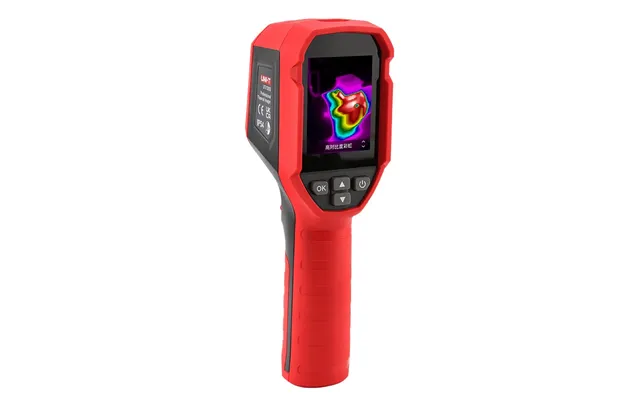
The UNI-T UTI120S is listed at $299.99 from Banggood.Com. It provides 120 x 90 infrared resolution and measures approximately -4°F to 752°F. For users who want a dedicated handheld device without moving up to the highest price points, it offers a balanced group of practical functions.
The camera includes center-point measurement, high- and low-temperature tracking, photo storage, high- and low-temperature alarms, a laser indication, and LED lighting. It also includes six palette options and adjustable emissivity. Those features can make routine inspection more straightforward because you can quickly highlight temperature extremes instead of relying on a single reading.
The listed package includes a 16GB TF card, a USB Type-C cable, a manual, software guidance, a lanyard, and the thermal imager. The device also has an IP54 protection rating and is described as having two-meter drop prevention. Its rechargeable 3.7-volt, 2,600mAh battery is listed with a service time of at least nine hours.
For workshop checks, electrical troubleshooting, and general maintenance, the UTI120S looks like a practical middle-ground choice. It is more self-contained than a phone attachment while remaining below the listed prices of the higher-resolution handheld models.
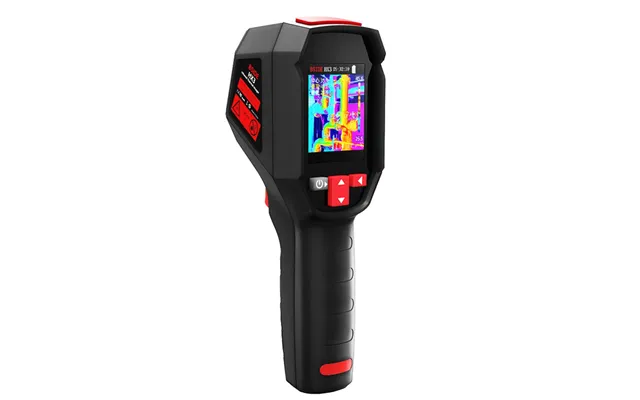
The BSIDE HX3 is listed at $699.00 from Banggood.Com and provides 240 x 240 thermal image resolution. Its measurement range is approximately -4°F to 1,022°F, and its stated accuracy is within approximately 3.6°F or 2% of the reading, whichever is larger, based on the listed 2°C accuracy figure.
This model includes a 2.4-inch TFT LCD screen, center-point measurement, high- and low-temperature tracking, a temperature alarm, a laser pointer, and a tripod mount. It also offers a wide selection of visual palettes, including white hot, black hot, rainbow, iron red, bark brown, ice fire, rain, green hot, red hot, and dark blue.
The HX3 uses a rechargeable 3.7-volt, 2,500mAh battery and has built-in memory card storage. The reference data states that it can store up to 30,000 image files. It also includes a USB Type-C interface and an IP54 protection level.
With its square 240 x 240 resolution and broad temperature range, the BSIDE HX3 is aimed at users who want more image detail and a dedicated inspection workflow. A tripod mount can also be useful when you need a stable view during repeated observations or documentation.
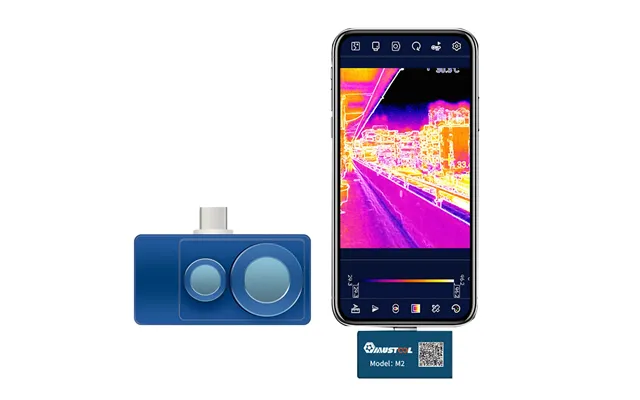
The MUSTOOL M2 is listed at $399.00 from Banggood.Com. It combines a 256 x 192 infrared sensor with a 100W visible-light lens and image-fusion technology. This dual-camera approach can make it easier to relate a thermal hotspot to the physical object in front of you.
The listed temperature range is approximately 41°F to 1,112°F, based on its stated 5°C to 600°C range. The product description also gives an accuracy of approximately 3.6°F or 2% of the reading, whichever is larger. A 25Hz refresh rate is listed, supporting a responsive live view while you scan an area.
This model is designed for Android and supports OTG. The reference data describes it as compact, measuring about 2.8 by 1.65 by 0.55 inches, with a listed weight of 1 ounce. It is also described as surviving drops of up to about 3.3 feet, based on the stated one-meter drop specification.
Beyond basic viewing, the MUSTOOL M2 supports continuous measurement and waveform graphs for following temperature changes. The description also mentions uploading images or reports to a server, annotating infrared images, and connecting to Windows computers through TCView for additional features.
If you want a portable phone-based tool with higher resolution than the entry-level Geekcreit model, the M2 deserves attention. Its visible camera, reporting functions, and broad temperature range make it particularly interesting for users who want to document findings rather than simply view a heat map.
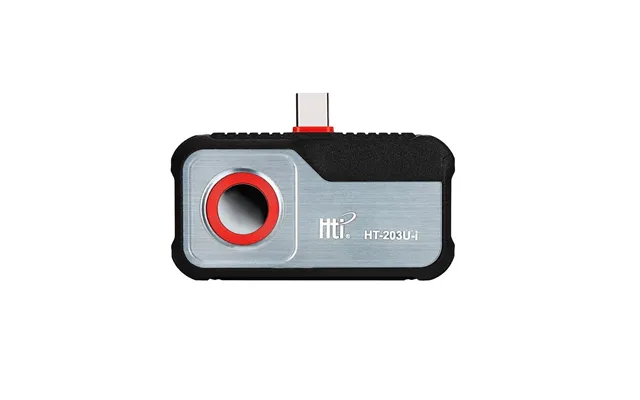
The HTI HT-203U-I is listed at $182.99 from Banggood.Com. It is an Android USB Type-C thermal imager with 256 x 192 resolution and a 25Hz frame rate. The reference data states that it is available for Android users and does not require focusing.
Its listed measurement range is approximately -4°F to 1,022°F, converted from -20°C to 550°C. The device offers center, hot-spot, and cold-spot tracking, along with point, line, and surface measurement methods. These modes give you more flexibility than a single center reading when you want to study a broader area.
The HTI provides adjustable emissivity from 0.01 to 1.00 and includes rainbow, iron red, cool, white hot, and black hot palettes. It is also described as compact and lightweight, weighing about 1 ounce and measuring approximately 1.8 by 2.8 by 0.6 inches, converted from the listed metric dimensions.
For someone who wants strong thermal resolution in a small Android accessory, the HTI HT-203U-I offers an appealing combination. Its lack of a focusing requirement may also simplify quick checks, especially when you are moving between different objects and distances.
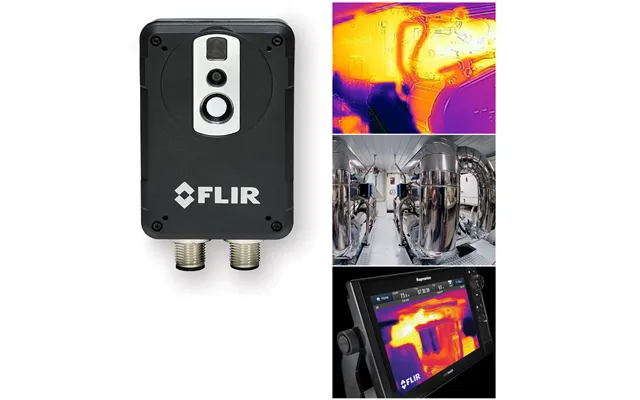
The FLIR E70321 AX8 Marine Thermal Monitoring System is listed at $1,301.12 from The Twister Group. It is the highest-priced product in the supplied comparison data and is identified as a FLIR marine thermal monitoring system.
The reference information provides the product name, brand, store, and price, but does not list detailed specifications such as thermal resolution, measurement range, battery design, or included accessories. For that reason, shoppers should treat this option differently from the more fully specified handheld and Android models in the list.
A marine monitoring system may appeal to users whose needs are tied to boating or marine equipment, but the exact fit depends on the technical details that matter for your installation. Compare the application, mounting requirements, monitoring functions, and compatibility information before making a decision.
Hot- and cold-spot tracking can save time. Rather than scanning the entire display manually, the camera can help identify the most extreme area in the scene. Temperature alarms add another layer of awareness by highlighting conditions that cross a selected threshold.
The UNI-T UTI120S, BSIDE HX3, and HTI HT-203U-I list tracking features, while the UNI-T and BSIDE also list temperature alarms. These functions are useful when inspecting electrical panels, machinery, components, or surfaces where a small hotspot may be more important than the average temperature.
Emissivity describes how effectively a surface emits infrared energy. Different materials can produce different readings, so an adjustable emissivity setting is valuable when measurement accuracy matters. It is a bit like adjusting the scale on a measuring cup before comparing ingredients: the result depends on using the right reference.
The Geekcreit, UNI-T UTI120S, BSIDE HX3, and HTI HT-203U-I descriptions include emissivity controls or adjustment ranges. The MUSTOOL M2 description focuses more on imaging, measurement, and reporting features in the supplied data, so review its full manual if emissivity control is essential to your work.
Saving images lets you compare conditions over time or share findings with someone else. The UNI-T includes a 16GB TF card, while the BSIDE description mentions built-in memory card storage and capacity for up to 30,000 image files. Phone-connected cameras can save images through their associated apps.
The MUSTOOL M2 goes further in the supplied description by mentioning image annotation, report uploads, Windows connectivity, and TCView software. If your inspections need documentation, these workflow features could be as useful as raw resolution. After all, a clear report can turn a visual clue into an actionable maintenance record.
For the lowest listed price, the Geekcreit model offers a phone-connected starting point at $66.59. It may fit casual users who want to explore thermal patterns and already have a compatible Android phone.
For a standalone handheld with storage, alarms, lighting, and a listed nine-hour service time, the UNI-T UTI120S at $299.99 is worth comparing. It offers a practical feature set without reaching the price of the more advanced high-resolution options.
For Android users seeking detailed imaging, the HTI HT-203U-I provides 256 x 192 resolution at a listed $182.99, while the MUSTOOL M2 adds a visible camera, image fusion, waveform graphs, and reporting functions at $399.00.
For a standalone camera with 240 x 240 resolution and a broad approximately -4°F to 1,022°F range, the BSIDE HX3 is listed at $699.00. Finally, the FLIR E70321 AX8 is the premium-priced marine monitoring entry at $1,301.12, though the supplied data does not provide enough technical detail for a direct feature-by-feature comparison.
Start with the job, not the specification sheet. Do you need to find a basic heat difference, record professional reports, monitor marine equipment, or inspect high-temperature machinery? The answer will narrow the field quickly.
Next, decide whether you want a standalone screen or an Android attachment. Phone-based models can be small and affordable, but they depend on device compatibility. Standalone cameras may be easier to use in the field because the screen, controls, battery, and storage are built into one tool.
Then compare temperature range, resolution, accuracy information, measurement modes, palettes, storage, and protective features. A large temperature range is useful only if the camera also suits the size and distance of the targets you inspect.
Finally, compare the current listings on ZoneOffer before you buy. ZoneOffer is a comparison site, not a store, so use the available product and seller information to evaluate your options and confirm the latest listing details before completing a purchase.
The best thermal imaging camera depends on how you plan to use it. The Geekcreit is the most affordable listed option, the HTI HT-203U-I offers high resolution in a compact Android format, the UNI-T UTI120S provides a capable standalone design, and the MUSTOOL M2 adds visible imaging and reporting features. The BSIDE HX3 emphasizes detailed handheld imaging, while the FLIR E70321 AX8 is positioned as a higher-priced marine monitoring system. Compare the temperature range, resolution, connectivity, measurement tools, and workflow features, and you will be far more likely to choose a camera that turns heat into useful information.