


Transparencies price list
Last updated Thursday, Nov 12, 2026

Loading...
Last updated Thursday, Nov 12, 2026
Good presentation materials can make information easier to see, follow, and remember. Whether you are preparing classroom visuals, business slides, overhead projector pages, or creative projects, clear transparency film gives you a practical way to display text and images. The right sheets should print cleanly, resist smudging, and work with the equipment you already have.
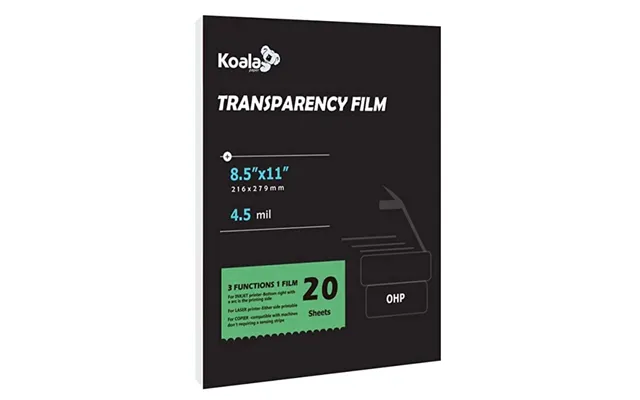
The A-SUB X Koala OHP Film Transparency Sheets listed in the reference data are designed for both inkjet and laser printers. They come in an 8.5 x 11-inch format and are described as smudge and heat resistant. A 20-sheet pack is listed at $9.19 through A-Sub, giving shoppers a straightforward option for several presentation or craft projects.
Digital screens are everywhere, but physical transparencies still have a useful role. A clear sheet can be placed on an overhead projector, used as a teaching aid, or incorporated into a handmade project. Think of transparency film as a visual bridge: it connects printed information with hands-on communication.
For presenters, transparencies can support diagrams, headings, charts, and visual examples. For teachers, they can help explain lessons one layer at a time. For crafters, the smooth clear surface opens up possibilities for decorative designs and custom projects. Their usefulness comes from their simplicity.
A transparency sheet also gives you a physical backup. If your presentation depends on a projector or printed visuals, having prepared sheets can provide another way to share information without relying entirely on a digital display.
The featured product is titled OHP Film Transparency Sheets for Inkjet and Laser Printers. The reference data identifies the brand as A-SUB X Koala and the store as A-Sub. The listed price is $9.19, and the package includes 20 transparency sheets.
These sheets are described as clear and smooth, with a coating intended to support sharp images and readable text. They are also presented as suitable for presentations, teaching, overhead projectors, crafts, and do-it-yourself projects.
The product listing describes the sheets as 8.5 x 11 inches. That familiar paper size can make planning easier because many standard printers and document layouts are built around the same dimensions. Before printing, you should still confirm that your printer settings match the sheet format and that the film is loaded correctly.
One of the most useful features in the listing is compatibility with both inkjet and laser printers. That flexibility matters because printing technologies handle specialty media differently. A product intended for both types of printers can be more convenient when you use different equipment at home, school, or work.
Even with dual compatibility, it is smart to check your printer instructions before beginning a full project. Select the correct media setting when available, load one sheet first, and examine the result. A quick test can help you confirm alignment, ink coverage, and drying before you use the rest of the pack.
Smudges can make a transparency look untidy and reduce the clarity of small text or detailed images. The featured sheets are described as specially coated to resist smearing. That feature is especially helpful when you need your printed visuals to look crisp in front of an audience.
Still, careful handling remains important. After printing, allow the sheet to settle before stacking it with others. Touching the printed surface too quickly can affect the finish, particularly when the design contains dark areas or dense graphics.
For the cleanest presentation, keep your work area free from dust and fingerprints. Handle sheets by their edges whenever possible. A clear transparency acts like a window: small marks may become surprisingly noticeable when light passes through it.
The listing also describes the film as heat resistant. This is a relevant feature for laser printing, because laser printers use heat during the printing process. A sheet designed to withstand heat can offer added confidence when you are preparing printed materials with that type of printer.
Heat resistance does not mean every printer setting is automatically suitable. Always follow the instructions for your printer and the media. If your equipment provides a transparency or specialty-film setting, using it may help the printer handle the sheet appropriately.
When planning a large project, test a single page first. This simple step can reveal whether the printed content is positioned correctly and whether the finished transparency meets your expectations.
Transparency sheets can support many kinds of visual communication. You might print a title page, a labeled diagram, a process illustration, or a simple set of discussion points. Because the film is clear, it can be projected or layered over another visual depending on your setup.
For business presentations, transparencies can provide physical copies of key visuals. They may be useful when presenting in spaces where an overhead projector is available or when printed visual aids are preferred. A strong layout can help your audience focus on the main idea instead of sorting through clutter.
In a classroom, a teacher can use transparency film to display lesson material, examples, or visual prompts. The sheets are also described as suitable for teaching, making them a practical choice for educational projects that need clear printed content.
Before printing, keep your design simple. Use large enough text, strong contrast, and clear spacing. A transparency should communicate quickly, almost like a road sign. If your audience has to struggle to read it, even excellent printing quality will not solve the problem.
Leave comfortable margins around the edges and avoid placing critical information too close to the border. Use one sheet for one main idea when possible. This approach makes a presentation easier to follow and helps you avoid overcrowded visuals.
The product description also identifies these transparency sheets as suitable for crafts and do-it-yourself projects. Clear film can be used for templates, overlays, decorative designs, and other creative applications where a see-through surface is helpful.
For craft work, the smooth finish may make it easier to create clean-looking printed elements. You can experiment with typography, line art, patterns, and layered compositions. The transparent surface adds depth because the background remains part of the final visual effect.
Since the pack contains 20 sheets, you have room to test ideas without committing every page to a single design. You can reserve some sheets for experiments and use the remaining sheets for finished pieces.
A little planning can stretch a pack further. Before printing, review each page at full size and check spelling, alignment, and image placement. Group related visuals into one project so you can use the sheets efficiently.
You may also want to label completed sheets lightly at the edge or store them in order. Keep them flat and separate from rough materials that could scratch or mark the surface. Good organization protects both your time and your finished visuals.
Preparation is often the difference between a smooth project and a frustrating one. Start with a document set to the sheet dimensions you plan to use. The featured product is listed as 8.5 x 11 inches, so your file should reflect that format whenever your software allows it.
Review the design in print preview. Look for cropped text, images extending beyond the printable area, and unexpected page breaks. If your transparency will be projected, consider how thin lines and pale colors may appear against the background.
Print a test page when the project matters. Use the test to confirm that the sheet feeds properly and that the design is positioned as intended. Testing is like a dress rehearsal: it takes a moment, but it can prevent a larger mistake.
The featured transparency film is described as compatible with both inkjet and laser printers, which gives you more flexibility. Your choice may depend on the equipment available and the type of visual you are creating.
Inkjet printing can be useful for image-rich designs, while laser printing may suit text-focused pages. However, the final result depends on your printer, settings, artwork, and handling. Since the reference data does not provide detailed performance comparisons between the two methods, testing remains the safest way to evaluate your specific setup.
Whichever printer you use, confirm that the film is loaded in the correct direction. Printer trays can vary, and feeding the sheet incorrectly may place the image on the wrong side or affect alignment.
When comparing transparency products, start with printer compatibility. A film that supports the printer you already own can make the project easier from the beginning. The A-SUB X Koala option stands out in the supplied data because it is described for both inkjet and laser printers.
Next, consider sheet size and pack quantity. The featured pack includes 20 sheets in an 8.5 x 11-inch format. That quantity may suit a short presentation, a classroom activity, or several small craft projects, depending on how many pages you need.
Surface performance also matters. The listing highlights a clear, smooth film along with smudge and heat resistance. These qualities are relevant when you want printed text and images to remain clean and professional-looking.
The listed price for the A-SUB X Koala transparency sheets is $9.19. Price alone should not be the only consideration, though. Think about the number of pages you need, the type of printer you will use, and whether the sheets match your presentation or craft plans.
Because ZoneOffer is a comparison site rather than a store, the listing helps you review the available product information in one place. You can use the stated price and features as a starting point when deciding whether this pack fits your project.
Keep transparency sheets clean before printing. Dust and fingerprints can affect the appearance of a clear surface, particularly when the material is projected under bright light. Store unused sheets in a clean, dry place and avoid bending them.
After printing, give the surface time before placing sheets together. Handle each page by the edges and avoid dragging printed sides across one another. These small habits can help protect the clarity of your visuals.
For presentations, organize the pages in sequence before you begin. If several sheets contain related information, mark their order in a discreet area that will not distract from the main content. Preparation helps you present with confidence.
The A-SUB X Koala sheets may be worth considering if you need a clear 8.5 x 11-inch film that is described as suitable for both inkjet and laser printers. The smudge-resistant and heat-resistant features may also appeal to people who want cleaner printed visuals and added flexibility.
The 20-sheet pack can support more than one task, from classroom materials to business presentations and craft projects. If your work depends on a different sheet size, a specialized printer requirement, or a particular finishing effect, review those needs before choosing.
The best product is the one that fits your equipment and your goal. Are you preparing a few overhead visuals, or do you need a larger supply for repeated projects? Answering that question can help you decide whether this pack is a practical match.
Clear transparency film remains a useful tool for presentations, teaching, and creative work. The A-SUB X Koala OHP Film Transparency Sheets listed in the reference data offer 20 sheets in an 8.5 x 11-inch format, with compatibility for inkjet and laser printers. The listing also highlights a smooth clear surface, smudge resistance, and heat resistance. At the stated price of $9.19 through A-Sub, this pack provides a flexible option for projects that need crisp, see-through printed visuals. Use careful file preparation, test your printer, and handle each sheet gently to get the most from your transparencies.