

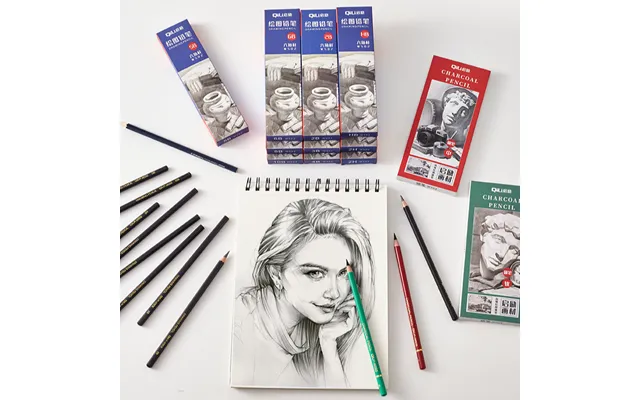
Art Charcoals price list
Last updated Tuesday, Oct 20, 2026



Loading...
Last updated Tuesday, Oct 20, 2026
Great drawings often begin with a simple question: which tools will help you turn an idea into something people can see? Art charcoal and graphite pencils each bring a different personality to the page. Graphite can feel precise and controlled, while charcoal creates bold shadows, expressive marks, and rich contrast. When you combine both, your sketchbook becomes more than paper—it becomes a playground for light, texture, and imagination.
For artists who want several drawing options in one compact set, the Professional Sketch Pencils Set listed in the reference data offers a useful combination of graphite and charcoal pencils. It includes 12 pieces designed for drawing and shading, with grades ranging from 2H to 10B, along with soft and medium charcoal pencils. The set is listed at $3.78 from Voghion, with the brand also identified as Voghion. ZoneOffer is a comparison site, so shoppers can use the listing as a starting point for evaluating an offer rather than treating ZoneOffer as the seller.
Charcoal is valued for its deep, dramatic marks. If graphite is like a fine-tipped pen that politely follows your plans, charcoal is more like a bold brush that encourages experimentation. It can create soft transitions, dark accents, and energetic strokes with relatively little effort.
Artists use charcoal for many types of work, including quick studies, portraits, still-life drawings, gesture sketches, and expressive compositions. It is especially useful when you want to focus on the relationship between light and dark instead of getting caught up in tiny details. A charcoal mark can suggest a shadow, a fold in fabric, or the curve of a cheek with just a few movements.
The charcoal pencils included in the listed set are described as soft and medium. That gives you two useful levels of mark-making. A softer charcoal pencil can help produce darker, more dramatic areas, while a medium option may offer a little more control for outlines and midtone shading.
The Professional Sketch Pencils Set is described as a 12-pack of art graphite pencils and charcoal pencils for drawing and shading. Its graphite selection includes 2H, HB, 2B, 3B, 4B, 5B, 6B, 8B, and 10B grades, plus soft and medium charcoal pencils.
That range gives you a broad tonal toolkit. The harder end can support lighter, cleaner marks, while the softer grades are suited to stronger shadows and fuller shading. The set may appeal to beginners who want to explore different pencil grades without choosing each one separately. It may also suit experienced sketchers who prefer to keep a compact selection ready for everyday practice.
Because the set combines graphite and charcoal, you can compare the two media as you work. Try drawing the same simple object with graphite first, then repeat it with charcoal. What changes? You may notice that graphite encourages careful layering, while charcoal makes it easier to work quickly and emphasize contrast.
Pencil labels help describe the character of the graphite. Grades marked with H are generally associated with harder graphite and lighter lines. HB sits around the middle and is often a comfortable general-purpose choice. Grades marked with B are generally softer and darker, making them useful for shading and stronger accents.
The listed set moves from 2H through HB and into B grades as dark as 10B. This gives you room to shift from delicate construction lines to bold shadow shapes. Instead of pressing one pencil harder and harder, you can choose a grade that naturally fits the value you want.
That approach can protect your paper from unnecessary pressure. Think of the pencil grades as different volume settings on a speaker. A lighter grade keeps the sound quiet, while a darker grade turns up the intensity without requiring you to force the tool.
Graphite and charcoal can both create beautiful drawings, but they behave differently. Graphite usually offers a more controlled, polished appearance. It can be useful when you want clear edges, gradual shading, and fine observations.
Charcoal tends to feel more immediate and expressive. It can produce dark areas quickly and encourages you to think in broad shapes. Depending on how you use it, charcoal may create crisp lines, soft shadows, or lively broken marks.
Neither medium is automatically better. The right choice depends on your subject and the mood you want. A detailed object study may benefit from graphite’s controlled structure, while a loose figure study may come alive with charcoal’s energetic quality. With a mixed set, you do not have to choose one path before you begin.
Graphite is a strong option when you want to study proportion, edges, texture, and subtle value changes. You might use a lighter grade to establish the basic shape, then build darker areas with progressively softer grades.
It can also be a friendly medium for beginners because the marks are often easier to control. If a line does not work, you can adjust the drawing through additional layers and careful erasing. The graphite range in the listed set gives you several options for practicing this gradual approach.
Charcoal is useful when you want speed, contrast, and atmosphere. It can help you block in the overall pattern of light and shadow before you spend time on details. This makes it suitable for warm-up drawings and studies where capturing the main idea matters more than creating a perfectly polished finish.
The soft and medium charcoal pencils in the listed set can help you explore both expressive darkness and more measured strokes. Start with broad shapes, then use the edge of the pencil for narrower accents. A few confident marks can often communicate more than a page filled with hesitant ones.
Shading becomes easier when you think in layers rather than trying to finish an area in one pass. Begin by observing where the light is strongest and where the deepest shadows appear. Then place a light foundation across the shadow areas before gradually increasing the darkness.
Use lighter graphite grades for the first stage of a graphite drawing. As the form develops, switch to softer B grades for deeper areas. Save the darkest marks for the places that truly need emphasis. If every part of the drawing is equally dark, the eye loses a clear path through the image.
With charcoal, you can work more boldly. Establish large shadow shapes first and refine selected edges afterward. You do not need to outline every object heavily. Sometimes a lost edge—a boundary that blends softly into the surrounding value—can make a drawing feel more natural.
To practice a smooth transition, draw a simple row of shaded blocks or a small sphere. Begin with a light touch, then gradually increase pressure or change to a softer grade. Try to move from light to dark without creating abrupt stripes.
Use the set’s range as a learning tool. Compare what happens when you layer several lighter grades with what happens when you use a darker B pencil immediately. Which result feels smoother? Which one gives you more control? These small experiments help you learn how each tool behaves in your hand.
For contrast practice, draw a simple object against a light background. Identify the darkest part of the object and place that value with confidence. Then compare it with the lightest area around it.
This exercise trains your eye to see relationships instead of isolated marks. A shadow looks dark partly because of what surrounds it. Graphite and charcoal are most effective when you use them to organize the full value structure of a drawing.
A new set can feel more useful when you give yourself clear exercises instead of waiting for inspiration. Start with objects that have uncomplicated shapes, such as a cup, a book, or a piece of fruit. Focus on observing the object rather than producing a perfect picture.
Draw the same object three times. In the first drawing, use only a lighter graphite grade. In the second, use a darker graphite grade for the shadows. In the third, use a charcoal pencil. This comparison makes the differences between the media easier to recognize.
You can also create a value scale using the available graphite grades. Arrange several sections from light to dark, using a different pencil or approach in each section. Keep the marks consistent and watch how the values change. This simple activity can improve your shading decisions over time.
Gesture sketching is about movement and overall structure. Set a short time limit and capture the main direction of a pose, object, or imagined figure. Do not worry about tiny details. Use the charcoal pencils to make energetic strokes, then try the exercise again with graphite.
Why practice this way? Quick sketches teach you to make decisions. Instead of overthinking every line, you learn to identify the most important shapes and rhythms. That skill can strengthen both expressive and realistic drawing.
Arrange a few everyday objects and draw them as a group. Look for overlapping shapes, cast shadows, and differences in texture. Start with a light structure, then develop the larger dark areas before adding smaller accents.
A mixed pencil set gives you the flexibility to test different finishes. You can keep one object controlled and detailed with graphite while using charcoal to emphasize a background shadow or a strong contour. This creates contrast not only in value, but also in mark quality.
Your grip and pressure affect the appearance of every stroke. Hold the pencil closer to the end for detailed work and farther back for looser marks. A relaxed grip can help you avoid pressing too hard, especially during long drawing sessions.
Rotate the pencil as you work so the point wears more evenly. For broad shading, you can use the side of the pencil rather than relying only on the tip. This creates a wider mark and may help you cover an area without filling it with repeated narrow lines.
Try not to chase every mistake immediately. Some lines can remain as part of the drawing process, especially in early studies. If you erase constantly, you may lose the energy of the sketch. Instead, ask whether the mark truly harms the image or simply shows how the drawing developed.
Dark marks attract attention, so place them thoughtfully. If you want the viewer to focus on a face, object, or central detail, reserve your strongest contrast for that area. Softer values can support the surroundings without competing for attention.
The darker graphite grades in the listed set, together with the charcoal pencils, can help you create this hierarchy. Use the full range as a visual map: lighter marks can recede, while darker accents can come forward.
When comparing drawing sets, consider what you actually want to practice. If you are learning shading, a range of grades can be more helpful than a collection with only one type of pencil. If you enjoy expressive sketches, charcoal options may give you a different way to explore tone and movement.
The Professional Sketch Pencils Set stands out in the reference data because it combines multiple graphite grades with soft and medium charcoal pencils. That combination supports both precise studies and looser experimentation. It can be a practical choice for someone who wants variety in a single listed product.
The listed price is $3.78, and the listed store and brand are both Voghion. Since ZoneOffer functions as a comparison site, review the offer information there as part of your shopping research and confirm current details before making a purchase decision.
A compact set can encourage regular practice because it reduces the friction between having an idea and starting a drawing. You do not need an elaborate studio to study value or experiment with texture. A sketchbook, a few pencils, and a subject in front of you can be enough.
Keep the set in a place where you can reach it easily. Create a small routine, such as drawing for a few minutes while drinking coffee or making a quick study before ending the day. Progress often arrives quietly, one page at a time.
You can also dedicate separate sketchbook pages to different goals. One page might focus on light graphite shading, another on charcoal contrast, and another on combining the media. By labeling the purpose of each exercise, you turn casual drawing into a personal reference library.
One common mistake is using only one pencil grade for an entire drawing. While this can be a useful challenge, it may limit the range of values you can create. Experiment with the grades in the set and notice how much easier it can be to achieve variety without excessive pressure.
Another mistake is making every edge equally sharp. Real objects usually contain a mixture of clear, soft, and barely visible boundaries. Use charcoal or softer graphite to blend selected areas, and keep sharper marks where you want attention.
Artists also sometimes shade without checking the overall pattern of light. Before adding texture, pause and ask where the light comes from. A convincing drawing depends on consistent lighting, much like a stage performance depends on a clear spotlight.
Art charcoal and graphite pencils offer complementary ways to draw, shade, and explore visual ideas. The Professional Sketch Pencils Set listed in the reference data brings together a broad graphite range from 2H to 10B with soft and medium charcoal pencils, giving you multiple approaches in one 12-piece collection. Listed at $3.78 from Voghion, it may be worth considering if you want to practice both controlled graphite studies and expressive charcoal work. Use ZoneOffer as a comparison resource, experiment with the tools gradually, and let consistent practice turn simple marks into confident drawings.