

Network Bridges price list
Last updated Saturday, Oct 17, 2026





View 8 Offers
Loading...
Last updated Saturday, Oct 17, 2026
Network bridges help different devices, protocols, or systems communicate with one another. Think of a bridge as a translator stationed between two neighborhoods: each side may use a different language, but the bridge helps information cross smoothly. In this comparison of network bridge products, you will find options for smart homes, audio-video installations, marine electronics, radio-frequency devices, and technical measurement work.
The products in this guide vary widely in purpose and price. Some are compact hubs designed to connect Zigbee devices with Wi-Fi and voice assistants. Others are specialized marine modules, audiovisual-over-IP encoders, or laboratory-style instruments. Because the right bridge depends on your equipment and goals, comparing features before choosing can save time and prevent compatibility headaches.
A network bridge connects devices or networks that use compatible or different communication methods. In a home, a bridge may connect smart sensors to an app. In a commercial AV system, it may carry video across an IP network. In marine electronics, it may translate data between navigation systems.
Although the products in this category share the word “bridge,” they are not interchangeable. A Zigbee gateway cannot automatically replace a marine data interface, and an AV-over-IP encoder serves a completely different role from an RF smart-home bridge. Start by identifying the type of signal you need to connect.
Compatibility is the foundation of a successful bridge installation. Check the protocol, supported devices, power requirements, and control platform before you buy. For example, one product in this selection supports Zigbee 3.0 and Wi-Fi, while another focuses on 433 MHz RF devices. Those systems may both belong in a smart-home setup, but they communicate with different types of equipment.
It is also wise to review connector types and installation requirements. A product may support the right protocol but still need a particular cable, power source, or compatible controller. A few minutes spent checking specifications can be like measuring twice before cutting wood: it reduces unpleasant surprises.
Smart-home bridges bring separate ecosystems together so you can control more devices from one platform. The reference selection includes gateways for Zigbee, Thread, Wi-Fi, and 433 MHz RF equipment. These products can be useful when your home contains devices from several manufacturers or uses older remote-controlled equipment alongside newer smart products.
A bridge can also simplify daily routines. Instead of opening several apps, you may be able to manage connected devices from one interface or use voice commands through a supported assistant. However, the exact experience depends on the bridge, the devices connected to it, and the smart-home platform you choose.
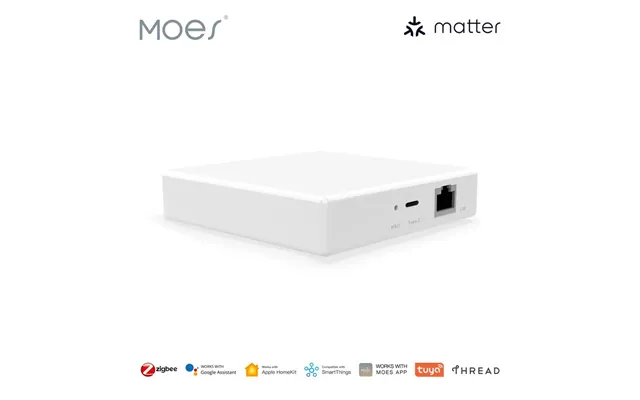
The Moes Matter Smart Zigbee Home Bridge is listed at $54.99 through Banggood.com. It supports Zigbee and Thread wireless protocols and is designed to work with platforms including Alexa, Google, Siri, HomeKit, and SmartThings. Its listed dimensions are approximately 3.54 inches by 3.54 inches by 0.87 inches.
The product uses a 5-volt, 1-amp power input and a USB Type-C power interface. The listed package includes the bridge, a Type-C cable, and a network cable. Its compact format may suit users who want a small gateway rather than a large control unit.
The listed operating range is from 50°F to 131°F, with operating humidity from 10% to 90% relative humidity, non-condensing. These figures are useful when considering placement. As with any electronics, keeping the device in a suitable indoor environment can support reliable operation.
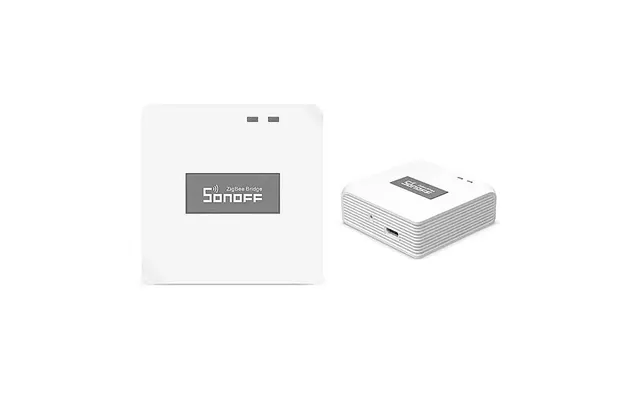
The Sonoff ZB Bridge Pro is listed at $29.99 through Banggood.com. It combines Wi-Fi with Zigbee 3.0, allowing supported Zigbee and Wi-Fi devices to be managed through a unified system. The listing also identifies compatibility with Alexa and Google Assistant.
Measuring approximately 2.44 inches by 2.44 inches by 0.79 inches and weighing about 1.23 ounces, this is one of the more compact options in the selection. It uses a 5-volt, 1-amp input and is made with PC V0 material, according to the supplied specifications.
The Sonoff bridge is intended for remote control through its accompanying app. That can be helpful if you want to check or manage connected devices while away from home. Its listed operating temperature range is 50°F to 104°F.
Many homes contain devices controlled by 433 MHz radio-frequency remotes. These might include certain sockets, switches, bulbs, door openers, and sensors. An RF bridge can connect those products to a Wi-Fi-based app, giving older equipment a path into a modern smart-home setup.
This type of bridge is especially useful when replacing every existing device would be expensive or inconvenient. Instead of discarding compatible RF products, you can investigate whether a bridge supports them. Still, the exact frequency and device type matter, so confirm that your equipment uses the required 433 MHz signal.
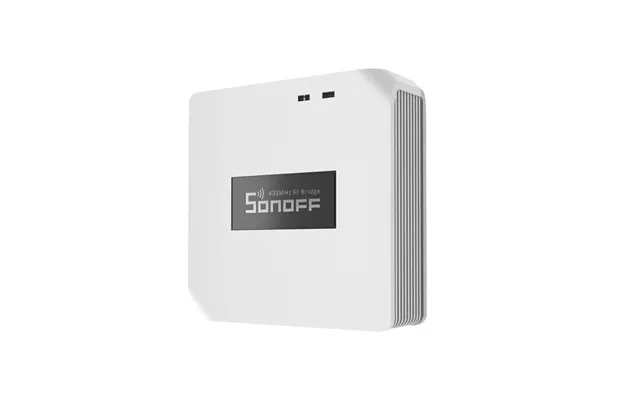
The Sonoff RF Bridge R2 is listed at $21.99 through Banggood.com. It converts compatible 433 MHz RF remote signals into Wi-Fi connectivity and works with the eWeLink app on iOS and Android, according to the supplied product information.
The listing states that the bridge can add up to 16 RM433 RF devices or alarms. It also describes support for up to 16 items and notes that one four-button remote can learn four devices, allowing up to 64 supported 433 MHz devices to be added through the app under the stated configuration.
The bridge can be used with several types of RF-controlled products, including switches, sockets, bulbs, and door openers. The listing also describes schedule, countdown, and loop timers, with up to eight timers available for turning connected RF products on or off.
Security-oriented uses are another part of its feature set. The product information mentions support for compatible door-and-window sensors and human-body infrared sensors, allowing users to create scenes in which a sensor triggers another device. The listing specifically notes that alarm push notifications are available in the owner’s account.
AV-over-IP products move audio or video through an IP network rather than relying only on traditional point-to-point connections. This approach can be useful in environments where one video source needs to reach multiple screens or where displays may be arranged into a video wall.
Before selecting an AV bridge or encoder, consider the resolution, network design, display arrangement, and control features you need. A product built for 1080p distribution should be matched with equipment and an installation plan that support that format. Network capacity and configuration also deserve attention, particularly in busy commercial environments.
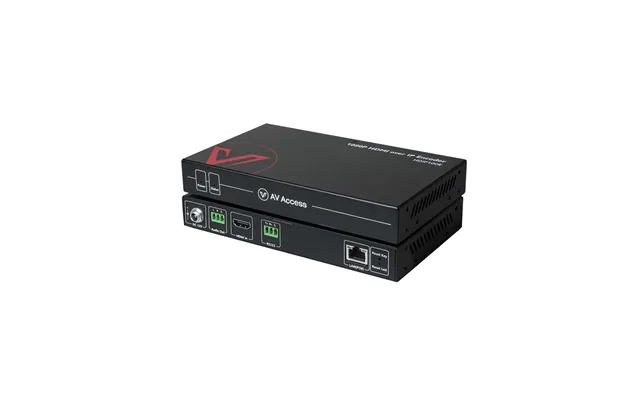
The AV Access HDIP100E is listed at $199.99 through AV Access. It is described as a zero-configuration 1080p AV-over-IP encoder with video wall and visual control features.
The product is positioned for distributed IP matrix installations and is identified as suitable for settings such as sports bars, houses of worship, and retail environments. Its zero-configuration description may appeal to users seeking a simpler starting point for a 1080p video distribution system.
Even with a simplified setup, it is sensible to map out the installation first. Consider where the source equipment, network connections, and screens will be located. A clear plan helps you avoid treating the encoder as a magic wand; it is one part of a wider AV network.
Marine electronics often rely on specialized communication standards so navigation, instrumentation, and control equipment can share information. A marine bridge or interface may translate data between systems that would otherwise struggle to communicate.
These products require careful compatibility checks. Pay attention to the equipment family, interface standard, power requirements, and any listed compatibility notes. Marine systems can be tightly integrated, so selecting a bridge based only on price or appearance may not be enough.
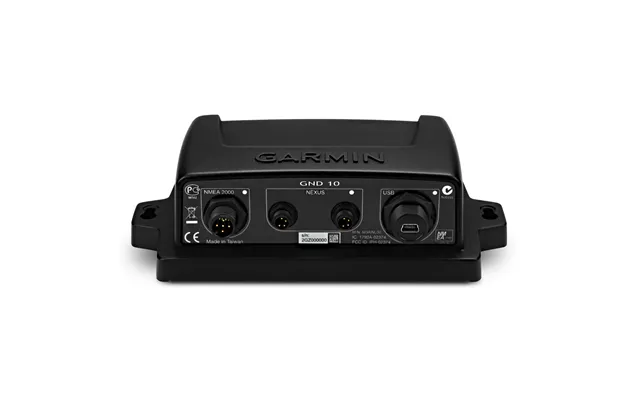
The Garmin 010-01226-00 GND 10 Black Box Bridge is listed at $177.12 through The Twister Group. Its listed purpose is to convert data between Garmin systems or related equipment.
The “black box” format suggests a component intended to sit within a broader electronics installation rather than function as a consumer-facing hub. When considering this type of product, identify the Garmin equipment already installed and confirm how the bridge fits into the system before purchasing.
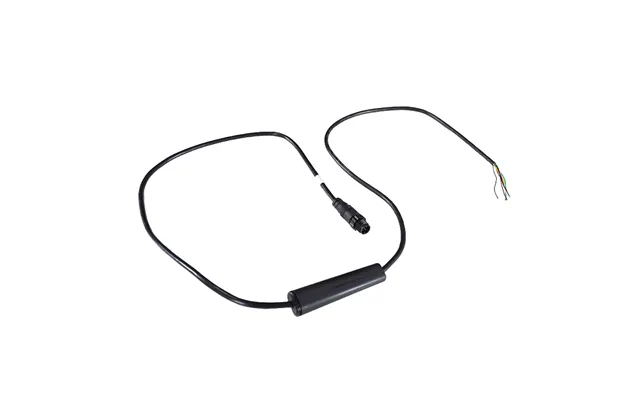
The Simrad 000-15939-001 NMEA 0183 Interface is listed at $182.12 through The Twister Group. Its title identifies it as an interface for NMEA 0183 marine communication equipment.
This option may interest boat owners or marine installers working with equipment that uses the NMEA 0183 standard. The key decision is whether your existing navigation or marine electronics require that interface. Matching the interface standard is more important than simply choosing the lowest listed price.
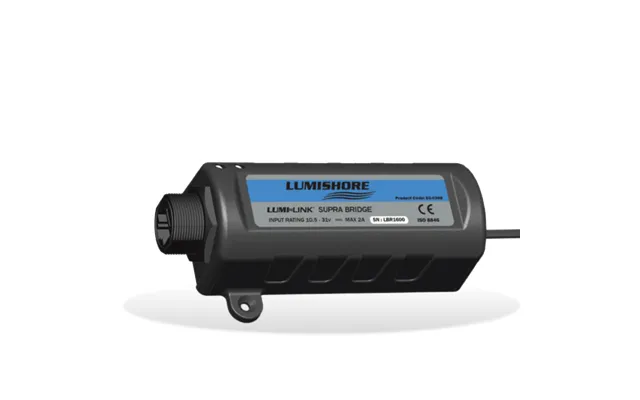
The Lumishore 010-04361-00 Supra Bridge Module is listed at $504.12 through The Twister Group. It is described as a module that Enable control of Supra light systems through a compatible multifunction display.
The listing identifies compatibility with TIX, THX, and SMX 53 Supra underwater lighting systems and states that a specification sheet should be checked for multifunction-display compatibility. It also lists a 10.5- to 31-volt DC power supply requirement.
This is a specialized bridge rather than a general networking hub. If you are planning a marine lighting installation, confirm that your display and lighting system match the stated compatibility information. Doing so is essential because a bridge can only translate signals for the systems it was designed to support.
Some products use bridge technology as part of electronic measurement rather than device control. A vector network analyzer, for example, can help evaluate radio-frequency behavior and signal performance. This makes it relevant to engineers, radio enthusiasts, designers, and technical users rather than typical smart-home shoppers.
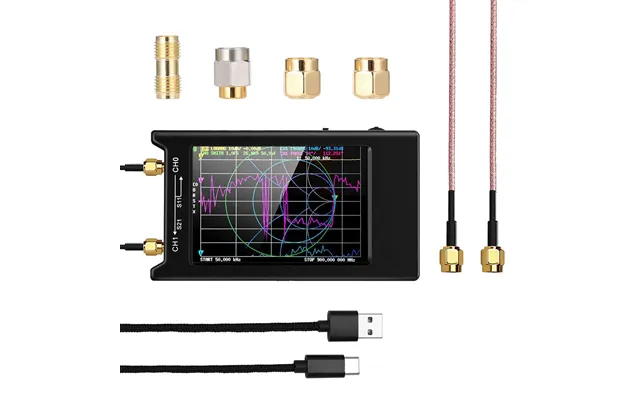
The MUSTOOL NanoVNA-H4 is listed at $699.00 through Banggood.com. It is described as a vector network analyzer covering 50 kHz to 1.5 GHz, with a 4-inch LCD screen and a lightweight ABS shell.
The supplied information highlights a 0 dBm RF output, computer software support, real-time display, and the ability to export SNP files for radio design and simulation software. It also describes a redesigned power-management circuit, a reserved UART interface for DIY expansion, and included calibration parts.
Calibration is an important part of using this type of instrument. The listing states that the dual ports are calibrated before delivery, but it also explains that recalibration is needed when measurement conditions change, such as switching bandwidth or adding an extension cable. That is a useful reminder: even a capable analyzer needs the right setup to produce meaningful results.
The listed device dimensions are approximately 2.95 inches by 5.24 inches by 0.71 inches, excluding protrusions. This compact size may make it easier to carry between a workbench and a field location, while the 4-inch display provides a direct way to view measurements.
Start with the signal type. Are you connecting Zigbee devices, Thread products, Wi-Fi equipment, 433 MHz RF remotes, marine electronics, or video sources? This first question narrows the field quickly.
Next, compare control platforms. The Moes bridge lists support for Alexa, Google, Siri, HomeKit, and SmartThings, while the Sonoff ZB Bridge Pro lists Alexa and Google Assistant compatibility. If voice control matters to you, select a product that supports the platform already used in your home.
Then review the power and physical specifications. Check voltage, current, connectors, dimensions, and operating conditions. For a compact installation, size may matter as much as features. For marine or AV projects, integration requirements may be the deciding factor.
Finally, compare the listed prices in relation to your goal. The supplied offers range from $21.99 for the Sonoff RF Bridge R2 to $699.00 for the MUSTOOL NanoVNA-H4. These products serve very different purposes, so a higher price does not automatically mean a better choice for your project.
Before connecting a bridge, create a simple equipment map. Write down the devices you want to connect, the protocol each one uses, and the platform you want to control them from. This turns a confusing web of devices into a clear route from source to destination.
For smart-home bridges, place the hub where it can communicate reliably with connected devices and reach the required network connection. For RF products, confirm that the remote or sensor operates on the supported 433 MHz frequency. For AV systems, plan the network path between the encoder and displays.
Marine and measurement equipment deserve extra care. Follow the relevant product documentation, verify power requirements, and check compatibility before applying power. When working with a specialized system, rushing is like navigating through fog without a chart: possible, but unnecessarily risky.
ZoneOffer is a comparison site, not a store. Its role is to help you review product information and compare listed offers from different sellers. That makes it useful when a category contains very different products under the same broad label.
Use the supplied prices and specifications as a starting point for research, then confirm the details that matter most for your project. Product information can vary by listing, and compatibility should always be checked against your existing equipment.
The best network bridge is the one that connects the systems you actually use. The Moes and Sonoff Zigbee bridges focus on smart-home control, the Sonoff RF Bridge R2 helps connect compatible 433 MHz devices, the AV Access HDIP100E supports 1080p AV-over-IP distribution, and the Garmin, Simrad, Lumishore, and MUSTOOL products serve specialized marine or technical roles. Compare protocols, compatibility, power requirements, size, control platforms, and listed price before choosing. With the right match, a bridge can turn isolated devices into a more coordinated system.