

Circuit Decoders & Encoders price list
Last updated Saturday, Oct 17, 2026





View 7 Offers

Loading...
Last updated Saturday, Oct 17, 2026
Finding the right circuit decoder or encoder can feel like searching for one specific key in a drawer full of similar parts. At first glance, many modules appear to perform the same basic job. Look closer, though, and the important differences emerge: input protocols, output formats, voltage ranges, control methods, channel counts, and intended applications all matter.
This guide explores the circuit decoders and encoders currently listed in the reference data. The selection includes LED controllers, motor-control circuit boards, a marine resistance-to-frequency conversion kit, and a CRSF-to-PWM converter. By comparing their functions and listed prices, you can narrow your search before checking compatibility and purchasing options through ZoneOffer, a comparison site.
Whether you are building an LED lighting project, adapting a radio-control system, repairing an autopilot setup, or sourcing a board for a sliding gate opener, the right converter can serve as the bridge between two electronic languages. Let’s look at what each product does and how to evaluate it.
A decoder generally receives a signal in one format and translates it into another usable output. An encoder performs the reverse kind of conversion in many applications, turning an input condition into a coded signal. In real-world projects, the terms can overlap with controllers, converters, receiver boards, and interface modules.
Think of a decoder as an interpreter. One device “speaks” a particular protocol, while another expects a different type of signal. The decoder helps them communicate. A controller may add extra features, such as dimming, wireless commands, multiple outputs, or synchronization between lighting channels.
The products in this category are not interchangeable. A board designed for RGB LED strips is not automatically suitable for a radio-control receiver, and a marine autopilot conversion kit has a very different purpose from a gate-opener circuit board. Matching the electrical and communication requirements is essential.
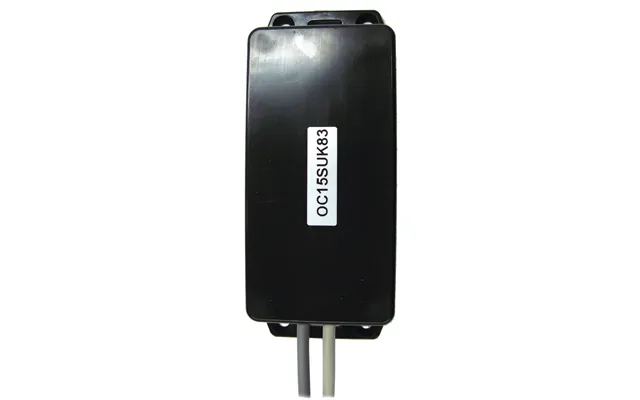
The Octopus OC15SUK83 Simrad Resistance to Frequency Conversion Kit is listed as a component required for Simrad autopilots. Its role is to convert a resistance-based signal into a frequency-based signal, allowing compatible equipment to process the information it receives.
This product stands apart from the LED and radio-control modules in the selection because it is aimed at marine electronics. If your project involves a Simrad autopilot, the conversion function is the first detail to examine. A converter is only useful when its input and output match the equipment already installed in the system.
The listed brand is Octopus, and the offer appears through The Twister Group. Its listed price is $207.12. Before choosing it, confirm that your autopilot setup specifically requires this type of Simrad resistance-to-frequency conversion kit. That single check can prevent an expensive mismatch.
Ask yourself which signal your existing equipment produces and which signal the receiving system expects. Does the system identify the component as required? Is the product intended for the exact autopilot arrangement you are working with? These questions are more important than a low price because a technically incompatible board cannot solve the communication problem.
The SX LED Touch Controller 5050 2835 Double Color model is designed for LED lighting control. The listing identifies support for 12V and 24V systems, a 12-amp rating, an aluminum shell, dimming, a maximum load of 216 watts, a 433MHz RF connection, and a six-key remote control.
This combination may appeal to someone who wants remote operation for compatible LED lighting rather than a basic on-and-off switch. The listed support for 5050 and 2835 LED formats also gives you useful information when comparing it with your lighting setup. Still, you should verify the strip’s electrical specifications before connecting anything.
The offer is listed through Alibaba at $4.56. The data does not identify a brand for this product. Its aluminum-shell construction and dimming function are notable features in the listing, but the most important selection criteria remain voltage, current, maximum load, and the type of LED arrangement you plan to control.
Start with voltage. A controller designed for 12V or 24V applications should be matched to the actual supply and lighting system. Next, consider current and total wattage. The listed 12-amp capacity and 216-watt maximum load provide reference points, but your installation still needs to stay within the controller’s limits.
Also consider signal range and user control. A 433MHz RF remote can be convenient when you want wireless operation, while six keys may provide more direct control than a simple single-button design. What will you adjust most often: brightness, color, or power? The answer can help you decide whether this type of interface suits your project.
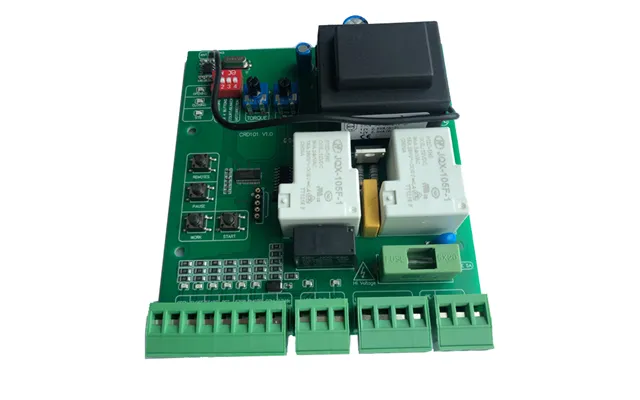
The AC Motor 220V 110V 433MHz Remote Control Circuit Board is listed for a sliding gate opener. It supports both 220V and 110V according to the product title and includes a 433MHz remote-control frequency.
This is a very different type of circuit board from an LED dimmer. Instead of managing brightness or color, it is intended for a motorized gate application. The voltage detail is particularly important because 110V and 220V systems are not casual substitutions. Your existing opener and electrical setup must match the board’s requirements.
The product is listed through Alibaba for $18.00. No brand is identified in the reference data. Since motor-control systems can involve higher electrical loads and moving hardware, compatibility should be checked carefully before installation. Confirm the gate opener model, motor requirements, control inputs, and remote frequency.
A circuit board may look universal while being designed for a narrow operating environment. A board listed for a sliding gate opener should be assessed as part of the complete opener system, not as a general-purpose remote circuit. Match the supply voltage, motor type, control arrangement, and physical connections before considering price.
The 433MHz detail can also help when comparing remote-control components. However, the frequency alone does not prove that every remote or receiver will work together. Treat it as one compatibility clue rather than a complete guarantee.
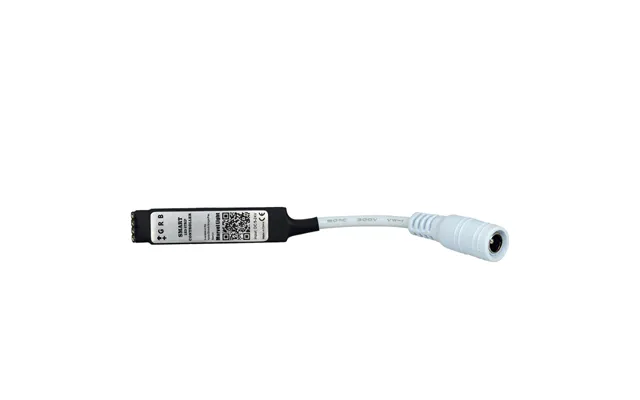
The Customizable DC5-24V Mini BT LED Dimmer RGB Controller is listed for RGB LED strip lights. It supports DC5V through 24V input, offers mobile app control, and is rated at 72 watts in the product title.
This compact controller may suit projects where smartphone-based operation is more appealing than a handheld remote. Bluetooth control can make an installation feel more convenient, especially when the controller is positioned near the lighting rather than somewhere easily reached.
The listed price is $0.55 through Alibaba, and the reference data does not identify a brand. The product is described as customizable, but the data does not specify the exact app, operating system, wireless range, or customization options. Those details should be verified before purchase if they are important to your project.
Begin by confirming that your LED strip is an RGB strip and that its voltage falls within the listed DC5V-to-24V range. Then compare the total power requirement with the listed 72-watt rating. If the lighting load is higher, this controller may not be the appropriate choice.
It is also sensible to check how the strip connects to the controller. RGB products can use different wiring arrangements, and a connector that looks similar may not have the same pin order. A little attention before installation is like measuring twice before cutting: it saves trouble later.
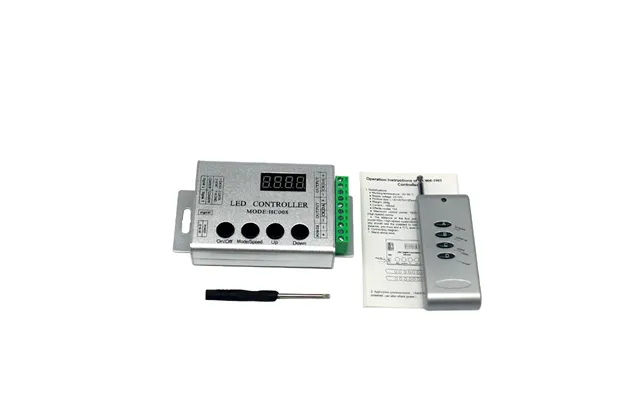
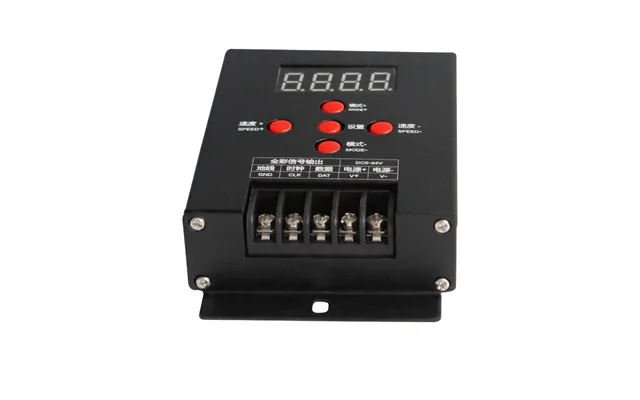
The Manufacturer HC008 controller is listed as a DC5-24V RF controller with four keys and multiple synchronous control. It is intended for LED pixel products using SPI protocols, including WS2811, WS2812, 1903, and 16703.
Unlike a basic RGB dimmer, a pixel controller is designed for individually controlled or digitally addressed lighting products. The reference data specifically names several supported pixel protocols, giving you a starting point for compatibility checks. If your strip or pixel installation uses one of those protocols, this product may deserve closer attention.
The listing appears through Alibaba at $6.99. No brand is provided. The product title identifies RF operation and four-key control, which may be useful if you want physical controls without relying entirely on a mobile device.
SPI LED products do not all communicate in exactly the same way. Even when two strips look alike, their data protocol, wiring, voltage, and signal requirements can differ. The named support for WS2811, WS2812, 1903, and 16703 is therefore valuable, but you should still match the exact LED product to the controller before ordering.
Multiple synchronous control can be useful when several lighting sections need coordinated behavior. Consider the size and layout of your installation. Do you need one controller for a compact project, or are you trying to coordinate several sections? Your answer will guide the next compatibility check.
The T-500 RGB Pixel LED Controller is described as a PWM dimmer and IC strip module for LED lighting. The listing identifies DC5-24V operation and a metal-and-plastic construction. It is listed through Alibaba for $5.19.
Pulse-width modulation, commonly called PWM, controls brightness by rapidly switching power on and off. You can think of it like adjusting the average amount of water flowing through a pipe: the system changes the effective output without necessarily changing the supply voltage itself.
This controller may be worth comparing with the HC008 if you are working with RGB pixel lighting. The two listings describe different control features, so the better choice depends on your strip’s protocol, voltage, preferred controls, and required dimming behavior. The reference data does not provide a brand for the T-500.
When comparing the T-500 and HC008, focus first on the signal type and supported LED ICs. Then examine the operating voltage and the way you want to control the installation. One project may benefit from RF keys, while another may prioritize a PWM dimming function or a particular module format.
Do not choose solely on the lowest listed price. A controller that fits your wiring and protocol can be more useful than a cheaper module that requires additional parts or cannot communicate with your LEDs.
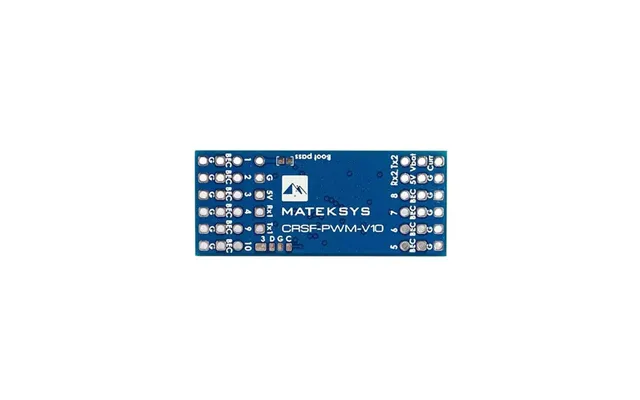
The Matek CRSF-PWM-V1.0 is a CRSF-to-PWM converter with a variometer and 10-channel PWM output. The listing describes compatibility with CRSF protocol receivers and identifies receiver frequencies including 433MHz, 868MHz, 915MHz, and 2.4GHz.
This module is aimed at radio-control electronics rather than lighting. It includes two UARTs for receiver and GPS telemetry, configurable PWM frequencies, configurable failsafe values, and firmware upgrade capability according to the listing. The PWM frequency is described as configurable from a 50Hz default to 100Hz, 160Hz, 330Hz, or 400Hz.
The listed brand is Matek, and the product is offered through Banggood.com at $29.99. The reference data lists a 5V LDO rated at 300mA for GPS and an external receiver, along with a 4.9V BEC pad. It also notes that servos must be powered through the BEC pad by an external 5V-to-9V source.
The power information deserves close attention. The listing specifies a maximum battery voltage sense range of 36V and identifies a built-in voltage divider. It also describes support for an external current sensor and configurable voltage and current sensor scales.
The board is listed with dimensions of about 1.50 inches by 0.63 inches and a weight of about 0.06 ounces. It includes a Dupont 2.54-pin package according to the product information. Before installation, review the receiver protocol, servo power requirements, telemetry setup, and firmware compatibility for your equipment.
A simple comparison starts with application. The Octopus kit is associated with Simrad autopilots. The gate board is intended for a sliding gate opener. The SX, mini Bluetooth, HC008, and T-500 products focus on LED lighting. The Matek module connects CRSF receiver signals to PWM outputs.
Next, compare the signal path. Are you converting resistance to frequency, CRSF to PWM, or digital LED data into lighting behavior? The signal conversion is the heart of the product. If that part does not match your system, features such as wireless control or a low listed price will not make the board suitable.
Finally, review voltage and load. The listings mention everything from DC5-24V LED controllers to 110V and 220V gate applications. Match the board to the system rather than trying to force the system to fit the board. When in doubt, consult the equipment documentation or a qualified technician.
ZoneOffer helps you compare products and offers in one place; it is not a store. The reference data lists products from the Twister Group, Alibaba, and Banggood.com, along with their brands where provided and their listed prices.
Use the comparison process to focus on the details that affect your project: product purpose, voltage, protocol, output count, control method, and physical format. Prices can help you build a shortlist, but technical fit should remain the deciding factor.
Because product information can change, review the current listing details before making a final decision. Confirm the exact model, specifications, and compatibility information for your installation. A careful comparison now can prevent rewiring, replacement costs, and frustrating trial and error later.
The circuit decoders and encoders in this selection cover several distinct needs, from Simrad autopilot signal conversion and gate-opener control to RGB lighting, SPI pixel management, and CRSF receiver integration. The best choice is not simply the cheapest board; it is the one that speaks the same electrical and communication language as your equipment. Compare the listed specifications, check voltage and load requirements, and use ZoneOffer to review the available offers before choosing the component that fits your project.