



Puppet & Puppet Theater Accessories
Loading...
Loading...
Puppet play turns an ordinary afternoon into a small stage filled with characters, questions, and surprising plot twists. With the right puppet theater accessories, children can invent stories, act out daily experiences, and explore different roles through playful performance. Whether your child performs for family members, toys, or an imaginary audience, finger puppets offer an easy way to begin.
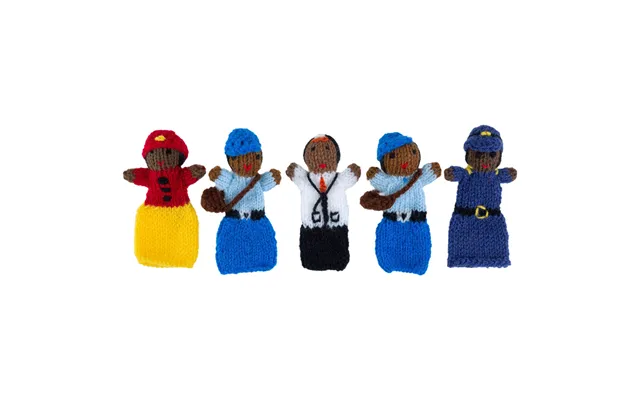
The reference selection includes the Occupational Finger Puppets - Set Of 5, a compact set designed around different occupations. Listed by GreaterGood.Com, this handmade set comes from the GreaterGood brand and is priced at $11.99, compared with a regular price of $12.95. It is a simple accessory, but like a handful of colorful building blocks, it can support countless ideas.
Finger puppets are small enough for children to hold and simple enough to use without complicated instructions. A child can place one on each finger and immediately begin creating a scene. That quick start matters because imaginative play works best when there are few barriers between an idea and the action.
A puppet theater does not always need a large stage or an elaborate setup. A blanket can become a curtain, a table can become a performance area, and a few finger puppets can become an entire cast. The Occupational Finger Puppets - Set Of 5 fits naturally into this kind of flexible play because the set is designed for all five fingers.
Five puppets can represent five different characters, five roles in one story, or a rotating cast for several short performances. Your child might create a workplace scene, invent a community adventure, or imagine what each character does during the day. The occupation theme gives stories a starting point without deciding exactly how those stories must unfold.
Think of the puppets as prompts rather than finished scripts. One character may become a helper in one story and an explorer in the next. Another might run a pretend business, solve a mystery, or join a completely fantastical adventure. The open-ended design leaves room for the child’s own voice.
The Occupational Finger Puppets - Set Of 5 is described as an assortment of occupations. Each set is handmade by artisans in Peru, adding a crafted quality to the product. Because the set focuses on occupations, it can encourage children to think about the many things people may do in their careers someday.
The product is listed at $11.99, with a regular price of $12.95. That price information comes from the supplied listing on ZoneOffer, which is a comparison site rather than a store. Shoppers can use the product details as a starting point while comparing options and deciding whether this style of puppet accessory suits their needs.
Occupation-themed puppets can connect pretend play with the world children see around them. A child may already recognize certain roles from family life, books, television, or visits around the community. Turning those ideas into characters can make play feel familiar while still leaving plenty of space for invention.
The theme also invites questions. What does each character do? Where do they work? Who do they help? What happens when two characters meet? These questions can become the spark for a puppet show, a conversation, or a collaborative game between children and adults.
Puppet play gives children a way to express ideas indirectly. A child who feels shy about speaking as themselves may feel more comfortable speaking through a character. The puppet becomes a friendly mask, helping the child experiment with dialogue, emotions, and different points of view.
Storytelling also encourages children to connect events in sequence. A character has a problem, meets another character, tries a solution, and reaches an ending. The story may be simple, silly, or wonderfully unpredictable, but the process helps children practice organizing their thoughts.
Finger puppets can encourage back-and-forth conversation. An adult can ask a character a question, and the child can answer in the puppet’s voice. Then the child can reverse the roles and interview an adult’s puppet. This creates a playful dialogue that feels more like a game than a lesson.
You can also introduce new descriptive words during play. Ask whether a character is helpful, busy, curious, careful, brave, or confused. Because the words appear inside a story, they have context. Instead of memorizing isolated terms, children hear and use language connected to action.
Performing with puppets allows children to rehearse ideas in a low-pressure setting. The audience may be a parent, sibling, stuffed animal, or even an empty chair. Over time, a child may become more willing to speak loudly, try new voices, and present a story from beginning to end.
There is no need to treat every puppet show like a formal performance. Sometimes the best play happens when the story changes every few seconds. Follow the child’s lead, respond to the characters, and let the scene grow naturally. A little encouragement can make the stage feel welcoming.
Start with a simple question: “What is happening today?” Each puppet can answer from its own perspective. One may be preparing for work, another may need help, and a third may have discovered an unusual problem. Soon, the characters have a reason to interact.
Another easy approach is to create a beginning, middle, and ending. In the beginning, introduce the characters. In the middle, give them a challenge. At the end, let them solve the problem or learn something new. The structure does not have to be perfect; it simply gives the story a gentle path to follow.
Try asking, “Who needs help?” or “What happens when all five characters meet?” You could also begin with a missing object, a sudden celebration, or a journey to an imaginary place. If your child gets stuck, offer two choices rather than taking over: “Should they visit the town or stay at home?”
Children can also assign each puppet a personality. One character might be energetic, one cautious, one humorous, and one thoughtful. These differences create natural dialogue. When characters disagree, children can decide how they work together, which adds another layer to the play.
You do not need a dedicated theater to enjoy finger puppets. Place a blanket over a table, use a doorway as a performance frame, or set up two cushions as the sides of a stage. The goal is to create a clear play area, not to build a complicated structure.
A small box can become a ticket booth, a desk, or a pretend workplace. Paper can serve as a backdrop, while drawings can show a town, a park, or an imaginary office. Keep the setup easy to change so the child can move from one story to another without waiting through a lengthy preparation process.
Everyday objects can become storytelling tools. A spoon might be a microphone, a piece of paper might be a map, and a cup might become a character’s pretend workplace item. When children help choose the props, they practice seeing familiar objects in new ways.
It is often better to offer a few flexible items than a crowded collection. Too many accessories can distract from the characters. With the Occupational Finger Puppets - Set Of 5, even a small selection of household objects can help create a complete scene.
Younger children may enjoy naming the occupations, copying voices, and making each puppet move. Keep the story short and use repetition. A familiar phrase or recurring action can help a child follow along and participate with confidence.
Older children may want to direct the entire performance. Encourage them to create character names, settings, and problems. They can also write a short script, draw a poster, or organize a puppet show for family members. The same set can support increasingly detailed play as storytelling skills develop.
Puppet theater play works well as a shared activity. One person can narrate while another controls the puppets. Children can divide roles, switch characters, or perform the same story in different ways. This creates opportunities to practice listening, taking turns, and responding to other people’s ideas.
Try leaving space for improvisation. If a child introduces a surprising character or changes the ending, accept the new direction. Collaborative storytelling is less about delivering a flawless show and more about building an idea together.
When comparing puppet accessories, consider how easily children can use them independently. Lightweight, straightforward designs tend to make spontaneous play easier. It is also helpful to think about whether the theme supports several kinds of stories rather than only one repeated scenario.
The Occupational Finger Puppets - Set Of 5 offers a clear occupation-based theme and a five-finger format. Its handmade description and Peruvian artisan origin may appeal to shoppers looking for a crafted puppet set with a distinct concept. As with any comparison, review the available listing details before making a purchase decision.
A good puppet accessory can act like a doorway. The theme invites the child in, while the open-ended format lets the child decide where to go. Occupation puppets can inspire realistic stories, humorous adventures, classroom-style play, or completely imaginary scenes.
Ask yourself what kind of play your child enjoys most. Do they like acting out familiar routines? Do they prefer making up unusual characters? Do they enjoy performing for others, or do they play quietly on their own? These questions can help you judge whether a particular puppet set is a good match.
Puppet play does not need to be reserved for special occasions. Keep the set in an accessible place so your child can reach for it during free play. A short, five-minute story can be just as valuable as a longer performance because creativity often grows through frequent small experiments.
You can create a recurring puppet theater tradition by choosing a “story of the day.” One day, the characters may solve a problem. Another day, they may interview one another. On a different day, they may simply sing, greet the audience, or describe their pretend jobs.
Change the setting to refresh familiar characters. The same puppets can appear at home, in a town, on a journey, or in a make-believe workplace. You can also invite children to swap personalities: the quiet character becomes bold, while the confident character faces a challenge.
Use questions to extend the story without controlling it. “What does that character need?” “Who can help?” “What will happen next?” These prompts keep the child thinking while preserving ownership of the performance.
The supplied listing identifies the product as the Occupational Finger Puppets - Set Of 5. It names GreaterGood.Com as the store and GreaterGood as the brand. The listed price is $11.99, while the regular price is $12.95. These are the specific pricing details provided in the reference data.
ZoneOffer helps shoppers compare products and listings; it is not the seller of the puppet set. Since product information can change, review the current comparison listing for the latest details before deciding. Avoid assuming that a product’s theme or format will meet every child’s preferences—consider the child’s interests and how they usually play.
The Occupational Finger Puppets - Set Of 5 offers a simple foundation for creative storytelling. With five occupation-themed finger puppets, children can explore characters, conversations, careers, and imaginative problems in their own way. Listed at $11.99 compared with a regular price of $12.95, the set is a focused option for shoppers exploring puppet theater accessories through ZoneOffer, a comparison site. Add a makeshift stage, a few open-ended questions, and an audience ready to listen, and a small set of puppets can become the beginning of a much bigger world.