

Gas Detectors price list
Last updated Tuesday, Nov 3, 2026





Loading...
Last updated Tuesday, Nov 3, 2026
Gas detectors can turn a difficult troubleshooting job into a much clearer process. Instead of relying only on smell, guesswork, or visible signs, the right sensor can help identify gases that are otherwise difficult to locate. For technicians, maintenance teams, and hands-on homeowners, a detector can act like a flashlight for invisible refrigerant leaks.
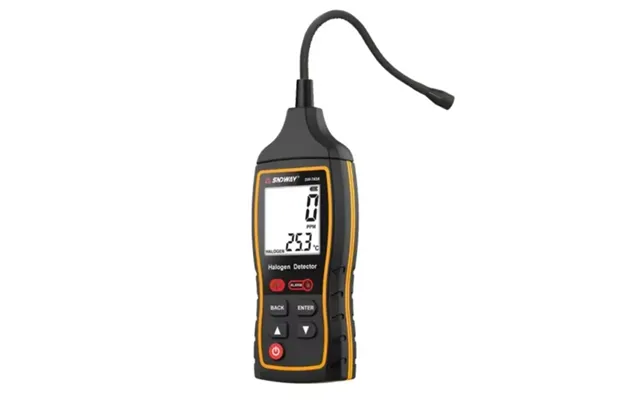
The SNDWAY SW-743A Halogen Leak Detector is designed specifically for detecting refrigerant leaks in air-conditioning and cooling systems. Listed on Banggood.com under the SNDWAY brand, this handheld device combines a liquid crystal display, adjustable detection capability, and a stated sensitivity of 1 ppm. It is intended for refrigerants such as CFCs, HCFCs, and HFCs, making it a focused tool rather than a general-purpose household gas alarm.
In this guide, we will look at what the detector is designed to do, the types of refrigerants it can identify, how its sensitivity may help during inspection, and what to consider before comparing this product with other gas detection tools. ZoneOffer is a comparison site, so you can use the product information as a starting point when reviewing your options.
The SNDWAY SW-743A is a halogen leak detector for refrigerants used in air-conditioning and cooling equipment. Its stated detection range is 0 to 1,000 ppm, while its listed resolution is 1 ppm. That combination gives the device a way to display changing gas concentration while you search around likely leak points.
Think of the detector as a digital nose for certain refrigerants. It does not replace proper service procedures, but it can provide a measurable signal when a leak is present. The device also includes an LCD, which displays information related to gas concentration, battery power, and the unit’s operation.
Because this product is aimed at halogen refrigerants, it is important to match the detector to the substance you are looking for. A specialized refrigerant detector is not automatically the right tool for every gas-related task. Before buying, consider the equipment you service and the refrigerant types involved.
One of the main strengths described for the SW-743A is its broad refrigerant coverage. The product information states that it can detect CFCs, HCFCs, and HFCs. It specifically references R11, R12, R22, and R134a.
This range may be useful when a technician works with more than one type of cooling or air-conditioning system. Instead of selecting a detector for only one named refrigerant, you can review a tool that is presented as covering several refrigerant families and examples.
The terms CFC, HCFC, and HFC describe different groups of refrigerants. The SNDWAY SW-743A’s listed coverage across these groups is relevant because older and newer systems may use different refrigerant formulations. A detector with broader stated coverage can simplify equipment checks when the exact refrigerant varies between applications.
Still, broad coverage should not be confused with universal gas detection. The information supplied for this product focuses on halogen refrigerants. If you need to detect another category of gas, check whether the product is designed for that purpose rather than assuming that every gas detector works in the same way.
The SW-743A is listed with 1 ppm sensitivity and a 0 to 1,000 ppm detection range. In simple terms, the range describes the concentration window the display is intended to show, while the sensitivity specification indicates the small concentration changes the detector is designed to recognize.
The product information also states that it can identify leaks as small as 0.5 ounces per year, or 14 grams per year. That detail is especially relevant when you are inspecting a system with a slow leak. Small leaks can be frustrating because they may not create an obvious visible sign, yet they can still affect performance over time.
A sensitive detector can help narrow your search. You might move the sensor around connection points, tubing, valves, or other areas where refrigerant could escape, watching for changes on the display. The detector provides information, while the technician still needs to interpret the reading and follow appropriate safety and service practices.
Large leaks may be easier to locate, but slow leaks can behave like a dripping faucet hidden behind a wall: the problem may be real even when the evidence is subtle. The SW-743A’s stated ability to detect small leaks gives it a clear role in detailed inspection work.
Early identification may help you focus attention before a minor issue becomes more difficult to troubleshoot. However, the product data does not provide a guarantee that every leak will be found in every situation. Environmental conditions, access to the equipment, airflow, and the location of the leak can all affect a practical inspection.
Speed matters when you are checking multiple points on an air-conditioning or refrigeration system. According to the supplied information, the SW-743A has a warm-up time of 30 seconds and a response time of less than 10 seconds.
The warm-up period is the time needed before beginning the inspection. Once the detector is ready, the stated response time suggests that it can react quickly when it encounters a detectable refrigerant concentration. That can make it easier to move methodically around a system without waiting too long at every location.
Picture the process as scanning a room with a flashlight. The 30-second warm-up is like switching the flashlight on and allowing it to reach full brightness. The response time is how quickly the beam helps you notice something as you move it across the area. A shorter response time can make the search feel more fluid, especially when inspecting several joints or components.
The product includes an LCD with automatic backlighting. The display is described as showing gas concentration, battery power, and related operating information. An automatic backlight can be helpful when lighting conditions change during a service task.
A clear display matters because gas detection often involves looking at the instrument while also positioning the sensor carefully. If you can quickly review the concentration reading and battery status, you can spend more attention on the equipment being inspected rather than trying to interpret a difficult screen.
The gas concentration reading is the central piece of information during a leak search. Battery information is also useful because a detector is only practical when it has enough power for the inspection. The display’s backlighting is intended to improve visibility without requiring a separate light source.
As with any measuring instrument, the display should be treated as a guide to the detected concentration rather than the complete diagnosis. A changing reading may indicate that you are near a source, but you should still confirm the situation using suitable professional procedures.
A halogen leak detector can be useful in air-conditioning and refrigeration maintenance. The SW-743A is specifically described for car refrigerants, AC systems, Freon, CFCs, HCFCs, and HFCs. That makes it relevant to inspections where the goal is to locate refrigerant escaping from a system.
Technicians may use this type of instrument when checking suspected leak areas. A scan can help direct attention toward components that deserve closer inspection. For a homeowner, the tool may be most useful when working alongside someone familiar with air-conditioning or refrigeration service rather than as a standalone solution.
Its value is greatest when the detector is paired with a careful inspection routine. Start with the equipment’s likely leak points, move the sensor steadily, and pay attention to changes rather than rushing from one area to the next. A calm, organized search is usually more useful than waving the detector randomly.
The SW-743A combines several features that support portable inspection: a handheld format, an LCD, automatic backlighting, a stated 30-second warm-up, and a response time of less than 10 seconds. Together, these details point toward a tool intended for active field checking rather than passive monitoring.
Its design appears focused on finding a source during a service visit. That is different from a permanent alarm installed in a room. A portable leak detector is something you carry to the equipment, position near suspected areas, and use while diagnosing a problem.
Portable detectors and fixed alarms serve different purposes. A portable instrument helps you investigate a particular system or location. A fixed monitor, by contrast, is installed in one place to watch that environment. The supplied information describes the SNDWAY SW-743A as a handheld halogen leak detector, so its role is inspection.
Understanding that distinction can help you compare products more accurately. Ask yourself: do you need to locate a refrigerant leak, or do you need continuous monitoring in a specific room? The answer will guide you toward the right type of gas detection equipment.
When comparing gas detectors, begin with the gas type. The SW-743A is described for halogen refrigerants, including CFCs, HCFCs, and HFCs. If your application involves one of the listed refrigerant types, that coverage is an important point to review.
Next, examine sensitivity and range. This model is listed with 1 ppm sensitivity, a 0 to 1,000 ppm range, and detection of leaks as small as 0.5 ounces per year. These specifications help describe the instrument’s intended measurement capability.
Response time and usability also deserve attention. The SW-743A’s stated warm-up time is 30 seconds, with a response time of less than 10 seconds. Its LCD and automatic backlight may make readings easier to follow during an inspection.
Finally, consider how you plan to use the detector. A tool intended for occasional household troubleshooting may be judged differently from one used regularly in professional service work. The right choice should match the refrigerants, equipment, inspection frequency, and level of measurement detail you need.
The reference information lists the SNDWAY SW-743A under the SNDWAY brand at Banggood.com. The listed price is $98.00. This information comes from the supplied comparison data and should be checked again when reviewing the offer, since product listings can change.
ZoneOffer is not the seller. It is a comparison site that presents product information to help shoppers evaluate available options. When comparing the SW-743A with other gas detectors, focus on the specifications that matter to your application instead of looking only at the headline price.
A lower-cost detector may not provide the same detection range or sensitivity, while a more expensive model may include features you do not need. The most useful comparison is not simply “Which one costs less?” but “Which one fits the job I actually need to do?”
Using a detector effectively is partly about technique. Allow the instrument to complete its stated 30-second warm-up before beginning. Then move through the system in an orderly way, giving the detector time to respond as you inspect likely areas.
Watch for changes in the displayed concentration. If the reading rises as you approach a component and falls as you move away, that pattern may help narrow the search. The detector’s less-than-10-second response time is designed to support this kind of moving inspection.
Do not let a digital reading replace judgment. Treat the detector as one part of the troubleshooting process. The instrument can point you toward a possible leak, while proper service methods are needed to evaluate and address the equipment safely.
The SNDWAY SW-743A stands out as a specialized refrigerant leak detector with a stated 1 ppm sensitivity, a 0 to 1,000 ppm range, and coverage for CFCs, HCFCs, and HFCs, including R11, R12, R22, and R134a. Its ability to detect leaks as small as 0.5 ounces per year, along with a 30-second warm-up and response time of less than 10 seconds, gives it a focused role in air-conditioning and refrigeration inspection. The LCD and automatic backlight add practical visibility during use. If those specifications match your equipment and goals, this SNDWAY model is worth including in your comparison. ZoneOffer helps you review such options, while the final buying decision should depend on the refrigerants you need to detect and the type of work you plan to perform.