

Dollies & Hand Trucks price list
Last updated Saturday, Oct 17, 2026




View 7 Offers

Loading...
Last updated Saturday, Oct 17, 2026
Moving heavy items does not have to feel like a wrestling match. The right dolly, hand truck, trolley, or wheelbarrow can turn an awkward load into a manageable job. Whether you are transporting tools, garden materials, equipment, luggage, or a portable power station, choosing the correct type of rolling support can protect your back and make every trip more efficient.
This guide explores the products listed in the Dollies and Hand Trucks category, including the Bluetti Trolley Cart, Jackson wheelbarrows, tool trolleys, and other rolling products. ZoneOffer is a comparison site, so the prices and product details below are presented to help you compare options rather than to suggest that ZoneOffer sells them directly.
A dolly acts like an extra pair of strong legs. Instead of lifting an entire load, you can place much of its weight on wheels and guide it across the floor, driveway, workshop, or yard. This simple change can make bulky items easier to move and can reduce the strain caused by repeated lifting.
Hand trucks are especially useful for upright loads, boxes, equipment cases, and compact appliances. Platform carts are often better for wider or lower items, while wheelbarrows are designed for loose materials such as soil, mulch, and construction debris. The best choice depends on the shape of the load as much as its weight.
Think of each moving tool as a different type of vehicle. A hand truck is like a narrow delivery van: it handles tall, compact loads well. A platform trolley is more like a small flatbed, giving you a stable surface for equipment. A wheelbarrow is closer to a rugged outdoor carrier, built for uneven ground and loose materials.
Before comparing prices, ask yourself a few practical questions. Will you work indoors or outdoors? Do you need to navigate narrow doors? Is the load solid, boxed, loose, or oddly shaped? Will you store the equipment in a crowded garage? These answers can quickly narrow the field.
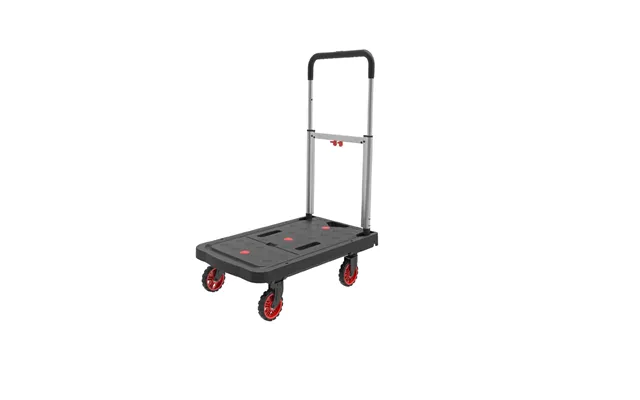
The Bluetti Trolley Cart is designed for several Bluetti power station and battery models, including the AC200P, AC200MAX, AC300, B300, B230, EB70, EB55, and EB150. Its listed design includes an anti-slip platform, a foldable frame, and universal wheels.
The cart is listed with a weight capacity of 330 pounds, which gives it a useful role when moving compatible generators or power equipment. Its foldable construction may also appeal to people who do not want a full-size cart taking over a storage area.
When folded, the Bluetti Trolley Cart is described as measuring about 26 by 16 by 3 inches and weighing 13.6 pounds. Those measurements make storage a central part of its appeal. You might slide it beside a cabinet, store it in a vehicle, or keep it against a workshop wall when it is not in use.
Its listed price is $189, compared with a listed regular price of $449. That difference is worth checking carefully when comparing offers, since prices can change. The key point is that this cart combines a 330-pound capacity with a foldable format, making it a focused choice for compatible power equipment rather than a general-purpose yard carrier.
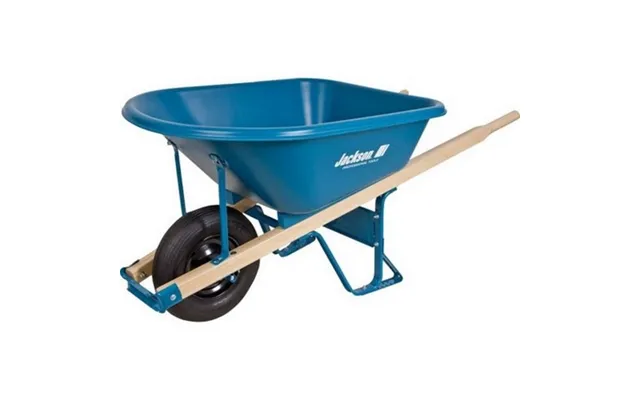
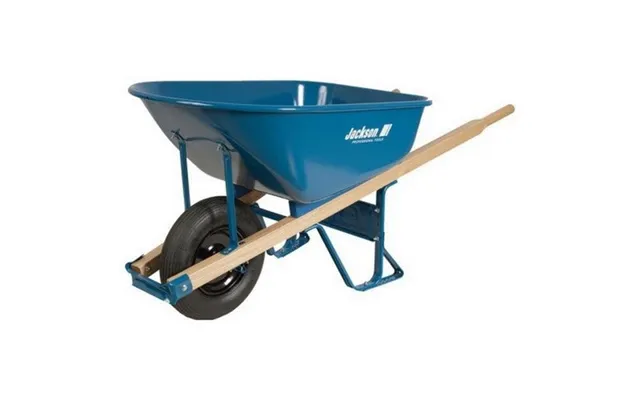
The reference data includes two Jackson wheelbarrows for contractors: a poly wheelbarrow listed at $333.04 and a steel wheelbarrow listed at $285.18. Both are described as having blue coloring, while the poly model is listed with a 5.75-cubic-foot capacity and the steel model with a 6-cubic-foot capacity.
These wheelbarrows are not the same as compact hand trucks. Their single-wheel format and deep basin design are intended for carrying loose materials. If your project involves landscaping, construction, or general outdoor work, that distinction matters. A flat platform may hold boxes securely, but it cannot contain a load of soil in the same way a wheelbarrow can.
A poly wheelbarrow can be attractive when you want a basin-style carrier with a non-metal body. A steel wheelbarrow may appeal when you prefer a metal construction. The reference data identifies the materials, capacities, and listed prices, but it does not provide additional specifications about tire design, handles, or exact load limits.
That means you should compare the product details carefully before choosing. Consider the type of material you will carry, the size of your work area, and how frequently the wheelbarrow will be used. A homeowner clearing garden beds may have different priorities from a contractor moving materials throughout the day.
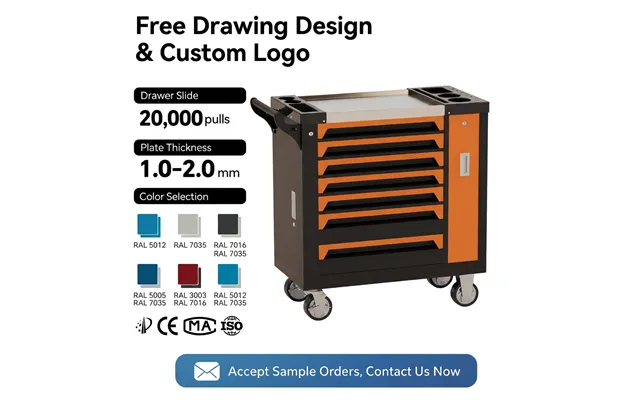
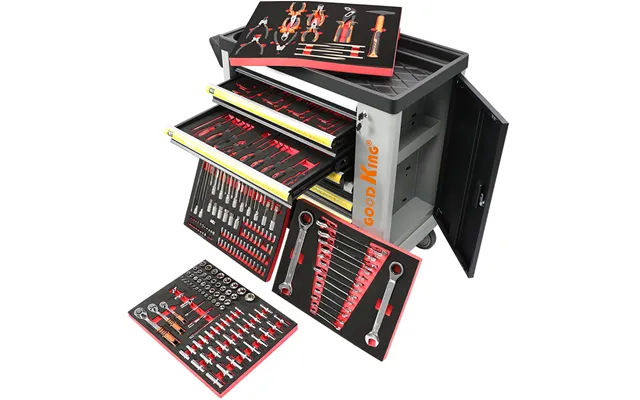
The listed Factory Direct Sale Super Rolling Metal Tool Trolley is described as a rolling metal tool cabinet or tool chest for car repair and garage use. Its listed price is $118. The data does not include a brand, dimensions, drawer count, weight capacity, or specific wheel information.
Another listing is titled Kitchen Mobile Trolley for Clean Mechanic Tool Cart Craftsman Work Bench, with a listed price of $300. Its title suggests a mobile work-support role, but the reference data does not provide enough detail to confirm its construction, storage layout, capacity, or intended environment.
For a workshop trolley, storage design can be just as important as rolling ability. Drawers, shelves, a working surface, and a locking mechanism can affect how useful the cart feels during a repair. However, you should only rely on specifications that the seller provides for the exact listing.
Look for information about overall dimensions, caster type, maximum load, drawer measurements, and assembly requirements. If those details are not shown, treat the listing as a starting point for research rather than a complete buying decision. A low price can be appealing, but the cart still needs to fit your tools and workspace.
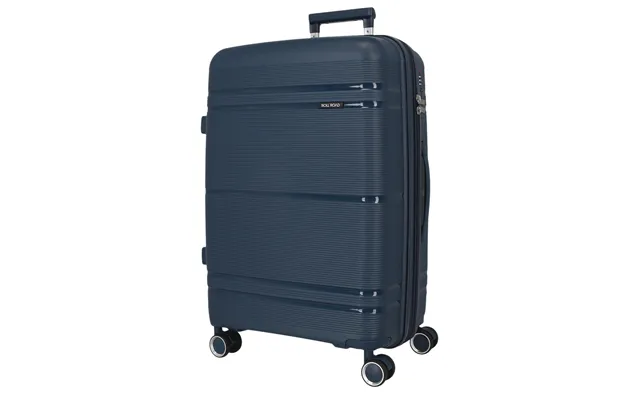
The Roll Road Trolley 75cm C Exp. 4r. Universe is described as a large navy-blue trolley case made from polypropylene. The listed dimensions are approximately 29.00 by 19.69 by 11.42 inches after conversion from the supplied measurements. Its listed capacity is about 3,728 cubic inches, and its listed weight is approximately 10.1 pounds.
The case is listed at $145.60, with a listed regular price of $205. It is not a workshop hand truck or a garden carrier, but it belongs to the broader family of wheeled products that make transportation easier. Its four-wheel design, as indicated by the product title, is suited to moving a packed case rather than carrying loose building supplies.
A rolling case can be useful when the load is personal gear, clothing, or other packed belongings. The enclosed format helps keep the contents together, while the wheels reduce the need to carry the full case. By contrast, an open dolly is generally more flexible for boxes and equipment but may require straps or other methods to secure the load.
When comparing a trolley case with a hand truck, focus on the purpose. Are you trying to move a container that already holds your belongings, or do you need a reusable platform for many different objects? The answer will tell you which format is more practical.
The Ware Manufacturing Roll-n-around Medium is listed as a one-count product at $10.24. Its description refers to a clear see-through running area and a brightly colored door, and it identifies the product as being designed for small pets.
Although this item appears in the broader rolling-products data, it is not a conventional dolly or hand truck for moving boxes, tools, or construction materials. It should therefore be evaluated according to its stated small-pet purpose rather than compared directly with a contractor wheelbarrow or tool cart.
Category pages can bring together products that share a rolling or trolley-related theme but serve completely different users. That is why reading the title and description is essential. A product may have wheels, yet still be unsuitable for transporting heavy loads.
Use the same principle throughout your search: start with the task, then choose the equipment. If you need to move a power station, examine a compatible equipment cart. If you need to carry soil, consider a wheelbarrow. If you need organized tool storage, focus on a workshop trolley.
Capacity is more than a number. A cart rated for 330 pounds may be suitable for a compatible power station setup, but that does not automatically mean it is ideal for every load of the same weight. Balance, platform size, wheel placement, and the shape of the item can all influence handling.
Start by estimating the total weight of the load, including cases, accessories, packaging, or tools. Then consider whether that weight will sit evenly. A tall item may be harder to control than a low, compact one even when both weigh the same.
Imagine pushing a shopping cart filled evenly from bottom to top. It usually feels stable. Now imagine placing everything at the very top. The cart may become awkward even if the total weight has not changed. The same idea applies to hand trucks, carts, and trolleys.
For narrow spaces, overall width and turning ability matter. For outdoor work, ground conditions become more important. For storage, folded dimensions can be a major advantage. The Bluetti Trolley Cart, for example, is specifically listed as foldable, while the available data does not provide equivalent folded dimensions for the tool trolleys or Jackson wheelbarrows.
Indoor moving often demands compact dimensions, controlled rolling, and easy storage. A tool trolley can help keep workshop equipment mobile, while a specialized cart can make heavy electronics easier to reposition. Smooth floors may also make smaller wheels practical, although the reference data does not specify wheel materials or floor recommendations for the listed products.
Outdoor work presents a different challenge. Soil, gravel, grass, and uneven pavement can make a loaded cart harder to control. The Jackson wheelbarrows are the most clearly outdoor-oriented options in the supplied data because their descriptions identify them as contractor wheelbarrows.
A simple shortlist can prevent an expensive mismatch. Write down your load type, estimated weight, largest object dimensions, route, storage location, and how often you expect to use the equipment. Then compare each listing against those needs.
For example, the Bluetti Trolley Cart may suit someone moving compatible power equipment and needing a foldable design. The Jackson models may suit outdoor material handling. The rolling metal tool trolley may suit a garage, while the Roll Road product is a packed travel case rather than a worksite carrier.
The reference data shows different price points across the category. The Ware Manufacturing Roll-n-around Medium is listed at $10.24, while the Factory Direct Sale Super Rolling Metal Tool Trolley is listed at $118. The Roll Road Trolley is listed at $145.60, the Bluetti Trolley Cart at $189, the Jackson Steel Wheelbarrow at $285.18, the Kitchen Mobile Trolley at $300, and the Jackson Poly Wheelbarrow at $333.04.
Two listings also include regular prices for comparison. The Roll Road Trolley shows a listed regular price of $205, and the Bluetti Trolley Cart shows a listed regular price of $449. These figures should be treated as listing information, not as a guarantee that the same pricing will remain available.
The cheapest rolling product is not necessarily the best value if it cannot handle your load or fit your workspace. A lower-cost item may be appropriate for a light, specific task, while a higher-priced model may provide a capacity or design that better matches demanding work.
Compare the product’s purpose, materials, capacity, portability, and storage needs alongside the price. In other words, do not judge a tool by its wheels alone. The right match can save time and effort long after the initial purchase.
Keep the load centered and secure it whenever it could shift. Move slowly around corners, ramps, and door thresholds. If the route includes stairs, do not assume a rolling product is designed for them unless the listing clearly says so.
Pay attention to your posture. Push when practical rather than pulling, keep your path clear, and avoid placing your hands where they could be caught between the cart and a wall. For outdoor carriers, check the ground before loading; loose gravel or a hidden rut can change how the equipment behaves.
Before moving a heavy item, examine the wheels, platform, handles, fasteners, and any straps or doors. Look for visible damage or anything that seems loose. The supplied data does not provide inspection schedules or maintenance instructions for the listed products, so follow the instructions supplied with the individual item.
ZoneOffer is a comparison site that brings product listings together so shoppers can review different choices in one place. It is not a store, and it does not replace the product information supplied by the listed seller.
Use the comparison process to identify the products that deserve closer inspection. Check the full listing for current specifications, price details, and any information not included in the reference data. This is especially important for products such as tool trolleys, where dimensions, capacity, and storage features are not provided in the available description.
The best dolly, hand truck, trolley, or wheelbarrow is the one that matches your actual moving task. The Bluetti Trolley Cart stands out for its foldable design, 330-pound listed capacity, and compatibility with specified Bluetti equipment. The Jackson wheelbarrows focus on contractor-style outdoor work, while the listed tool trolleys target garage or workshop use. The Roll Road Trolley serves as a large wheeled travel case, and the Ware Manufacturing product has a small-pet purpose rather than a heavy-load function. Compare each listing carefully, focus on fit and capacity, and use ZoneOffer as a comparison resource while verifying current details with the relevant seller.