

Generator Accessories price list
Last updated Wednesday, Nov 11, 2026

View 10 Offers

Loading...
Last updated Wednesday, Nov 11, 2026
A portable generator or power station is only as useful as the connections that help you charge it, move power, and stay ready for changing conditions. The right accessory can act like a bridge between your vehicle, solar equipment, and portable power system. In this guide, we explore three AllPowers generator accessories listed on ZoneOffer, a comparison site that helps you review product options and prices in one place.
The featured products include a DC5525-to-Anderson adapter cable, a car cigarette lighter cable, and a car charger-to-XT60 cable. Each one is designed for a different connection setup, so choosing the best option depends on the input your power station uses and the output available from your vehicle or other equipment. Ready to find the right match?
Generator accessories may look simple, but a suitable cable can make a major difference in how easily you use a portable power system. Think of the cable as a roadway: the connectors are the entrances and exits, while the wire carries the electrical traffic between them. If the ends do not match, the system cannot work as intended.
These cables can help connect portable power equipment to a car outlet, a solar setup, or a compatible Anderson-style connector. They may also make your kit more adaptable when you are camping, traveling, preparing for an outage, or working away from a standard wall outlet.
Before selecting an accessory, check the connector type, voltage requirements, polarity, and supported current. A few minutes of preparation can help you avoid buying a cable that does not fit your equipment.
The reference data includes three ALLPOWERS products, all listed through the allpowers store. ZoneOffer is a comparison site rather than a store, so you can use the information to compare the available accessories and identify which design best suits your setup.
The products cover several common connection needs. The first is an adapter with a DC5525 male connector and an Anderson connector. The second is a car cigarette lighter cable that also uses a DC male connection and an Anderson-style connector. The third connects a car cigarette lighter outlet to an XT60 input.
Prices in the supplied data are $29.99 for the DC5525 adapter cable, $35.99 for the car cigarette lighter cable, and $38.99 for the car charger-to-XT60 cable. These listed prices can help you compare the options, but always review the current listing before making a purchase decision.
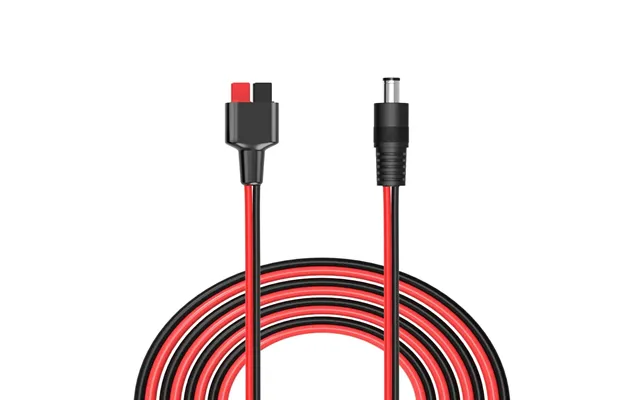
The ALLPOWERS DC5525 5.5mm x 2.5mm to Anderson connector adapter cable is listed at $29.99. It features a red-and-black cable, a 4.9-foot length, and a 12-gauge copper wire design according to the supplied product information.
This adapter supports a voltage range of 12 to 24 volts, current up to 18 amps, and power up to 250 watts. One end uses a 45A connector, while the other end uses a DC5.5 male connector. That combination makes it a practical option when your equipment uses a compatible DC input and you need to connect it with an Anderson-style power connection.
The product description also states that the cable works with mating 15A, 30A, and 45A Power Pole connectors. Its weatherproof construction is designed to handle extreme heat and cold, which may be useful when your power setup operates outdoors.
Polarity is especially important with this accessory. The supplied information identifies the red cable as positive and the black cable as negative. Before connecting the adapter, check the positive and negative poles on your solar panel connector or compatible equipment carefully.
Why does this matter? Connecting a cable without confirming polarity is like trying to fit a key into a lock upside down. The connection may not function correctly, and incorrect wiring can create equipment risks. Always compare the cable markings with the markings on the device you plan to connect.
The ALLPOWERS car cigarette lighter cable is listed at $35.99. It is designed with a DC male power plug on one side and an Anderson cable connection on the other. The product description identifies a 4.9-foot cable length and heavy-duty 16-gauge copper wire.
This accessory is intended for setups that use a vehicle cigarette lighter outlet as the power source. It can connect that outlet to compatible portable power equipment through an Anderson-style connector. The description also says it works with mating 15A, 30A, and 45A Power Pole connectors.
For road trips, camping, or emergency preparation, this type of cable can help you use a vehicle as part of your portable charging arrangement. The cable is also described as weatherproof and suitable for use in extreme heat and cold, giving it a design suited to outdoor environments.
Car charging can be convenient when you are away from a household outlet. Your vehicle becomes a mobile power source, and a compatible cable helps transfer that power to a portable generator or power station. However, the connector must match the input on your equipment.
The two car-oriented accessories in this selection use different connection designs. The car cigarette lighter cable leads to an Anderson-style connection, while the car charger-to-XT60 cable ends in an XT60 connector. That difference is the key detail to consider.
Before choosing between them, look at your power station and identify the input port. If it accepts an Anderson-style connection, the first car cable may be the better match. If it uses an XT60 input, the XT60 version may be more suitable. The product name alone is not enough; your equipment’s port determines compatibility.
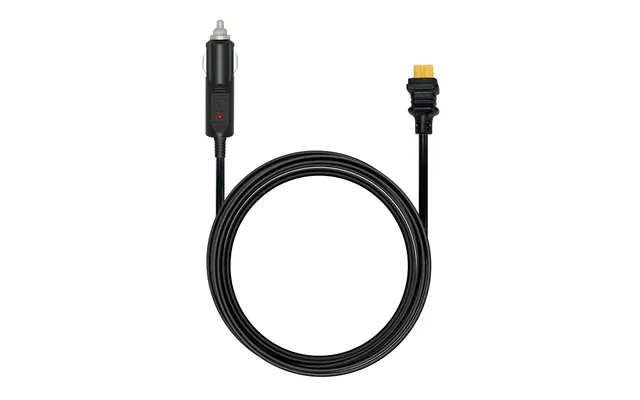
The ALLPOWERS car charger to XT60 cable is listed at $38.99. It measures 4.9 feet and connects a vehicle cigarette lighter outlet to an XT60 connector. The description says it is suitable for car outputs of 12 volts and truck outputs of 24 volts.
This cable is designed for charging an XT60-input solar generator or power station from a vehicle. Its tinned brass conductor is intended to help minimize power loss and improve charging efficiency. The product information also describes a flexible construction, a durable rubber exterior, and an IP68 waterproof shell.
That combination may appeal to people who spend time outdoors and want a cable that is easier to manage in changing conditions. Whether you are traveling, camping, or keeping an emergency power kit ready, a flexible 4.9-foot cable can offer useful reach without becoming excessively cumbersome.
The product description states that the car charger-to-XT60 cable can adapt automatically to 12-volt or 24-volt vehicle output. This makes it relevant for both cars and trucks, provided that your equipment and charging setup are compatible with the stated specifications.
Still, automatic adaptation does not remove the need to check your equipment. You should confirm the input requirements of the power station, inspect the XT60 connector, and make sure the vehicle outlet is suitable for the intended use. Compatibility is a team effort between the cable, the vehicle, and the power station.
At a glance, the three accessories may seem similar because they all support portable power connections. Their connector types and intended uses set them apart. Comparing them side by side can make the decision much easier.
The DC5525-to-Anderson cable is listed at $29.99 and supports 12 to 24 volts, up to 18 amps, and up to 250 watts. It has a 45A connector on one end and a DC5.5 male connector on the other. This option may suit equipment that uses a compatible DC input and Anderson-style connection.
The car cigarette lighter cable is listed at $35.99. It uses a car cigarette lighter connection and an Anderson-style cable connection, with a 4.9-foot length and 16-gauge copper wire. It may be useful when your vehicle is the charging source and your equipment accepts the matching connector.
The car charger-to-XT60 cable is listed at $38.99. It connects a cigarette lighter outlet to an XT60 input, supports car and truck output descriptions of 12 and 24 volts, and includes features such as a tinned brass conductor and an IP68 waterproof shell.
Start with the port on your portable generator or power station. If the input is DC5.5, the first accessory may be the relevant option. If the input is XT60, the third cable may be the more appropriate choice. If you need an Anderson-style connection from a vehicle outlet, examine the second cable.
Next, identify your power source. A car cigarette lighter outlet points toward one of the vehicle charging cables, while a solar or DC connection may point toward the DC5525 adapter. Finally, compare the voltage, current, power, polarity, and connector details.
Do not choose solely by price. The lowest-priced cable is not automatically the best value if its connector does not match your equipment. A correct fit is the foundation of a useful generator accessory.
Portable power equipment often travels through less-than-perfect conditions. Cables may be packed in a vehicle, used at a campsite, placed near outdoor equipment, or exposed to changing temperatures. A durable exterior can therefore be an important consideration.
The DC5525-to-Anderson cable and the car cigarette lighter cable are described as weatherproof and designed to withstand extreme heat and cold. The XT60 cable is described with a durable rubber skin and an IP68 waterproof shell. These details may make the accessories more appealing for outdoor use.
Durability does not mean you can ignore basic care. Avoid sharply bending the cable, pulling it by the connector, or storing it under unnecessary pressure. Coil it loosely and keep the connection points clean. A cable is a little like a hiking boot: strong materials help, but sensible handling still extends its usefulness.
When you use several generator accessories, organization becomes more than a cosmetic concern. Clearly separating DC, Anderson, and XT60 cables can help you select the right lead quickly. Labeling the cables according to their connector types may also reduce confusion during a power outage or outdoor activity.
It is also wise to inspect the cable before use. Look for damaged insulation, bent connector parts, loose terminals, or signs of wear. If anything appears unusual, pause and verify the cable and equipment before connecting them.
Specifications tell you how a cable is intended to be used. The first product lists 12 to 24 volts, 18 amps, and 250 watts. The second emphasizes 16-gauge copper wire and a 4.9-foot length. The third highlights 12-volt car and 24-volt truck outputs, a tinned brass conductor, and an XT60 connection.
Wire gauge can help you understand the cable’s construction, but it should not be treated as the only measure of compatibility. The connector type and the electrical requirements of your equipment are equally important. Think of the specification list as a puzzle: every piece needs to fit.
Length matters, too. All three listed cable descriptions reference a 4.9-foot length. That can provide useful distance between a vehicle or power source and a portable power station, but you should still plan where each device will sit before connecting them.
Voltage describes the electrical pressure, current describes the flow, and power represents the overall electrical output. The DC5525 adapter specifically lists support for 12 to 24 volts, up to 18 amps, and up to 250 watts. These figures should be compared with the requirements of the equipment you intend to connect.
For the vehicle cables, the supplied information identifies compatibility with 12-volt car output and 24-volt truck output for the XT60 model. Even when a cable is designed for these source levels, the receiving power station must also support the connection. Check both sides before use.
A generator accessory kit can give you more ways to use portable power when your normal routine changes. A vehicle charging cable may be helpful during travel, while an adapter cable can support a different connector arrangement. Together, the right accessories can make a power station more flexible.
Consider where you expect to use your equipment. A camping kit might prioritize weatherproof construction and flexible cable handling. A roadside emergency kit might focus on vehicle compatibility. A solar setup may require careful attention to polarity and the correct DC connector.
You do not need every cable simply because it is available. Choose accessories based on the connections you actually use. A focused kit is often easier to manage than a box filled with mismatched parts.
ZoneOffer helps you compare product information; it is not a store and does not sell these accessories directly. When reviewing the listings, compare the product title, connector types, specifications, construction details, brand, and listed price.
The three featured accessories are all from ALLPOWERS and are listed through the allpowers store in the supplied data. The listed prices range from $29.99 to $38.99. Use those figures as a comparison reference and verify the current listing details before proceeding.
A simple comparison process can save time. First, match the connector. Second, confirm electrical requirements. Third, consider the cable’s length and construction. Finally, compare the listed price. This approach keeps the decision practical instead of turning it into a guess.
The right generator accessory can make portable power easier to use, whether you are charging from a vehicle, connecting an Anderson-style system, or working with an XT60-input power station. The ALLPOWERS DC5525-to-Anderson adapter, car cigarette lighter cable, and car charger-to-XT60 cable each serve a distinct connection need. Compare the connector, voltage, current, polarity, length, and construction details carefully on ZoneOffer, then choose the cable that matches your equipment rather than simply choosing the cheapest option.