

Computer Racks & Mounts price list
Last updated Saturday, Oct 17, 2026





View 20 Offers




Loading...
Last updated Saturday, Oct 17, 2026
Choosing the right computer rack or mount can transform a crowded wiring area into a cleaner, more manageable workspace. Whether you are organizing patch panels, switches, shelves, cable runs, or other rack-mounted equipment, the right support system gives every component a logical place. It is a little like arranging a workshop: when each tool has a home, maintenance becomes easier and the entire setup works more smoothly.
This guide explores the computer racks and mounts listed in the reference data, with a focus on capacity, installation style, cable management, shelves, and space planning. The products are ICC items unless otherwise noted, and the listed offers are shown through The Twister Group. ZoneOffer is a comparison site, so it helps you compare products and listed prices rather than acting as the seller.
Rack capacity is commonly measured in rack mount spaces, often shortened to RMS or U. One rack mount space represents a standard vertical portion of a rack. As the number increases, the rack can accommodate more equipment or larger combinations of shelves, panels, and components.
The reference data includes compact options such as the ICC ICCMSWMUR5 wall-mount utility rack with 5 RMS, as well as larger choices including the ICC ICCMSWMR30 wall-mount rack with 30 RMS. Between those sizes are 8 RMS, 12 RMS, 15 RMS, and 25 RMS products. Thinking about your current equipment and future additions can help you avoid choosing a rack that feels cramped shortly after installation.
A rack should not be treated like a suitcase that must be filled completely. Leaving some open space can make cable routing, equipment access, and later upgrades easier. If you expect to add switches, patch panels, shelves, or cable management accessories, a little spare capacity may be more useful than selecting the smallest possible frame.
At the same time, a very large rack may be unnecessary for a compact installation. The ICC ICCMSWMUR5 is designed for up to 5 RMS and accommodates rack-mounted patch panels, 110 blocks, networking hubs, and switches. It is positioned in the reference data as an economical utility option for smaller installations.
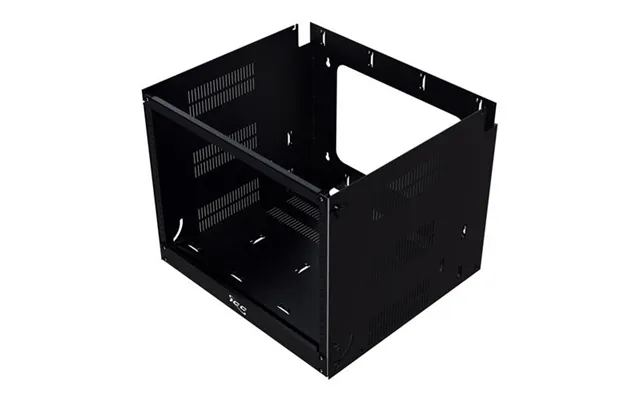
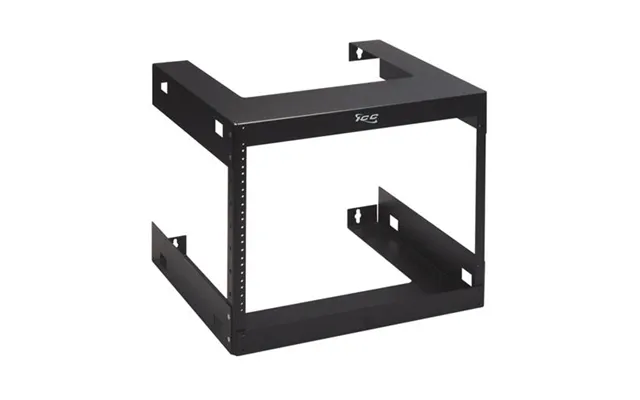
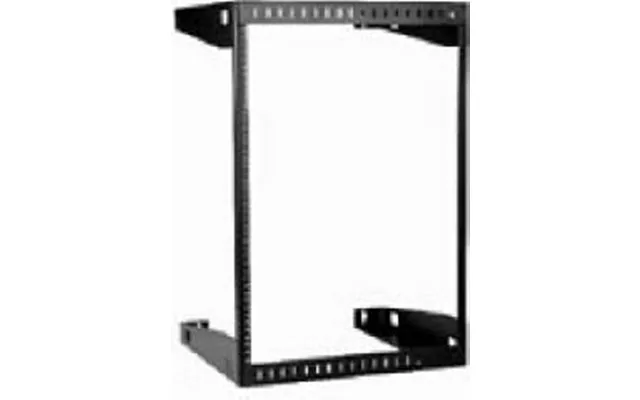
Wall-mount racks are useful when the floor area is already occupied or when keeping equipment off the ground is a priority. The ICC ICCMSWMR08 offers 8 RMS in an 18-inch-deep design and is listed with a 125-pound load capacity. The product description says it supports patch panels, active components, shelves, and drawers.
For more equipment, the ICC ICCMSWMR15 provides 15 RMS in an 18-inch-deep wall-mount format. It is described as a 19-inch-wide rack with a 125-pound load capacity, a durable black powder-coated steel finish, and included rack screws. The ICC ICCMSWMR30 extends the same general wall-mount format to 30 RMS.
These products can suit different stages of a network installation. The 8 RMS model may fit a smaller communications area, while the 15 RMS and 30 RMS models provide more room for a growing setup. Before choosing, measure the wall, check the depth of your equipment, and consider how much clearance you need to work comfortably.
Access is one of the most important details in a mounted system. A rack can hold equipment securely, but if the rear connections are difficult to reach, troubleshooting can become frustrating. Hinged and swing-frame designs help by allowing the mounted section to move away from the wall or swing open.
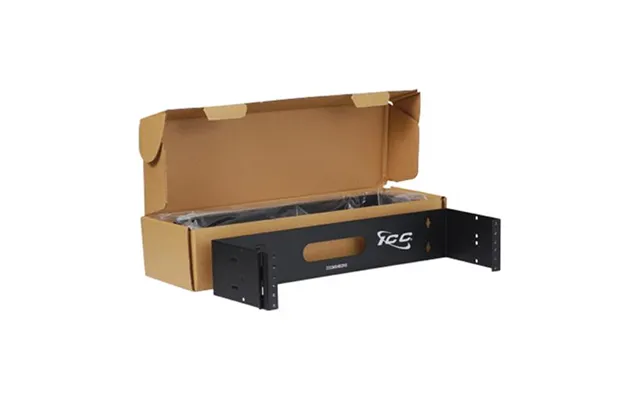
The ICC ICCMSHB2RC is a 2U wall-mount hinged bracket offered as a 2-pack. The reference data describes a 6-inch depth and identifies uses such as patch panels, cable managers, network routers, and switches. Its side-hinged design is intended to provide access during and after installation, making it useful where space restrictions prevent a conventional floor rack.
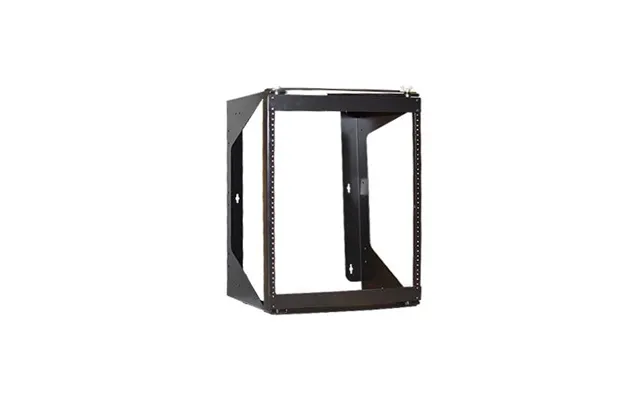
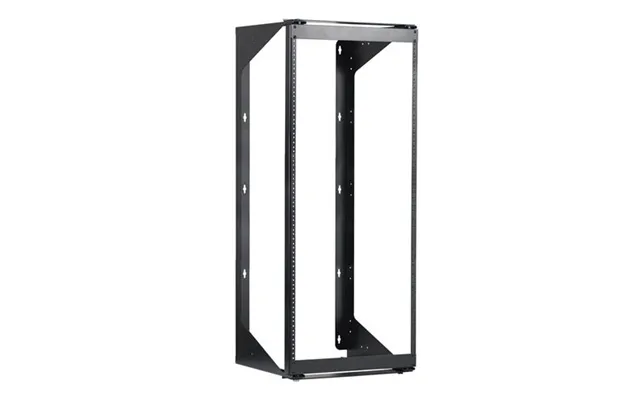
For a larger installation, the ICC ICCMSSFR12 wall-mount swing frame provides 12 RMS and is described as supporting up to 85 pounds of equipment. Its 18-inch depth can accommodate voice and data equipment, patch panels, active components, shelves, drawers, and cable management products. The frame can be installed to swing left or right, which gives you flexibility when deciding where it should open.
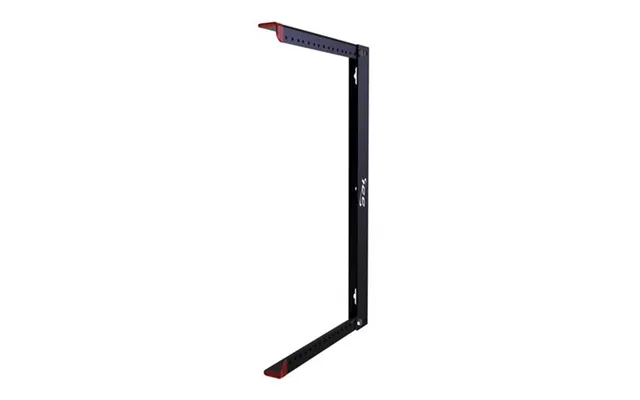
The ICC ICCMSVHB18 is an 8 RMS vertical hinged bracket with an 18-inch depth. The product description lists a durable steel construction, a black textured powder-coated finish, and support for up to 60 pounds of equipment. It is designed for installations where floor space is limited and equipment needs to remain accessible.
When comparing hinged products, look beyond the RMS number. Check the stated depth, load capacity, mounting surface, and the direction in which the frame can open. Imagine the finished installation in real life: will a technician be able to reach the rear cables without moving furniture or disconnecting nearby equipment?
Not every device has rack ears. A rack shelf fills that gap by creating a supported platform inside a standard rack. This can be useful for bulky equipment, standalone components, modems, or other hardware that does not mount directly to the rack rails.
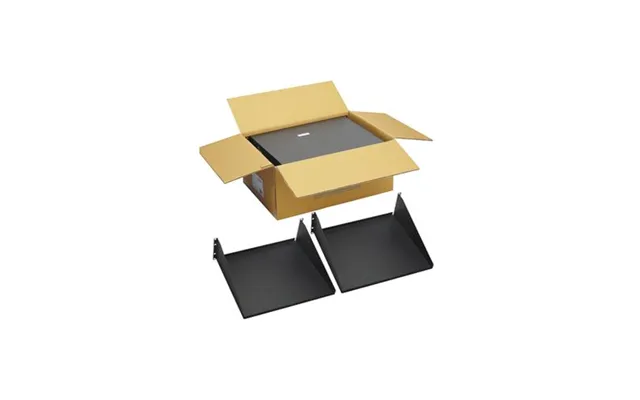
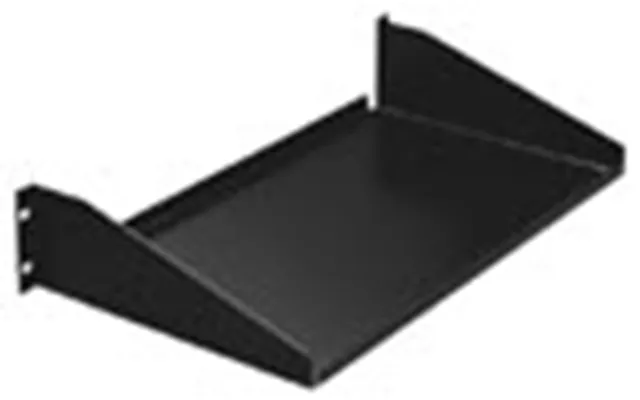
The ICC ICCMSRSF15 is a 15-inch-deep single shelf with 3 RMS. Its description lists a 75-pound capacity and notes that it can accommodate bulky equipment. The ICC ICCMSRFC2 is a 2-pack of 15-inch-deep shelves, each using 3 RMS, with a listed load capacity of up to 75 pounds. The shelves use durable steel construction with a black powder-coated finish.
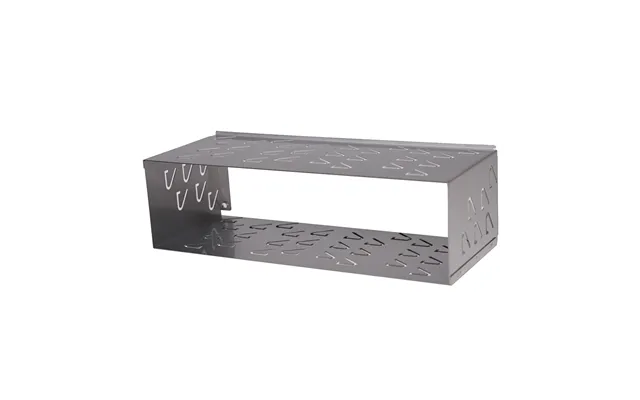
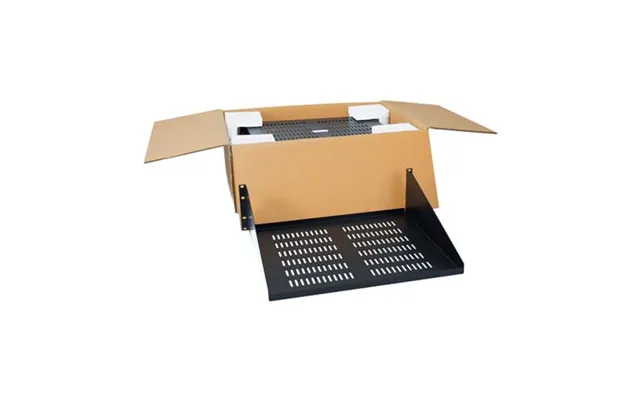
For airflow, the ICC ICCMSRVC2 offers a 2-pack of 15-inch-deep single vented shelves. Each shelf uses 3 RMS, and the description lists support for up to 50 pounds. The vented design is intended to provide airflow around mounted equipment. That can be a practical consideration when a device needs a shelf but should not sit on a completely solid platform.
A solid shelf can provide a broad, stable surface for equipment, while a vented shelf may be preferable when airflow is an important consideration. The best choice depends on the device, its heat output, and how the surrounding rack is arranged. Keep in mind that the reference data provides product descriptions and listed capacities; it does not confirm the thermal requirements of every type of equipment you might place on a shelf.
Also consider shelf depth. A 15-inch shelf may be suitable for many compact components, but you should measure the equipment before ordering. A few inches of clearance can make it easier to connect cables and prevent the rear of a device from pressing against the rack or wall.
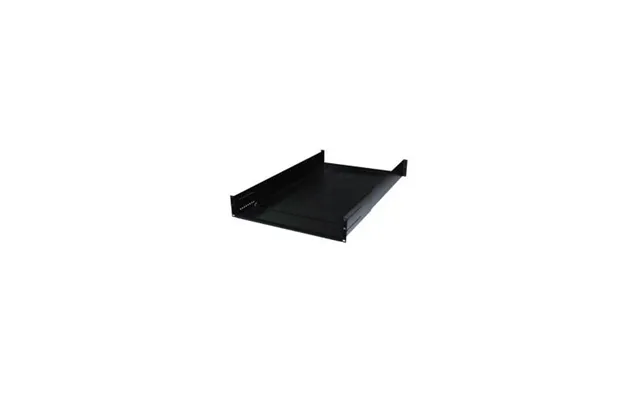
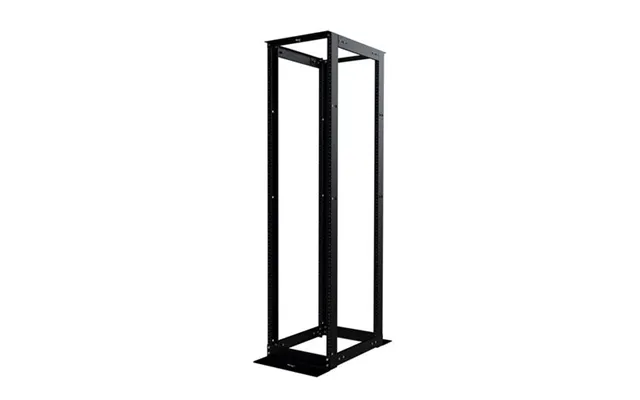
Four-post racks provide mounting points at the front and rear, which can be useful for deeper equipment and adjustable support. The ICC ICCMSR4P84 is a 7-foot, 4-post distribution rack listed in the reference data. Its matching ICC ICCMSRAS30 adjustable shelf uses 2 RMS and is designed for standard 4-post, 19-inch distribution racks.
The adjustable shelf can be extended from 27 inches to 32 inches and is listed with a capacity of up to 125 pounds. This makes it a different type of solution from a short fixed shelf. Instead of being limited to one shelf depth, the adjustable design can be configured within its stated range to suit the rack and equipment.
Before selecting a four-post system, measure both the equipment and the available room. A tall rack may provide generous expansion space, but it also needs a suitable installation area. Check the ceiling height, access path, and floor footprint before planning a large distribution rack.
The ICC ICCMSR1984 is a 7-foot black rack with an 84-inch height and an EIA-standard 19-inch format. The description identifies 6061-T6 high-strength aluminum alloy, roll-tapped 12-24 threading on the front and back, slotted holes on the base for adjustment, two angled top cross-members, and 30 pilot-point screws.
A full-height rack can be valuable when a project includes many panels, shelves, cable managers, or network components. Open designs also make the mounted equipment easy to view and reach. However, they may require more attention to cable organization because the structure does not conceal equipment in the way an enclosed cabinet might.
Use the rack’s height as a planning guide rather than assuming every inch will be available for equipment. Accessories, blank spaces, cable loops, and service access can all use rack space. A thoughtful layout is more important than filling every mounting position.
Rack organization does not stop at the frame. Cable runway helps route wires horizontally above racks, reducing loose cable bundles and making the telecom area easier to understand. The ICC ICCMSLST05 is a 5-foot ladder rack made from heavy-duty 16-gauge steel with a powder-coated finish. The product description says it can attach to ICC racks.
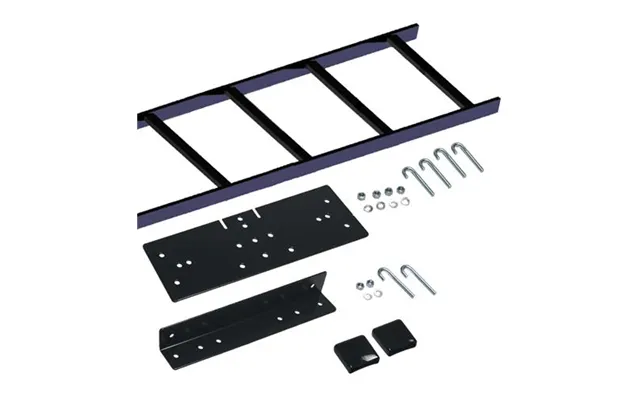
The ICC ICCMSLRW05 is a 5-foot runway rack-to-wall kit. It is described as supporting horizontal cable running overhead and distributing cable loads in telecom closets and open architectural areas. The modular system is intended to work with common cable management systems and can route cables horizontally, vertically, or around obstacles.
Think of runway as a highway for cables. Without clear lanes, every cable competes for space. With a planned route, installation and maintenance become less like untangling a knot and more like following a map. When planning, account for bends, entry points, future cable additions, and the distance between the rack and the wall.
Some installations need smaller mounting accessories rather than a full rack. The ICC ICC107SF2SS is a 2-port, single-gang flush-mount product made from stainless steel. Its compact form may be relevant when a clean wall-plate-style connection point is preferred.
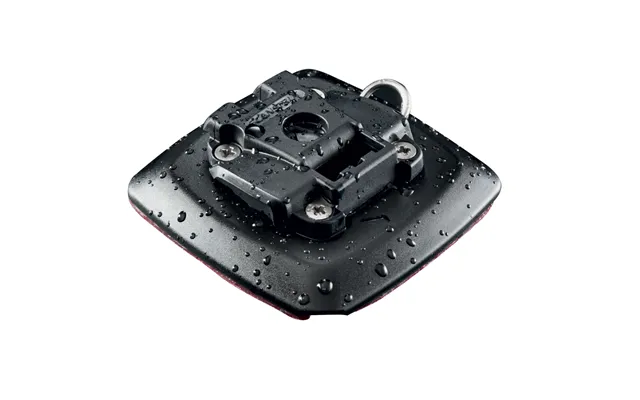
The Scanstrut RLS-404 ROKK Mini is listed as a self-adhesive surface mount. The Fusion 010-12466-00 MS-RA70DC is identified as a DIN cage for the RA70 series. These products are not substitutes for large network racks, but they show how mounting solutions can range from full-height frames to small, specialized supports.
When comparing compact accessories, confirm that the product’s intended application matches your equipment. A small mount can be the perfect finishing touch in one installation and the wrong tool entirely in another. The goal is not simply to add hardware; it is to create a stable, purposeful mounting point.
The reference data lists prices for the products, allowing you to compare options by size and function. Among the listed offers, the ICC ICC107SF2SS is shown at $6.12, while the ICC ICCMSRFLKT concrete rack floor mount kit is listed at $13.12. The ICC ICCMSHB2RC hinged bracket 2-pack is listed at $57.12.
For shelves and mid-sized mounts, the ICC ICCMSRSF15 is listed at $88.12, the ICC ICCMSWMUR5 at $106.12, and the ICC ICCMSRFC2 2-pack at $125.12. The ICC ICCMSRVC2 vented shelf 2-pack is listed at $132.12, while the ICC ICCMSWMR08 is listed at $148.12.
Larger or more specialized systems have higher listed prices. The ICC ICCMSLST05 ladder rack is shown at $148.12, the ICC ICCMSVHB18 at $181.12, and the ICC ICCMSRAS30 adjustable shelf at $198.12. The ICC ICCMSLRW05 runway kit is listed at $227.12, the ICC ICCMSWMR15 at $226.12, and the ICC ICCMSSFR12 at $249.12.
The largest listed prices include $351.12 for the ICC ICCMSWMR30, $396.12 for the ICC ICCMSSFR25, $487.12 for the ICC ICCMSR1984, and $994.12 for the ICC ICCMSR4P84. The prices are provided for comparison and should be checked on the relevant offer page before making a purchase decision.
Start by listing every component you intend to mount. Include patch panels, switches, shelves, cable managers, drawers, and equipment that may be added later. Then estimate the RMS required by each rack-mounted item and leave room for service access.
Next, measure the available space. Wall-mount products need a suitable wall and enough room to open or swing if they are hinged. Floor racks need adequate clearance around the frame. Overhead runway needs a route that does not interfere with lighting, doors, or other building systems.
Finally, consider weight and cable direction. Match the planned load to the product’s listed capacity, and plan how cables will enter, exit, and bend. A rack is the skeleton of your setup, but cable management is the connective tissue. Both need to work together.
The reference data includes a broad range of computer racks and mounts, from compact flush-mount accessories and 5 RMS utility racks to 7-foot racks, four-post distribution systems, hinged frames, shelves, ladder racks, and runway kits. The best choice depends on your available space, required RMS, equipment depth, load, access needs, and cable layout. By comparing those practical details alongside the listed prices, you can build a cleaner and more adaptable installation instead of choosing a rack based on appearance alone.