


Centrifuges price list
Last updated Monday, Nov 2, 2026





Loading...
Last updated Monday, Nov 2, 2026
A centrifuge can be the quiet workhorse of a laboratory. While the instrument may look compact, it performs an important job: spinning samples at a controlled speed so materials can separate more efficiently. For laboratories, clinics, educational settings, and other professional environments, choosing the right centrifuge means looking beyond appearance. Rotor capacity, tube compatibility, operating controls, safety features, and everyday durability all matter.
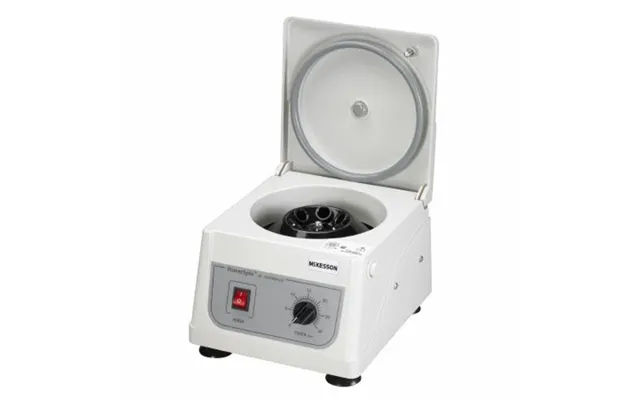
The reference product in this guide is the McKesson 6 Place Fixed Speed Centrifuge with a fixed-angle rotor. It is listed on ZoneOffer, a comparison site that helps shoppers review product information and pricing from participating sellers. ZoneOffer is not the store or manufacturer. The listed seller is Herbsdaily, and the available reference data identifies the brand as McKesson.
This model is designed for routine centrifugation tasks involving standard laboratory tubes. It combines a six-place rotor, a fixed speed of 3,400 rpm, a mechanical timer, and a safety switch in the lid. Think of it as a straightforward tool built around repeatable operation rather than a long menu of advanced settings.
A laboratory centrifuge uses rotation to help separate components within a sample. When a tube spins, heavier material tends to move toward the bottom while lighter components remain closer to the top. The exact outcome depends on the sample, tube, speed, rotor design, and operating procedure.
That basic principle makes centrifuges useful across many laboratory workflows. A compact benchtop unit can be especially practical when a facility needs a dedicated instrument for routine sample preparation without the footprint of a larger industrial system.
However, centrifuges are not interchangeable. A model intended for a small number of standard tubes may be ideal for one workflow but unsuitable for another that requires higher capacity, variable speed, refrigeration, or specialized rotors. Before comparing models, ask yourself a simple question: what will you spin most often, and how many tubes must the instrument handle at once?
The McKesson centrifuge in the reference data has a six-place fixed-angle rotor and a fixed operating speed of 3,400 rpm. It is described for use with standard tubes ranging from approximately 0.17 to 0.34 fluid ounces. With available adapters, it can also accommodate up to three tubes of about 0.51 fluid ounces, along with smaller tubes of approximately 0.07 fluid ounces and 0.14 to 0.17 fluid ounces.
Because the speed is fixed, the unit offers a focused operating experience. You do not need to select among several speed programs for each run. Instead, the centrifuge is designed to operate at its specified speed, which can make routine use more direct and easier to standardize.
The product description also identifies a dependable mechanical timer with a 30-minute setting and a bell signal at the end of the run. That feature can help users keep track of short laboratory processes without continuously watching the instrument.
The reference listing identifies the following features: a six-place rotor, fixed-angle design, fixed speed of 3,400 rpm, and compatibility with standard tube formats when used according to the product description. It also includes a mechanical timer, a bell signal, a high-impact plastic housing, a lid safety switch, a front-right latch release, and a power indicator light.
The listed price is $428.64. The reference data does not provide a regular price for comparison, a discount percentage, a rating, or an availability statement. Those details should not be assumed when evaluating the listing.
Rotor design influences both capacity and how tubes are positioned during a run. This McKesson model uses a six-place fixed-angle rotor, giving it space for up to six compatible tubes according to the product title and description.
A six-place configuration can suit smaller batches and routine tasks. It may be a practical match for a facility that values a compact setup rather than a high-throughput system. You can think of the rotor as the instrument’s seating arrangement: the number of available positions determines how many compatible tubes can be processed in one cycle.
Tube balance remains an essential part of centrifuge operation. Users should follow the manufacturer’s instructions and laboratory procedures when arranging tubes. The reference data describes the rotor and compatible tube formats, but it does not provide a detailed balancing protocol. Always rely on the product documentation and your organization’s safety procedures for operating instructions.
The product description states that the centrifuge is intended for standard tubes in the approximate range of 0.17 to 0.34 fluid ounces. It also states that up to three tubes of approximately 0.51 fluid ounces can be spun, while smaller tube sizes can be used with available adapters.
Adapters can be useful when a laboratory works with more than one tube format. Instead of treating tube compatibility as an afterthought, check your current supplies before purchasing. Do your routine tubes fit directly into the rotor? Will you need adapters? How many compatible tubes do you typically process in a single run?
The listing mentions adapters but does not specify their price, included accessories, or seller availability. For that reason, shoppers should verify adapter details separately before making a buying decision.
A fixed-speed centrifuge can simplify repetitive work. With the McKesson model operating at 3,400 rpm, users have one defined speed rather than multiple adjustable settings. That may be helpful when a laboratory follows a consistent routine and does not need speed changes between common runs.
Simple controls can also reduce decision-making. Imagine using a kitchen appliance with one dependable setting instead of adjusting several dials every time. That does not make it suitable for every task, but it can make a dedicated workflow more straightforward.
At the same time, fixed speed is an important limitation to consider. If your procedures require different rotational speeds, this model may not provide the flexibility you need. The reference data does not identify adjustable speed control, programmable profiles, refrigeration, or digital controls, so those features should not be presumed.
The centrifuge includes a mechanical 30-minute timer and a bell signal at the end of the run. This combination gives the user a defined operating period and an audible indication when that period has finished.
A timer can support consistent routines. Rather than relying on a separate clock, the operator can set the instrument for the intended run duration. The bell signal may be particularly useful in a busy laboratory where attention moves between tasks.
Still, a timer is not a substitute for supervision. Users should follow laboratory procedures and remain aware of the instrument during operation. The reference data confirms the presence of the timer and bell signal, but it does not describe additional automation or monitoring functions.
Safety is one of the most important considerations when choosing rotating laboratory equipment. The McKesson listing identifies a safety switch in the lid that shuts off the motor when the lid is unlatched. This feature is designed to stop operation if the lid is opened or no longer secured according to the unit’s mechanism.
The product also has a latch release located on the right front side. A clearly positioned latch can make the basic open-and-close process easier to understand during routine use. The power indicator light shows when the unit is powered on, giving the operator a visible reminder that the centrifuge is connected and receiving power.
These features do not eliminate the need for safe handling. Users should inspect tubes, secure the lid, follow balancing instructions, and use the centrifuge only as directed. Safety equipment should be treated like a seat belt: valuable protection, but not permission to ignore responsible operating practices.
The centrifuge is described as having a high-impact plastic housing intended to support dependable use. A durable outer housing can be useful in environments where equipment is handled frequently and must withstand normal day-to-day activity.
The reference description does not provide a formal durability rating, warranty term, chemical-resistance specification, or service-life estimate. Therefore, it is best to view the high-impact housing as a stated construction feature rather than a guarantee of performance under every condition.
This model may appeal to laboratories seeking a compact, fixed-speed centrifuge for routine tube processing. Its six-place rotor can fit workflows that involve smaller batches, while its timer and bell signal support repeatable operation.
It may also suit users who prefer a simple control layout. When a laboratory’s routine calls for one established speed, adjustable programming may add complexity without adding practical value. A fixed-speed model can function like a dependable lane on a familiar road: less flexible, perhaps, but easy to follow when the destination is consistent.
On the other hand, buyers with high-volume workflows or specialized requirements should compare the rotor capacity and operating features carefully. The available product data does not describe large-batch processing, refrigeration, variable speed, digital displays, or advanced programming. Those needs may point toward a different centrifuge category.
Start with capacity. A six-place rotor may be enough for occasional or small-batch processing, but users who handle many samples may prefer a larger configuration. Consider not only the number of tubes per run but also how often the centrifuge will operate during a typical day.
Next, review tube compatibility. Confirm the approximate tube sizes used in your workflow and determine whether adapters are required. The McKesson description provides several supported tube formats, but it does not state that every possible tube will fit.
Then evaluate speed control. A fixed 3,400 rpm setting may be appropriate for a defined routine. If your procedures require several speeds, look for a model whose controls and specifications match that need. Never assume that a centrifuge can perform a task simply because the tube fits physically.
Finally, consider usability and safety. A mechanical timer, audible end signal, power light, lid safety switch, and front latch release can all contribute to a more predictable experience. These are practical details, but practical details often determine whether equipment feels effortless or frustrating after months of use.
Routine care helps laboratory equipment remain ready for use. Before each run, users should inspect the rotor and tubes for visible problems, make sure the lid is properly latched, and follow the manufacturer’s directions for loading and balancing.
Cleaning procedures should be based on the product documentation and the materials used in the laboratory. The reference data does not identify approved cleaning agents or detailed maintenance intervals, so those instructions should be confirmed through the manufacturer or supplied documentation rather than guessed.
Keep the operating area organized and avoid placing unnecessary items near the instrument. A clear workspace makes it easier to load samples carefully, notice warning signs, and respond appropriately if a run does not proceed as expected.
The McKesson Fixed Speed Centrifuge is listed at $428.64 in the reference data. The listing identifies herbsdaily as the seller and McKesson as the brand. ZoneOffer presents this information for comparison; it does not sell the centrifuge itself.
The reference data does not include a regular price, discount information, product rating, stock statement, shipping details, or delivery estimate. Shoppers should therefore treat the listed price as the supplied offer price and verify current listing information before completing a purchase.
Price is only one part of the decision. A centrifuge that matches your tube formats, capacity, speed requirements, and safety expectations can be more useful than a cheaper model that does not fit your workflow. The best choice is less like picking the lowest-priced tool in a toolbox and more like choosing the right key for a specific lock.
Will the six-place rotor cover your normal workload? Are your tubes within the listed size range? Do you need a fixed 3,400 rpm speed, or would adjustable control be more appropriate? Can your team work comfortably with a mechanical timer and bell signal?
You should also consider the physical environment where the centrifuge will be used. The reference data identifies a high-impact plastic housing, but it does not provide dimensions or weight. If bench space is limited, confirm those specifications before purchase.
Finally, decide whether the product’s safety features align with your laboratory procedures. The lid safety switch and power indicator are useful stated features, but proper training, balancing, and supervision remain central to safe operation.
The McKesson 6 Place Fixed Speed Centrifuge offers a focused set of features for routine laboratory centrifugation: a six-place fixed-angle rotor, a 3,400 rpm operating speed, a 30-minute mechanical timer, an end-of-run bell, a high-impact plastic housing, and a lid safety switch. Its straightforward design may appeal to users who need dependable small-batch processing without adjustable speed controls. Listed at $428.64 through herbsdaily, it is available for comparison on ZoneOffer, which is a comparison site rather than a store. Before choosing it, confirm tube compatibility, capacity, operating requirements, and current listing details against your laboratory’s needs.