



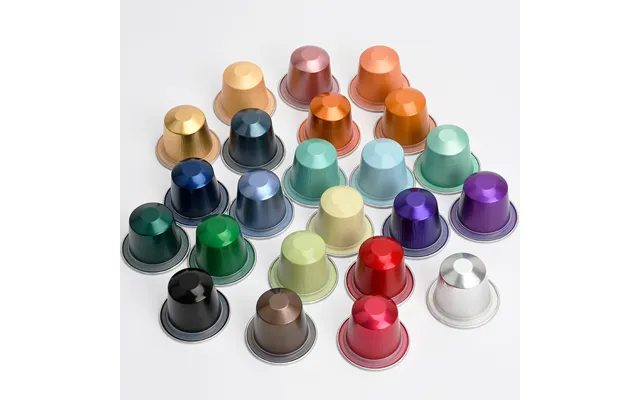
Disposable Lids price list
Last updated Wednesday, Nov 4, 2026




Loading...
Last updated Wednesday, Nov 4, 2026
Choosing the right disposable lid can feel like a small purchasing decision, but in foodservice, small details often shape the entire workflow. A lid must match the container, protect the contents, and fit the way your team prepares and serves products. When you are sourcing coffee capsule components in bulk, the right comparison can help you avoid mismatched sizes and unnecessary spending.
This guide focuses on two aluminum foil coffee capsule lid listings available for comparison through ZoneOffer. ZoneOffer is a comparison site, not a store, so the listings are presented to help shoppers review available product details in one place. The two offers are designed around espresso coffee capsules and include options involving common foil lids, self-adhesive foil lids, and compatible pod seals.
A capsule lid is more than a cover. Think of it as the final seal on a small package: it needs to sit correctly, stay in place, and work with the capsule format. For businesses preparing espresso products, a suitable foil lid can support a consistent preparation process while keeping capsule components organized.
Disposable lids can also simplify operations. Instead of cleaning and reusing a permanent cover, staff can work with single-use sealing components selected for the intended capsule type. The best choice depends on the capsule design, machine compatibility, sealing method, and the volume of products you plan to prepare.
Aluminum foil is commonly used for lightweight sealing applications because it can be shaped and applied to small openings. In coffee capsule products, the foil lid forms part of the capsule assembly. However, shoppers should still confirm that the lid format matches the capsule and equipment they use.
The reference listings specifically concern aluminum foil lids for espresso coffee capsules. They do not provide technical specifications such as foil thickness, adhesive strength, heat tolerance, or exact compatibility details beyond the wording in each title. For that reason, those points should be verified before purchasing.
The reference data includes two offers from Alibaba. Both listings relate to aluminum foil seals or lids for coffee capsules, and both show a listed price of 8.50 or 8.69. The data does not specify the pricing unit, package quantity, shipping cost, final checkout total, or stock status.
The first listing is titled “Empty Portable 37mm Disposable Aluminum Foil Espresso Coffee Capsule With Common Foil Lids And Self Adhesive Foil Lid.” Its stated size is 37 millimeters, which is approximately 1.46 inches. Because the product title uses the 37-millimeter measurement, buyers should compare that size with their capsule opening before ordering.
This listing mentions both common foil lids and self-adhesive foil lids. That wording may appeal to shoppers comparing different sealing approaches, but the reference data does not explain whether both lid types are included in one offer, available as variants, or presented as related options. Review the full listing carefully to confirm exactly what the purchase includes.
The listed price is 8.50. The description also states “1M new products” and mentions exclusive perks of up to “US 500 off.” Since the reference information does not explain the terms, eligibility, currency treatment, or application of that promotion, shoppers should verify the final offer directly through the comparison result.
The second listing is titled “Custom Size Aluminum Foil Seal Pod Compatible Coffee Capsules For Espresso Coffee Machine.” This option emphasizes custom size and compatibility with an espresso coffee machine. That makes dimensional checking especially important: a custom-size product may require you to provide or select exact measurements during the purchasing process.
The listed price for this offer is 8.69. Its description also states “1M new products” and references exclusive perks of up to “US 500 off.” As with the first listing, the reference data does not provide enough information to confirm the promotion’s conditions or whether it applies to every buyer.
The listing does not state a specific brand. It also does not provide a confirmed package count, material thickness, sealing temperature, machine model list, or delivery estimate. Those missing details do not necessarily mean the product is unsuitable; they simply mean you should request or confirm them before placing a bulk order.
At a glance, the first offer is more specific about a 37-millimeter capsule format and mentions common and self-adhesive foil lids. The second focuses on custom sizing and compatibility with espresso coffee machines. Your decision may come down to whether you already know the required capsule dimensions or need a more tailored option.
The price difference shown in the reference data is 0.19, with the first listing at 8.50 and the second at 8.69. That difference alone should not determine the purchase. A lid that fits your process correctly may be more valuable than one with a slightly lower listed price. What good is a cheaper lid if it does not match the capsule or machine?
A listed size such as 37 millimeters, or approximately 1.46 inches, can be useful when your capsule design already follows that measurement. A defined size makes initial comparison easier because you have a starting point for checking fit.
Still, the title alone does not confirm the complete dimensions. The diameter may be only one part of the fit, alongside the rim, depth, capsule material, and sealing surface. Before buying, compare the listing details with your actual capsule components rather than relying on the size label alone.
A custom-size option may be worth considering when your capsule format does not align with a standard measurement. It may also suit a business that has a particular capsule design or wants to work around existing espresso equipment.
Custom sizing can introduce extra questions. Ask how measurements should be submitted, whether samples are available, what tolerances apply, and whether the quoted price changes with size or quantity. The reference data does not answer these questions, so they remain important points for buyer verification.
The first listing mentions common foil lids and self-adhesive foil lids. These phrases describe two different ways a lid may be handled during capsule preparation, but the reference data does not provide a full explanation of the application process.
A self-adhesive lid may be attractive when the workflow calls for a straightforward application method. A non-adhesive or common foil lid may be considered when another sealing process is already available. The right choice depends on your equipment, labor routine, capsule material, and desired production method.
If you are considering a self-adhesive foil lid, check whether the adhesive is already applied, whether a liner must be removed, and what surfaces it is designed to bond with. You should also confirm storage requirements and whether the adhesive is suitable for your intended coffee capsule application.
Do not assume that every adhesive lid works with every capsule material. Ask for the recommended application process and any relevant technical information. The listing title identifies a self-adhesive option, but it does not confirm performance specifications.
Price is only one part of a bulk purchase. A useful comparison looks at fit, quantity, application method, customization, and the information available before checkout. Imagine building a bridge: the price is one support, but the structure also needs accurate dimensions and dependable product details.
Start with the opening diameter and sealing area. For the first listing, the title identifies a 37-millimeter size, or about 1.46 inches. For the custom-size listing, determine which measurements the supplier requires. Record your dimensions in inches when comparing products to keep your purchasing notes consistent.
The reference data does not state how many lids are included in either offer. Do not assume that the listed price represents one lid, one pack, one case, or a larger bulk quantity. Confirm the unit of sale, minimum order quantity, and available quantity options before comparing the real cost per lid.
The second listing refers to compatibility with an espresso coffee machine, but it does not name specific machine brands or models. Compatibility should therefore be confirmed directly. Check the capsule shape, sealing surface, and machine requirements before ordering a large quantity.
For a business order, a sample can be a sensible step before committing to a larger purchase. Ask whether samples are available, whether the same material will be used in the production run, and whether custom dimensions affect the price or lead time. These details are not included in the reference data, so they should be verified separately.
These listings may interest cafes, coffee businesses, caterers, restaurants, and other foodservice buyers working with espresso coffee capsule formats. They may also be relevant to businesses exploring custom capsule assembly or comparing sealing components for a new product line.
However, the reference information does not confirm a particular industry certification, food-contact approval, environmental claim, or performance rating. If your operation requires documentation, request the appropriate information before making a purchasing decision.
Small businesses may benefit from comparing a defined-size option with a custom-size option. The first offer may be easier to evaluate if your capsule already matches the listed measurement. The second may be useful if your design requires a specific fit.
Start with a practical checklist: capsule dimensions, lid type, quantity, listed price, compatibility, and any required customization. A simple checklist can prevent a small detail from becoming a large ordering problem.
Larger operations should look beyond the initial listed price. Consistency, repeat ordering, packaging, quality documentation, and production capacity can matter just as much. The reference data does not confirm these factors, so they should be discussed with the supplier before committing to bulk purchasing.
The first offer shows a price of 8.50, while the second shows 8.69. The reference data does not identify the pricing currency or the quantity represented by each price. Treat these as listed comparison figures rather than guaranteed final totals.
Both descriptions mention “1M new products” and exclusive perks of up to “US 500 off.” The wording is included in the reference data, but it does not explain the promotion’s requirements. Confirm eligibility, expiration, minimum order conditions, and whether the offer applies to the product you select.
Other costs may also affect your final budget, including customization, packaging, taxes, shipping, or payment-related charges. None of those costs are provided here, so they should not be assumed or estimated from the listing price alone.
Comparison shopping helps you separate what is known from what still needs confirmation. In this case, you can quickly see the difference between a listing centered on a 37-millimeter format and one centered on custom sizing. That distinction may save time when you are narrowing down suitable capsule components.
ZoneOffer brings comparison information together, but it is not the seller. Use the listing details as a starting point, then review the supplier’s information for the final specifications, order terms, and purchase conditions. A thoughtful comparison is like using a map: it guides you, but you still need to confirm the road ahead.
Before selecting either disposable lid listing, confirm the capsule diameter in inches, the complete lid dimensions, the material details, the sealing method, and the exact package quantity. If you are considering the custom-size offer, confirm how customization works and whether additional charges apply.
Next, verify espresso machine compatibility and ask whether samples or technical documents are available. Review the listed price and any stated promotional language, but do not treat the figures as a final checkout total until the purchase details are clear.
Finally, compare the two offers based on fit and workflow rather than price alone. The 8.50 listing highlights a 37-millimeter capsule and both common and self-adhesive foil lid wording, while the 8.69 listing highlights custom sizing and espresso machine compatibility. Either may be worth further review depending on your requirements.
In conclusion, the two aluminum foil disposable lid listings provide different starting points for coffee capsule buyers. The first focuses on a listed 37-millimeter, approximately 1.46-inch format with common and self-adhesive lid references. The second emphasizes custom sizing for espresso coffee machine use. Because important details such as quantity, technical specifications, shipping, and final terms are not provided, careful verification remains essential. Use ZoneOffer to compare the available options, then confirm the full purchase information before ordering.