

Vehicle Service Manuals price list
Last updated Wednesday, Nov 25, 2026
| Vehicle Service Manuals | Price |
|---|---|
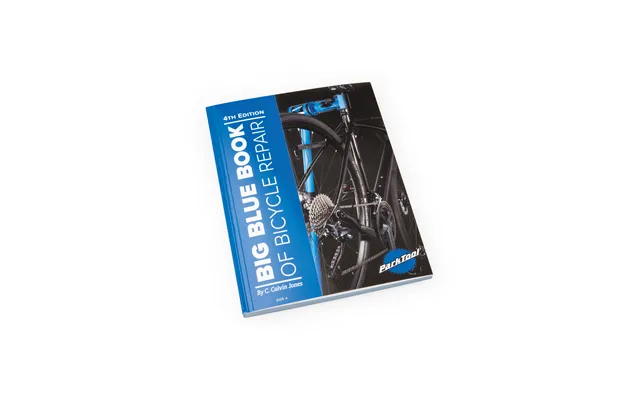
| Park Tool Bbb-4 Big Blue Book Of Bicycle Repair Volume Iv | $40.00 |



Loading...
Last updated Wednesday, Nov 25, 2026
| Vehicle Service Manuals | Price |
|---|---|
| Park Tool Bbb-4 Big Blue Book Of Bicycle Repair Volume Iv | $40.00 |
Working on a bicycle can feel intimidating when you are staring at unfamiliar parts, small fasteners, and a problem you cannot immediately identify. A dependable repair manual can turn that uncertainty into a clear sequence of steps. The Park Tool Bbb-4 Big Blue Book of Bicycle Repair Volume IV is designed to serve as a reference for bicycle repair and maintenance, bringing instructions, photographs, charts, and explanations together in one guide.
Listed in the Vehicle Service Manuals category, this Park Tool title is available through Ribble Cycles for $40. It is worth noting that ZoneOffer is a comparison site, not a store. Its role is to help shoppers compare available product information and make a more informed decision before visiting a listed retailer.
The Park Tool Bbb-4 Big Blue Book of Bicycle Repair Volume IV is the fourth edition of Park Tool’s bicycle repair reference book. It focuses on practical guidance, using clear instructions and visual material to explain a broad range of bicycle repairs.
Think of it as a workshop companion rather than a book you read once and put away. You can consult it when you need help understanding a repair, review a procedure before starting, or use it as a learning resource while building your maintenance skills.
The guide is written by Calvin Jones, Park Tool’s director of education and a recognized authority on bicycle repair and maintenance. That background gives the book a strong instructional focus, especially for readers who want more than a quick answer from an online search.
Bicycle maintenance often rewards patience and preparation. A manual gives you a structured way to approach a task instead of relying on guesswork. When each stage is explained clearly, you can better understand what you are doing and why the order of the work matters.
A reference guide can also help you slow down. Rather than rushing into a repair because a component looks simple, you can review the relevant instructions first. That extra moment may make the difference between a controlled adjustment and a frustrating mistake.
For experienced mechanics, a manual can act as a quick reference. For beginners, it can provide a foundation. In both cases, the value comes from having organized information available when you need it.
One of the main features highlighted for the Big Blue Book of Bicycle Repair Volume IV is its clear, step-by-step instruction. That format is helpful because many repair tasks are easier to understand when broken into a logical sequence.
Instead of presenting a dense block of technical language, a step-by-step approach helps you move from preparation to inspection and then to the repair itself. You can follow along at your own pace, pause when something needs closer attention, and return to a previous step if necessary.
That structure is especially useful when you are learning. A repair manual should not make you feel as though you need to know everything before you begin. It should act like a map, showing you the route one stage at a time.
The reference information describes the book as suitable for mechanics of any experience level. That makes it relevant to a wide audience, from someone developing basic maintenance confidence to a more familiar mechanic looking for a dependable reference.
Newer riders may appreciate the explanatory approach because it can make repair terminology and procedures less overwhelming. More experienced users may value the ability to consult specific sections when they want a reminder or a second perspective on a task.
Of course, every reader brings a different level of knowledge to a repair. The best way to use the book is to match its guidance to your own skills, work carefully, and avoid rushing through instructions you do not yet understand.
Words are important, but bicycle repairs are often visual. You may need to recognize a component, understand how parts relate to one another, or see the position of an item before attempting a procedure. The Big Blue Book is described as including high-quality photos to support its explanations.
Those images can make technical information easier to absorb. A photograph may clarify what a written description means, helping you connect the instruction on the page with the bicycle in front of you.
Visual references are also useful when you are checking your progress. If you are unsure whether a part is positioned correctly, comparing your work with the relevant illustration can give you another way to evaluate the repair.
Imagine trying to assemble a puzzle while looking only at a written list of pieces. You might eventually understand it, but a picture would make the process much easier. Bicycle repair can work the same way. Photos provide context that words alone may not deliver.
When a manual combines written steps with images, it can support different learning styles. Some readers prefer detailed explanations, while others understand a procedure faster when they can see it. A visual guide helps bridge that gap.
The product description also notes that the book includes valuable charts and graphs. These tools can help organize information that might otherwise feel difficult to compare or remember.
A chart can make a group of related details easier to scan. A graph can present information in a visual format that supports understanding. Together with the written instructions and photographs, these elements give the book several ways to communicate the same subject.
This matters because reference material is most useful when you can find and understand the information without unnecessary effort. A well-organized page can be as helpful as a clear explanation.
The Big Blue Book of Bicycle Repair is described as explaining and demonstrating hundreds of bicycle repairs. That broad coverage makes it more than a guide for one isolated problem. It is intended to be a substantial reference that you can return to as different maintenance questions arise.
Having many repair topics in one volume can be convenient. You do not need to depend on a separate source for every new task, and you can build familiarity with the way the book presents procedures over time.
For a home workshop, a repair manual with broad coverage can become part of the surrounding toolkit. It sits alongside your tools and helps you prepare mentally before you begin working on the bicycle.
A strong reference guide does not have to be used from beginning to end. You might open it when a repair first appears, consult it during the work, and return to it later when you want to review what you learned.
You can also use it proactively. Reading about maintenance before a problem appears may help you recognize the names of components and understand the general structure of a repair. When a real issue arises, the information may feel less unfamiliar.
That is one reason reference books can remain useful over time. They support both immediate problem-solving and gradual skill development.
This guide may appeal to bicycle owners who prefer to understand their equipment rather than rely entirely on trial and error. It can also suit hobbyists who enjoy hands-on work and want a more organized learning path.
Readers with experience may find it useful as a refresher or workshop reference. Beginners may appreciate the combination of clear instructions, photographs, charts, and graphs. The product information specifically presents it as suitable for mechanics of any experience level.
If you enjoy learning through practical examples, the book’s instructional format may be a good fit. If you prefer to have a physical reference nearby while working, its role as a comprehensive guide may also be appealing.
When comparing repair manuals, start by considering how you learn best. Do you want visual demonstrations, detailed written steps, or a combination of both? The Park Tool Big Blue Book includes all of these listed elements: instructions, photos, charts, and graphs.
Next, think about whether you want a narrow guide for one repair or a broader reference. This title is described as covering hundreds of bicycle repairs, so it is positioned as a wide-ranging resource rather than a single-purpose booklet.
You should also consider the author and the instructional perspective. The book is written by Calvin Jones, Park Tool’s director of education, and is presented as a guide for mechanics with different levels of experience.
Before choosing a manual, ask yourself what you expect from it. Do you want a guide for learning, a reference for occasional repairs, or a book that can remain in your workshop for repeated use?
It is also sensible to review the available product details, including the edition, title, brand, listed retailer, and price. For this offer, the title is the fourth edition, the brand is Park Tool, the listed store is Ribble Cycles, and the listed price is $40.
These details help you compare the product with other manuals without making assumptions about information that has not been provided.
The referenced offer is for the Park Tool Bbb-4 Big Blue Book of Bicycle Repair Volume IV. It is listed under the Park Tool brand and shown at Ribble Cycles for $40.
ZoneOffer provides comparison information rather than selling the book directly. If you are considering the guide, use the listed details as a starting point for your shopping research and review the retailer’s current information before making a purchase decision.
The reference data does not provide additional details about shipping, availability, discounts, ratings, or store policies. Those details should not be assumed. Keeping the comparison focused on confirmed information helps you make a clearer and more reliable choice.
Once you have a manual, approach each repair with a plan. Read the relevant section before starting, identify the stages involved, and make sure the instructions are clear to you. If a step seems confusing, pause instead of improvising.
It can also help to keep the book clean and easy to consult. A reference guide is most valuable when you can quickly return to it during future maintenance work. Marking useful sections or making your own notes may help you build a personal repair routine, provided you do so carefully.
Use the photographs, charts, and graphs together rather than relying on only one part of the page. The written steps may explain the action, while the image provides visual context. The chart or graph may organize related information. Like pieces of a toolkit, each element has a different job.
The product is identified as Volume IV, the fourth edition of the Big Blue Book of Bicycle Repair. An edition number helps distinguish this title from earlier versions and gives shoppers a precise way to identify the product they are considering.
When searching for a manual, using the complete title and edition can reduce confusion. It also makes it easier to compare the correct product details across listings. In this case, the full product name includes Park Tool, Bbb-4, Big Blue Book of Bicycle Repair, and Volume IV.
Rather than relying on a shortened name, check the complete listing details before deciding. A precise title acts like a label on a toolbox: it helps you reach for the right resource.
The Park Tool Bbb-4 Big Blue Book of Bicycle Repair Volume IV is a broad bicycle repair reference built around step-by-step instructions, high-quality photos, charts, and graphs. Written by Calvin Jones, Park Tool’s director of education, it is presented as a useful guide for mechanics across experience levels and covers hundreds of bicycle repairs.
For shoppers comparing bicycle service manuals, the listed offer provides a clear starting point: Park Tool, Ribble Cycles, and a price of $40. ZoneOffer is a comparison site, so use the available information to evaluate the guide while checking the retailer’s current listing for any details not included here. If you want a structured, visual reference for bicycle maintenance, this title may be worth considering.