


Gun Lights price list
Last updated Thursday, Oct 29, 2026




Loading...
Last updated Thursday, Oct 29, 2026
A suitable gun light can add visibility to a firearm setup, but choosing one requires more than looking at a product photo. You need to consider fit, controls, mounting position, light function, maintenance, and safe handling. The reference data features one listed option: the 1077 Metal Dual-color Laser Sight Flash High Precision Lower Mount Glock G17 Infrared Flashlight.
This guide explains what that product listing says, how to assess a gun light in general, and which questions are worth asking before making a decision. Think of a gun light as part of a larger system rather than a magic upgrade. The firearm, holster, training routine, storage method, and user all matter.
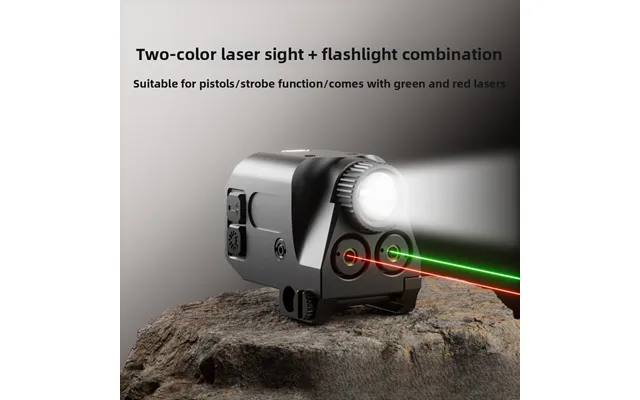
The listed product is titled “1077 Metal Dual-color Laser Sight Flash High Precision Lower Mount Glock G17 Infrared Flashlight.” Its description identifies it as a metal, dual-color laser sight and infrared flashlight with a lower-mount design intended for a Glock G17.
The reference data lists the brand as Voghion and the store as Voghion. The listed price is $42.52. ZoneOffer is a comparison site, not a store, so shoppers should use the listing as a comparison reference and confirm current product details directly through the relevant offer page before making a purchase.
The product name provides several useful clues. “Metal” describes the stated construction material. “Dual-color laser sight” indicates that the laser function is presented as having two color options, although the reference data does not specify which colors are included.
“Lower mount” suggests that the accessory attaches beneath the firearm rather than above the slide or along another mounting location. “Glock G17” identifies the intended firearm model in the listing. Even so, you should verify compatibility carefully because model names alone may not confirm fit across every generation, frame configuration, or accessory rail design.
Gun lights are generally designed to provide illumination, aiming assistance, or both. A flashlight can help identify objects in a dark environment, while a laser can offer a visible aiming reference. These functions may sound similar, but they serve different purposes and should not be treated as interchangeable.
Visibility is the foundation. Without enough light, a person may struggle to distinguish a harmless object from a genuine hazard. A laser, meanwhile, can show a projected aiming point, but it does not replace safe identification, proper sight alignment practice, or responsible decision-making.
Would a light automatically make every situation safer? Not necessarily. It can improve visibility, but it can also create glare, reveal your position, or encourage overconfidence if the user has not trained with the accessory.
A firearm-mounted flashlight is intended to illuminate the area in front of the user. Before choosing one, consider how easily you can operate its controls without changing your grip or placing a finger near the trigger. Control placement matters because a light should be usable without compromising basic firearm safety.
The reference data describes the featured item as an infrared flashlight, but it does not provide technical details such as brightness, beam distance, battery type, runtime, water resistance, or activation modes. Those specifications should be confirmed before relying on the product for any particular purpose.
A laser sight projects a visible point that may help with aiming practice or alignment under certain conditions. However, the dot may be difficult to see in bright surroundings, and a laser can distract users who have not practiced with it. The most dependable approach is to treat the laser as an accessory rather than a replacement for fundamental sight skills.
The featured listing uses the phrase “dual-color,” but the reference data does not identify the exact colors or explain how users switch between them. If color selection is important to you, check the detailed specifications and product documentation before deciding.
Compatibility should be your first practical checkpoint. The listed accessory names the Glock G17, which suggests that the product is intended for that model. Still, a careful buyer should confirm the generation, frame style, rail profile, and mounting method.
Why is that important? An accessory that appears close to fitting may still sit loosely, interfere with controls, or fail to align correctly. A secure fit is not just a convenience; it affects handling and reliability. Never assume that an accessory designed for one firearm model will fit another model simply because both appear similar.
Check whether the listing identifies the exact Glock G17 generation it supports. Look for information about the mounting interface, included hardware, adjustment method, and installation requirements. Also verify whether the flashlight and laser can be used independently or only together.
The reference data does not confirm whether mounting screws, tools, batteries, instructions, or other components are included. Those details should be confirmed through the offer information rather than assumed.
A lower-mounted accessory changes the shape and balance of a firearm. Even a compact light can affect how the firearm fits in a holster, how it rests in a storage case, and how the user reaches the activation controls.
After installation, check that the accessory does not block the trigger guard, interfere with the slide, prevent the magazine from being removed, or obstruct other essential controls. If anything feels loose or unusual, stop using the setup until the issue has been resolved by a qualified professional.
Holster compatibility also deserves attention. A holster made for an unmodified Glock G17 may not accommodate a mounted light or laser. Since the reference data does not include a holster or confirm holster compatibility, do not treat the listed accessory as a complete carry setup.
Any laser sight should be checked for alignment in a controlled, lawful environment. A laser that shifts after repeated handling may give the user a false sense of precision. The reference data calls the product “high precision,” but it does not provide test results, adjustment ranges, accuracy measurements, or independent ratings.
Use the manufacturer’s instructions for adjustment and avoid improvising with unsuitable tools. Keep the firearm unloaded when performing installation or basic adjustment, and follow the four core safety rules: treat every firearm as loaded, keep the muzzle pointed in a safe direction, keep your finger outside the trigger guard until ready to fire, and be certain of your target and what is beyond it.
Training matters more than a bright dot. Practice should reinforce safe handling, identification, and control rather than encourage rushed reactions. If you are unfamiliar with laser-equipped firearms, consider instruction from a qualified firearms professional.
The product description states that the featured accessory is made of metal. That information may be useful when comparing construction, but it does not establish the item’s exact alloy, finish, weight, impact resistance, or weather protection.
Durability is shaped by more than material. Mounting tension, vibration, battery condition, storage, cleaning habits, and exposure to moisture can all influence performance. A metal housing may feel substantial, yet the controls, lenses, wiring, and mounting hardware still deserve attention.
The reference data does not state the accessory’s dimensions, weight, battery type, operating time, brightness, laser wavelength, adjustment range, water resistance, or warranty information. Those omissions do not mean the product lacks these features; they simply mean they should not be guessed.
When comparing gun lights, make a short checklist of the specifications that matter most to you. Clear information is valuable because it helps you compare products on evidence rather than on dramatic wording alone.
Routine care can help keep an accessory ready for inspection and use. Remove surface dust with a soft, clean cloth, and follow the manufacturer’s instructions for cleaning the lens. Avoid harsh chemicals unless the product documentation specifically approves them.
Inspect the mount periodically. Look for visible movement, damaged hardware, cracks, corrosion, or a control that no longer operates normally. If the light flickers or the laser shifts unexpectedly, unload the firearm and investigate the issue safely.
Battery care is equally important, although the reference data does not identify the battery type used by the featured product. Use only the recommended battery and follow the instructions for installation and storage. Remove batteries during long-term storage if the manufacturer advises it, especially when leakage could damage the electronics.
The listed price for the featured Voghion product is $42.52. The reference data shows a regular price of $0.00, but that figure does not provide a meaningful comparison baseline. It also does not state a discount, promotion, rating, or availability status.
Price is only one part of value. A less expensive accessory may still suit your needs if it fits properly and provides clear, reliable operation. On the other hand, a low price is not useful if the product lacks the specifications, compatibility information, or support you need.
Before comparing offers, place the price beside the features that matter: intended firearm model, mounting style, controls, laser options, flashlight details, included parts, and verified documentation. That approach turns shopping into a measured decision instead of a race toward the lowest number.
Rules concerning firearms, lasers, mounted accessories, transportation, and use can vary by location. The reference data does not provide legal guidance, so you should check the laws and regulations that apply where you live and where you intend to use the accessory.
Safe storage remains essential. Keep the firearm secured according to applicable law and away from unauthorized users. Store the accessory and firearm in a way that prevents accidental activation, damage, or unsafe access.
Remember that a mounted light can illuminate more than the intended area. Avoid pointing a firearm-mounted light at people or objects unnecessarily, and never use the laser as a toy or casual pointer. Responsible handling keeps the accessory in its proper role: a tool that demands discipline.
Start with compatibility, then consider operation. Can you activate the light without shifting your grip? Can you identify the laser mode quickly? Does the accessory remain secure after installation? Are the specifications clear enough for you to understand what you are buying?
Next, think about your use case. Someone focused on basic home visibility may prioritize a straightforward flashlight control. Someone interested in structured training may care more about adjustment, repeatability, and documentation. The best choice is not automatically the one with the longest feature list; it is the one that matches your needs without creating new handling problems.
Confirm the firearm model and generation. Verify the lower-mount design and rail compatibility. Check the flashlight type, laser colors, control layout, battery requirements, and included hardware. Review the seller information and current listing details. Finally, consider whether your existing holster, storage case, and training routine can accommodate the accessory.
The reference data identifies one gun light option: the Voghion 1077 Metal Dual-color Laser Sight Flash High Precision Lower Mount Glock G17 Infrared Flashlight, listed at $42.52 through Voghion. Its stated features include metal construction, dual-color laser functionality, an infrared flashlight, and a lower-mount design for a Glock G17.
Because many technical details are not provided, careful verification is important. Confirm compatibility, controls, batteries, adjustment information, included components, and current offer details before relying on the accessory. ZoneOffer helps users compare listings, but it is not a store and does not replace the product documentation or applicable safety guidance.
In conclusion, choosing a gun light is about fit, clarity, and responsible use. The featured listing may be worth examining if you need a lower-mounted laser and flashlight combination for a Glock G17, but the right decision comes from checking the details rather than guessing. Treat the accessory as one part of a safe, practiced, and legally compliant setup.