

Pool Heaters price list
Last updated Saturday, Oct 17, 2026




View 3 Offers

Loading...
Last updated Saturday, Oct 17, 2026
A comfortable pool can extend your swimming season, but choosing the right heating solution takes more thought than simply picking the highest wattage or the lowest listed price. Pool heaters vary by design, energy source, installation needs, coverage, and intended environment. Solar collectors, vacuum-tube systems, and floating de-icers all serve different purposes, so the best option depends on what you are trying to heat.
In this guide, we will explore the products listed in the reference data, explain how their designs work in practical terms, and cover the key questions to ask before buying. You will also find guidance on solar heating, pond de-icers, maintenance, installation planning, and energy-conscious use. ZoneOffer is a comparison site, so the listed offers are presented for comparison rather than sold directly by ZoneOffer.
Not every heating product is designed for the same job. A solar collector can help capture heat from sunlight, while a floating de-icer is designed to help prevent ice from forming in a pond. Treating these products as interchangeable would be like comparing a patio umbrella with a space heater: both relate to outdoor comfort, but they solve different problems.
The reference data includes three notable options. The Pondmaster Floating Winter Pond De-icer is intended for winter pond use and supports ponds of up to 2,000 gallons. The other two listings are solar heating systems: the Bte Solar 100 Tubes High Efficiency Solar Heating System with Copper Pipes and an Efficient Heating New Technology Parabolic Solar Vacuum Tube Pressurized Pool Heating Solar Collector.
Before choosing, identify your water feature, the season of use, the desired temperature change, and whether you have space for a collector system. Those details can quickly narrow the field.
The Pondmaster Floating Winter Pond De-icer is a 120-watt floating device designed for winter pond conditions. According to the product information, it is suitable for ponds up to 2,000 gallons and includes an 18-foot power cord. Its primary purpose is to maintain an ice-free opening rather than to warm an entire swimming pool to a comfortable bathing temperature.
That distinction matters. The product uses a doughnut-shaped design that keeps a central area free of ice. The open area can allow gases to escape, which is useful in a pond environment during winter. The de-icer also uses thermostatic control, helping limit heating time instead of operating continuously at all times.
The listed specifications include 120 watts of heating power, dimensions of 12 inches in diameter by 4.5 inches high, and a minimum pond depth of 18 inches. The 18-foot cord may provide useful placement flexibility, depending on the pond layout and the location of a suitable power source.
The product description also states that the internal electronics are epoxy sealed and that the shell has double-sealed protection for water resistance. It is described as suitable for flexible liners and preformed ponds. A 1-year limited manufacturer warranty is included in the supplied product information.
This type of equipment is worth considering when your goal is to prevent a pond surface from freezing completely. It may be especially relevant for pond owners with fish or plants that remain outdoors during cold weather. However, it should not be selected as a substitute for a dedicated pool heating system.
Think of the Pondmaster as a small winter doorway in the ice, not as a whole-pond furnace. Its design focuses on preserving an open section of water, while a pool heater generally aims to raise or maintain swimming water temperature.
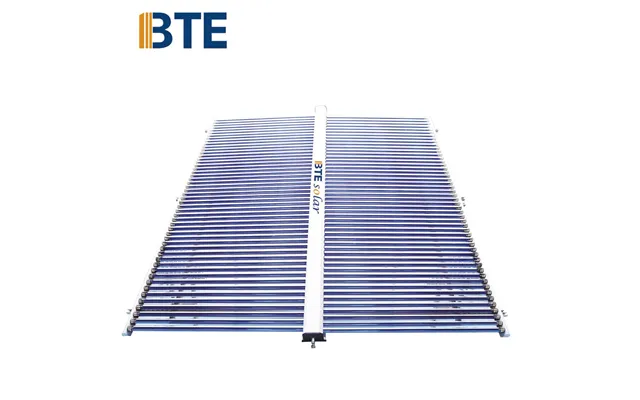
The Bte Solar 100 Tubes High Efficiency Solar Heating System is listed with copper pipes and is described as a solar heating system for Spain. The reference data identifies the product as having 100 tubes, but it does not provide additional technical details such as total collector area, flow rate, pool capacity, installation dimensions, or temperature performance.
Because of that, shoppers should treat the listing as an initial comparison point rather than a complete installation specification. A system with many tubes may sound impressive, but the number of tubes alone does not tell you exactly how much water it can heat or how it will perform at your property.
Before purchasing a solar tube system, consider asking for the dimensions, connection requirements, compatible pump specifications, mounting method, and recommended pool size. You may also want to confirm whether the design is intended for a particular climate or installation angle.
Solar heating depends heavily on sunlight and system placement. Roof direction, shading, local weather, plumbing layout, and circulation all influence real-world results. Even a well-designed collector cannot gather much energy from sunlight when the panels are shaded for most of the day.
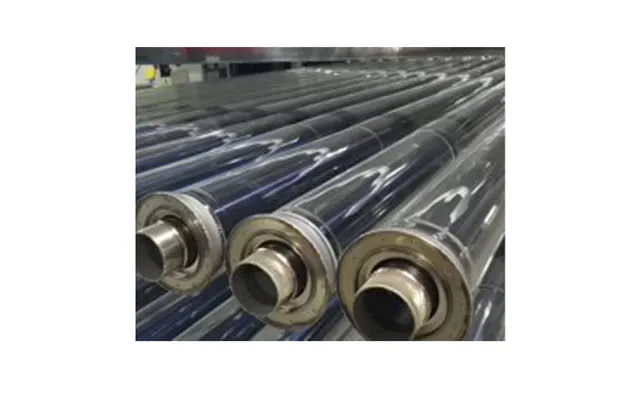
The Efficient Heating New Technology Parabolic Solar Vacuum Tube Pressurized Pool Heating Solar Collector is another solar-based listing in the reference data. It is described as a pressurized pool heating solar collector with high transmittance, and the product title identifies parabolic and vacuum-tube technology.
Like the Bte Solar listing, this product may appeal to shoppers looking for a solar approach to pool heating. However, the supplied data does not state its collector dimensions, number of tubes, pool capacity, installation requirements, or expected temperature increase. Those details should be confirmed before treating the product as a complete solution for a particular pool.
Solar vacuum-tube systems are generally designed to capture solar energy through tubular collectors, while parabolic shapes can focus sunlight toward a heating surface. In practical terms, these systems need careful placement and compatible water circulation. The collector is only one part of the setup; plumbing, pumping, mounting, and controls also matter.
Would the system fit your available space? Can your existing circulation equipment support it? These are more useful questions than simply focusing on the phrase “high efficiency.” A good match between the collector and the rest of the installation is what turns solar energy into usable pool heat.
The Pondmaster Floating Winter Pond De-icer is listed at $83.89 on Peta2z. The Bte Solar 100 Tubes High Efficiency Solar Heating System is listed at $1,400 on Alibaba, while the Efficient Heating New Technology Parabolic Solar Vacuum Tube Pressurized Pool Heating Solar Collector is listed at $112 on Alibaba.
These prices should be viewed as comparison data from the supplied listings. The reference data does not provide regular prices, confirmed discounts, shipping charges, installation costs, taxes, or availability details. The product descriptions for the two Alibaba listings mention exclusive perks of up to $500 off, but the data does not establish the conditions, eligibility, timing, or final price of any such offer.
Price alone can be misleading. A lower-priced collector may still require additional mounting hardware, plumbing work, controls, or professional installation. Similarly, a pond de-icer may be economical for preventing ice in a pond but unsuitable for the heating demands of a swimming pool.
Solar pool heating can be attractive because it uses sunlight as the energy source. Yet the system must be planned around the property. Start by looking at the roof, rack, or ground area where collectors could be installed. Note when that space receives direct sunlight and whether trees, buildings, or other structures create shade.
Next, examine the pool’s circulation setup. Solar heating usually relies on water moving through a collector and returning to the pool. The plumbing route should be practical, accessible, and compatible with the pump and control arrangement. If the system is pressurized, the installation should be evaluated carefully so the connections and components match the required operating conditions.
A solar collector cannot create sunlight, so local conditions are central to its performance. Bright, consistent sun generally provides more opportunity for solar heating than overcast or shaded conditions. Pool covers can also be relevant because reducing heat loss may help preserve the warmth captured during the day.
Do not judge a solar system only by its product title. Ask for measurable information, including recommended pool volume, collector size, flow requirements, and expected performance under stated conditions. Without those details, it is difficult to compare two systems fairly.
Installation is one of the most important parts of any heating project. A collector must be mounted securely, connected correctly, and integrated with the water circulation system. A floating de-icer must be used in the environment it was designed for, with attention to pond depth, cord placement, and electrical safety.
The Pondmaster listing specifies a minimum pond depth of 18 inches and includes an 18-foot cord. Those specifications should be considered during placement. Keep electrical connections protected and follow the manufacturer’s instructions for safe operation. Water and electricity require careful handling, even when equipment is designed for outdoor use.
For solar pool heating, installation may involve plumbing changes and mounting work. If you are unsure about electrical connections, structural support, pressure requirements, or water circulation, consult a qualified professional. A poorly planned installation can reduce performance and create avoidable risks.
Regular checks help heating equipment perform more reliably. For a pond de-icer, inspect the unit for visible damage, buildup, or obstructions before use. Check the cord and housing, and make sure the device remains positioned as intended. The Pondmaster product information describes sealed internal electronics and a double-sealed shell, but routine inspection is still sensible for any outdoor equipment.
Solar systems also benefit from visual inspection. Look for dirt, debris, damaged tubing, loose connections, or unusual leaks. Keep the collector area clear of shading where possible, and monitor the circulation system for signs that water is not moving correctly.
Maintenance is a little like tuning a musical instrument: small adjustments and regular attention can help the whole system work more smoothly. Waiting until a cold day or a circulation failure leaves fewer options.
Choosing an efficient heating method is only part of managing energy use. Operating equipment when conditions are favorable, reducing unnecessary heat loss, and maintaining proper circulation can all support more sensible use. Solar systems naturally depend on available sunlight, while the Pondmaster de-icer uses thermostatic control according to the supplied description.
For a pool, consider how much heating you actually need. Raising the temperature dramatically may require more energy than maintaining a moderate target. If you use a cover, make sure it is suitable for the pool and installed safely. Limiting heat loss can make any heating system work less like a sprint and more like a steady walk.
The most efficient purchase is often the one that solves the correct problem. If you need to keep a winter pond from freezing completely, the Pondmaster de-icer is the relevant type of product among these listings. If you want to explore solar pool heating, the two solar collector listings may be worth investigating further, provided their specifications match your pool and installation conditions.
Begin with purpose. Is the product intended for a swimming pool, ornamental pond, or winter protection? Then compare capacity information, power requirements, system dimensions, mounting needs, and compatibility with your existing equipment.
Next, separate confirmed facts from unanswered questions. The reference data confirms the Pondmaster’s wattage, dimensions, cord length, minimum pond depth, and stated pond capacity. It does not provide equivalent performance details for the two solar listings. That difference should guide the questions you ask before committing to a purchase.
Finally, review the total project cost. The listed product price may not include plumbing, mounting, professional labor, electrical work, or other accessories. A complete comparison looks beyond the number shown beside the product title.
Choose the Pondmaster Floating Winter Pond De-icer if your main concern is maintaining an open area in a winter pond and your pond fits the listed requirements, including up to 2,000 gallons and at least 18 inches of depth.
Consider the Bte Solar 100 Tubes system if you are researching a larger solar collector arrangement and are prepared to confirm its technical specifications, installation requirements, and suitability for your location. Its listing price is $1,400, but the supplied data does not explain the full installation scope.
Consider the parabolic solar vacuum tube collector if you want to investigate a solar pool heating option listed at $112. Before deciding, request the missing information about capacity, dimensions, connections, pressure, and installation. The lower listed price does not by itself prove that it will meet your heating needs.
The best pool heating choice starts with a clear goal. The Pondmaster Floating Winter Pond De-icer is a winter pond product designed to help maintain an ice-free area, while the Bte Solar 100 Tubes system and parabolic solar vacuum tube collector are solar heating options that require further specification checks. Compare purpose, capacity, installation demands, and total project cost—not just the headline price. By treating each listing as part of a bigger system, you can make a more informed decision and choose equipment that fits your water feature, climate, and heating plans.