

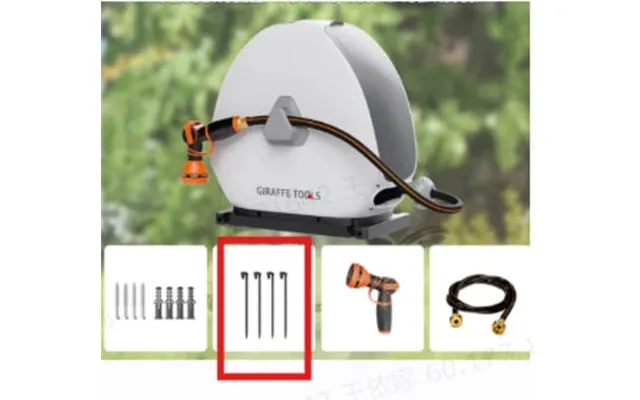
Garden Hose Fittings & Valves price list
Last updated Saturday, Oct 17, 2026
| Garden Hose Fittings & Valves | Price |
|---|---|
| Ground Spike For Hose Reel | $29.99 |




Loading...
Last updated Saturday, Oct 17, 2026
| Garden Hose Fittings & Valves | Price |
|---|---|
| Ground Spike For Hose Reel | $29.99 |
A reliable watering setup can make garden care feel less like a chore and more like a smooth routine. Garden hose fittings and valves help connect, control, direct, and organize water flow, while the right support equipment can keep a hose reel steady where you need it. If your current setup leaks, kinks, shifts, or feels awkward to use, a small upgrade may make a surprisingly large difference.
This guide focuses on the garden hose fittings and valves category, with practical advice for choosing components that suit your outdoor watering habits. It also highlights the Ground Spike For Hose Reel listed in the reference data. ZoneOffer is a comparison site, so it helps you review product information rather than acting as the store selling the item.
A hose is only one part of a watering system. The connections at the faucet, hose ends, spray tools, splitters, valves, and reels all influence how easily the system works. Think of fittings as the joints in a garden’s plumbing network: when they match well, water moves where you want it; when they do not, leaks and frustration can follow.
Good fittings can help you connect accessories, change watering patterns, and make routine tasks easier. Valves are especially useful when you want more control over the flow. Instead of walking back to the faucet every time you need to pause or reduce the stream, a suitable valve can place that control closer to your working area.
That does not mean every setup needs a large collection of accessories. The smartest approach is to identify the inconvenience first. Are you dealing with a loose connection, poor control, an unstable hose reel, or a hose that is difficult to store? Once you know the problem, you can choose a component that solves it without cluttering your yard.
Garden hose fittings come in several forms, each designed for a particular connection or control task. Some join the hose to an outdoor faucet, while others connect a hose to a nozzle, sprinkler, reel, or additional hose section. A fitting should create a secure connection without making everyday use unnecessarily difficult.
Connectors and couplings are used to join hose sections or attach accessories. They can be helpful when you need extra reach or want to switch between different watering tools. Before choosing one, consider the connection points already present in your setup. A fitting that seems useful in isolation may not help if its ends do not match the equipment you already own.
Ease of handling matters, too. A connector that is simple to twist into place can save time throughout the season. If the fitting is difficult to grip, you may be tempted to overtighten it, which can make later adjustments harder and may place unnecessary strain on the connection.
Adapters are useful when two components use different connection styles. They can bridge the gap between a faucet, hose, spray tool, or other watering accessory. When considering an adapter, check the product details carefully and compare the connection types rather than relying on appearance alone.
Hose-end fittings are often handled repeatedly, so convenience is important. You may attach a nozzle in the morning, disconnect it for storage, and reconnect it later the same day. A practical fitting should support that rhythm rather than turn each change into a wrestling match.
A splitter can divide one water source into more than one outlet. This may be useful when you want to keep a hose connected while also using another watering line. Separate controls can make the arrangement more flexible, although you should still pay attention to how many outlets you truly need.
More connections can mean more places to inspect if water escapes. Keep the design simple where possible, and make sure each fitting is firmly connected before turning on the water. A few seconds of checking can prevent a wet surprise around the faucet.
Valves give you a way to manage water flow. Depending on the design and placement, a valve may let you start, stop, or reduce the flow near the hose or accessory you are using. That added control can be valuable when watering delicate plants, filling a container, or moving between garden beds.
A valve is not a magic fix for every watering problem. It should complement a secure hose and suitable fittings. If a connection is loose or a hose is damaged, adjusting the flow may reduce the visible spray without addressing the underlying issue. Use valves as control tools, not as substitutes for sound equipment.
Picture yourself watering a row of containers. Without a nearby control, you may need to walk back to the faucet whenever you want to pause. With a convenient valve, you can make quick adjustments where you are standing. That small change can make the task feel more natural and less repetitive.
Valves may also help when you need a gentler stream. Strong flow can disturb loose soil or overwhelm smaller plants. By adjusting the water, you can work more carefully and avoid turning a simple watering session into a miniature mudslide.
The best location for a valve depends on how you use your hose. A control at the faucet may suit a short watering area, while a hose-end control may be more convenient for larger spaces. If you regularly move between beds, pots, and lawn areas, placing control near the working end may reduce unnecessary trips.
Accessibility is worth considering before installation. Can you reach the valve comfortably? Can you see its position clearly? Will plants, soil, or stored tools make it difficult to operate? A component is most useful when it is easy to find and adjust during ordinary garden work.
The reference data includes the Ground Spike For Hose Reel, described as a ground spike for a hose reel. It is listed under the brand Giraffe Tools US and associated with the store giraffe tools. The listed price is $29.99.
A ground spike for a hose reel is designed around one practical concern: keeping the reel positioned in the ground rather than allowing it to shift during use. If your hose reel moves as you pull the hose, a stabilizing accessory may be worth considering. The goal is simple—make the reel feel more anchored while you extend and retract the hose.
Before choosing this type of accessory, think about where you plan to position the reel. The ground surface, the amount of available space, and the direction in which you usually pull the hose can all affect how convenient the setup becomes. A well-placed reel can turn hose storage into a quick, predictable motion instead of a daily tug-of-war.
Hose organization is about more than appearance. When a reel stays in place, the hose may be easier to extend along a planned route and return after use. That can reduce wandering loops across walkways and help keep the watering area more orderly.
Imagine a reel as an anchor point in your outdoor setup. Without enough stability, every pull can move that point. With a suitable support accessory, the reel may remain closer to its intended position, making the entire watering process feel more controlled.
Start by asking where the hose reel will be used most often. Is it beside a garden bed, near a lawn, or in another outdoor watering area? Next, consider whether the reel needs to stay in one place or whether you frequently move it. A fixed support may be useful for a dedicated watering station, while a portable arrangement may suit changing tasks.
You should also review the product information for compatibility and installation requirements. The reference data identifies the Ground Spike For Hose Reel by name, but it does not provide dimensions, materials, installation instructions, or compatibility details. Those points should be checked in the product listing before making a purchase decision.
Choosing fittings becomes easier when you map your watering system from the water source outward. Begin at the faucet and follow the path through the hose, reel, valve, connector, and watering tool. At each point, ask what needs to connect, disconnect, or change.
Write down the problem you want to solve in one sentence. For example: “I need better control near the garden bed,” or “My hose reel shifts when I pull the hose.” This simple step keeps you focused. Otherwise, it is easy to buy accessories that sound useful but do not address the real inconvenience.
Compatibility should be one of your first checks. Look at the connection details for both the existing equipment and the new fitting. Product names can sound similar even when connection types differ, so confirm the specifications in the listing whenever they are provided.
Do not assume that a fitting will work with every hose, faucet, reel, or nozzle. The reference data for the featured ground spike does not specify the types of hose reels it fits. For that reason, review the relevant product details before ordering rather than guessing from the title alone.
An accessory used every day deserves more attention than one used occasionally. If you water frequently, prioritize convenient handling and easy access. You may also prefer a layout that minimizes repeated bending, walking, and reconnecting.
For occasional use, a simpler setup may be perfectly suitable. The best system is not necessarily the one with the most parts. It is the one that makes your regular tasks easier without creating extra maintenance.
Different tasks call for different levels of control. A broad lawn area may need a different approach from a collection of delicate pots. A valve can help you adjust flow, while a connector or adapter can help you change tools. A reel support can help with organization and stability.
Try to build your system around the way you actually work. If you move constantly, prioritize flexibility. If you water one area repeatedly, consider a stable, dedicated arrangement. Your garden routine is the blueprint; the fittings are the pieces that follow it.
Before installing any fitting or accessory, turn off the water and inspect the connection points. Remove dirt, plant debris, or old material that could prevent a clean connection. A fitting cannot seal well against a surface that is already clogged or uneven.
Hand-tighten connections carefully and avoid forcing them. Over-tightening may make the part difficult to remove later. After setup, turn the water on gradually and watch each connection. Look for dripping, spraying, or movement before using the system normally.
Testing in stages makes troubleshooting easier. First, check the faucet connection. Then inspect the hose and any intermediate fitting. Finally, test the valve, nozzle, or other accessory. If you activate everything at once and notice a leak, you may have to examine the entire system.
A short test can also reveal whether the layout is practical. Is the hose pulling smoothly? Does the reel stay where you expect? Can you reach the valve without stepping into a flower bed? Adjusting the arrangement early is easier than living with an awkward setup all season.
Hose fittings work best when they are not buried under leaves, soil, or garden tools. Keep connection points visible enough to inspect. If you use a reel support, leave room to operate the reel and pull the hose without snagging nearby objects.
Clear organization also makes seasonal checks simpler. When components are easy to see, you are more likely to notice wear, looseness, or damage before the problem becomes larger.
Leaks often begin with small issues: a connection that is not seated correctly, a fitting that does not match, or a seal that has become worn. Regular inspection can help you spot trouble early. Look for damp areas around connections, unexpected sprays, or a drop in performance when the system is running.
Water control matters for both convenience and responsible garden care. A valve can help you stop flow quickly, while a well-organized reel can reduce the time spent dragging and repositioning a hose. The less effort your setup requires, the more likely you are to use it thoughtfully.
If a leak continues after reconnecting the parts, stop and review compatibility and condition. Do not keep tightening indefinitely. The issue may be a mismatch or damaged component rather than insufficient force.
Maintenance does not have to be complicated. Periodically disconnect fittings and check for dirt, cracks, distortion, or signs of wear. Rinse away debris and reconnect the parts carefully. If a valve becomes difficult to operate, inspect it rather than forcing the handle.
Hose reels also benefit from simple care. Keep the hose winding evenly and avoid allowing large loops to bunch together. A neatly wound hose is easier to pull out next time and less likely to create unnecessary strain on the reel or connections.
At the start of the watering season, inspect the entire path from the faucet to the hose end. Check the fittings, valves, reel, and support arrangement. At the end of the season, clean the equipment and store removable components in a suitable location if needed.
The reference data does not provide specific storage instructions for the Ground Spike For Hose Reel, so consult the product listing or manufacturer information for care guidance. Avoid assuming that every accessory should be handled in exactly the same way.
When comparing garden hose fittings and valves, look beyond the headline name. Review the intended use, connection details, installation information, and any included components shown in the listing. These details help you understand whether the item fits your current system.
For the Ground Spike For Hose Reel, the reference data identifies a listed price of $29.99, the brand Giraffe Tools US, and the store giraffe tools. It does not provide a rating, shipping information, availability details, dimensions, or a discount. Those details should not be assumed; check the current comparison information and product listing for the latest information.
Using a comparison site can make this process more convenient because you can review product information in one place. Still, comparison is not the same as a guarantee. Treat the listed details as a starting point, then confirm the specifications that matter most for your yard and equipment.
A useful watering station does not need to be elaborate. Start with a dependable water source, a hose that reaches the working area, and fittings that connect securely. Add a valve if you need closer flow control, and consider a reel support if movement or storage is a recurring problem.
Arrange the station so the hose follows a clear path. Avoid sharp turns around corners, crowded planting areas, and places where people frequently walk. A little planning can protect the hose, reduce tripping hazards, and make watering feel more like a smooth loop than a tangled puzzle.
You can also group tasks by location. Water nearby containers first, then move toward more distant beds, or use a consistent route that prevents repeatedly crossing the same area. The right fittings support this routine, but your habits complete the system.
Garden hose fittings and valves can improve control, organization, and everyday convenience without requiring a complicated watering setup. Connectors help join equipment, valves help manage flow, and hose reel supports can help keep a reel positioned where you want it. The Ground Spike For Hose Reel listed in the reference data is associated with Giraffe Tools US, listed through giraffe tools, and shown at $29.99. Before choosing it or any other accessory, confirm compatibility and current product details. With a little planning, your hose system can become a dependable tool instead of another garden frustration.