


Juggling price list
Last updated Sunday, Nov 1, 2026





Loading...
Last updated Sunday, Nov 1, 2026
Juggling is one of the simplest ways to make soccer practice more engaging. You need only a ball, a little space, and the willingness to repeat the same movement until it feels natural. However, keeping the ball close can be difficult when you are still developing touch, timing, and coordination. That is where a soccer juggling bag can add structure to your training.
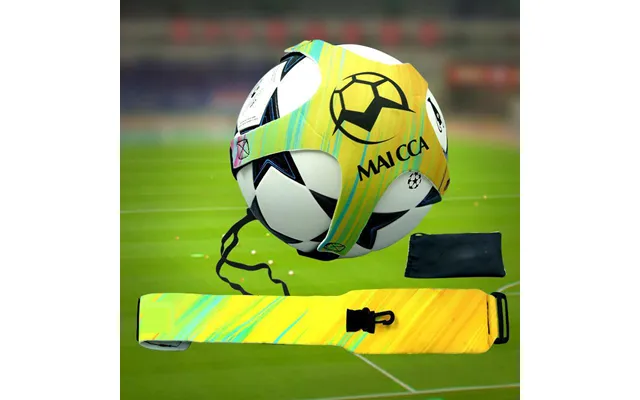
The featured listing is for a Soccer Juggling Bag Football Training Equipment Rebound Control Practice Ball Skills Development Portable Football Juggle Trainer with Elastic Cord. It is listed by Voghion, with Voghion shown as the brand, at a price of $10.08. ZoneOffer is a comparison site, so it helps you review product information rather than acting as the store selling the item.
In this guide, you will learn how this type of practice equipment can fit into a training routine, which skills it can support, and how to use it without making practice feel repetitive. Think of the trainer as a bridge between basic ball contact and more confident soccer technique.
A soccer juggling bag is a training aid designed to help you practice touches while keeping the ball connected to you. The featured product is described as a portable football juggle trainer with an elastic cord. Instead of chasing the ball after every missed touch, you can work with a rebound-style setup that brings the ball back toward you.
That simple change can make a practice session feel more controlled. It allows you to concentrate on the contact between your foot and the ball rather than spending most of your time retrieving it. For beginners, this can make the learning process less frustrating. For experienced players, it can provide a convenient way to repeat familiar movements.
The product description also highlights rebound control, practice, and skills development. These terms point to a training focus built around repeated contact and better control. It is not a replacement for full soccer practice, but it can be a useful piece of equipment within a broader routine.
Ball control is the foundation beneath many soccer skills. Passing, dribbling, receiving, shooting, and changing direction all become easier when your first touch is dependable. Imagine trying to write with a pen that keeps sliding across the page. Even if you know what you want to say, poor control makes the task harder. The same idea applies to a soccer ball.
Juggling encourages you to pay attention to how the ball responds to each touch. A contact that is too strong sends the ball away, while a contact that is too soft may not give you enough time for the next movement. Over time, you begin to recognize the balance between force and precision.
Regular practice can also encourage patience. You may not keep the ball in the air for long during your first attempts, and that is normal. The goal is not to chase a perfect performance immediately. Instead, use each repetition as feedback. Where did the ball move? Which part of your foot made contact? What could you adjust next time?
The featured trainer includes an elastic cord, according to the product description. An elastic connection can help return the ball toward the player after a touch. This makes the equipment suitable for repetitive exercises where you want to practice striking, receiving, and redirecting the ball.
For a new player, the cord may help create a more predictable practice rhythm. You can make a touch, watch the rebound, and prepare for the next contact. That rhythm works like a metronome for your feet: touch, observe, adjust, and repeat.
The product is described as portable football training equipment. Portability can be valuable when you want a practice option that does not require a full field or a large collection of equipment. You can focus on short sessions in an appropriate open area where you have enough room to move safely.
A portable design may also make it easier to build consistency. Instead of waiting for a formal team session, you can use a compact training aid when you have a few spare minutes. Even short practice periods can feel productive when you approach them with a clear goal.
Rebound control is another feature named in the listing. In practical terms, rebound-focused practice asks you to respond to the ball quickly and keep it within a manageable range. You are not simply kicking the ball; you are learning how your touch affects its next movement.
This kind of exercise can help you notice the difference between a controlled touch and a forceful one. The best contact is not always the strongest. Often, the most useful touch is the one that gives you another playable opportunity.
A soccer juggling trainer can suit beginners who are learning basic ball familiarity. If ordinary juggling feels difficult, a connected practice setup may give you more chances to repeat the movement without constantly stopping. You can begin with simple touches and gradually introduce more challenging patterns.
Young players may also enjoy the game-like quality of the equipment. Training becomes easier to continue when it feels active rather than like a lecture. Instead of standing still and listening to instructions, the player gets immediate feedback through every rebound.
More experienced players can use this type of equipment as a warm-up or coordination exercise. It may help them focus on quick touches, alternating feet, or controlled contact before moving into larger drills. The key is to match the exercise to your current ability instead of trying to force advanced movements too soon.
Casual players can benefit as well. You do not need to be preparing for a tournament to enjoy better ball control. A few focused repetitions can make informal play more comfortable and give you a more confident relationship with the ball.
Start with a single touch and allow the ball to return. Your first goal is not speed. Concentrate on making contact with enough control to keep the rebound manageable. If the ball moves too far or returns at an awkward angle, reduce the force on your next attempt.
Repeat this movement until it feels less surprising. Your body is learning timing through repetition, much like a musician learns a basic rhythm by playing it slowly before increasing the tempo.
Once single-foot touches feel comfortable, alternate between your left and right foot. Switching sides encourages balance and prevents you from relying entirely on your stronger foot. Keep the movement relaxed and avoid reaching too far for the ball.
If alternating feels difficult, return to a few repetitions on one side and then change. Training should challenge you, but it should not become so difficult that every attempt ends in frustration.
You can explore contact with the inside of the foot, the top of the foot, and other comfortable areas as your control improves. Each contact point can change the direction and height of the rebound. Begin with the area that feels most natural, then introduce variety gradually.
Always prioritize control over force. A gentle touch that stays playable teaches you more than a powerful strike that sends the ball away. Your aim is to create a repeatable movement, not simply to make the ball move quickly.
End each session with a small challenge. You might try a certain number of controlled touches, alternate feet for a brief sequence, or maintain a steady rhythm. Keep the challenge realistic. A goal that is just beyond your current ability can motivate you without making practice feel impossible.
Record your own progress if you find that helpful. You do not need complicated statistics. Simply noting what felt easier or harder can help you choose the next focus for your training.
Use relaxed movements whenever possible. Tension in your legs or shoulders can make your touches stiff and unpredictable. Take a breath, soften your knees, and watch the ball carefully. A calm body often makes it easier to react.
Keep your eyes on the ball during contact, but also learn to notice its overall path. You want to see where it is going rather than staring at one fixed point. This awareness can help you prepare your next touch earlier.
Practice both sides of your body. It is tempting to use the foot that feels strongest, especially when you want a longer sequence. However, balanced practice gives you a more complete skill base and helps you feel less limited during real play.
Keep sessions focused rather than endlessly long. A short routine with clear attention can be more useful than a long session where your technique becomes careless. When your touches start losing control, pause and reset instead of simply trying to force more repetitions.
One of the most common mistakes is striking the ball too hard. Powerful contact may feel impressive, but it can make the rebound difficult to manage. Start softer than you think you need, then increase force only when you can consistently predict the result.
Some players look down briefly and then lift their eyes before they are ready. This can cause them to miss the ideal contact point. Keep your attention on the ball during the important part of the movement, especially while learning.
A rigid stance limits your ability to adjust. Keep your posture comfortable and allow small movements through your legs and hips. You do not need exaggerated motion; you simply need enough flexibility to stay aligned with the ball.
Juggling is a coordination skill, and coordination develops through repetition. If your first sessions feel awkward, that does not mean the method is failing. Treat mistakes as information. Each missed touch shows you something about timing, contact, or force.
Choose an open practice area that gives you enough space to move without striking nearby people or objects. The product is designed for football juggling practice, but your surroundings still matter. Look around before beginning, and remove obstacles that could cause a trip or an unexpected collision.
Wear comfortable clothing and suitable athletic footwear for your practice surface. Move within your ability, especially when attempting quicker touches or changes in direction. If your body feels tired, take a break. Good technique becomes harder to maintain when fatigue takes over.
Keep the session suitable for your experience level. Beginners can use gentle movements and simple goals, while more confident players can add variation. There is no advantage in turning a basic coordination drill into a rushed contest.
The reference listing identifies the item as a Soccer Juggling Bag Football Training Equipment Rebound Control Practice Ball Skills Development Portable Football Juggle Trainer with Elastic Cord. It is listed under the Voghion brand and associated with the Voghion store at $10.08.
Those are the specific details provided in the reference data. Information such as customer ratings, shipping terms, stock status, included accessories beyond the stated description, material composition, and size is not provided here. Before making a purchase decision, review the current listing details through the comparison information available on ZoneOffer.
Because ZoneOffer is a comparison site, it is useful for evaluating the listed product and its stated price in one place. It is not the seller, and the Voghion store is the store identified in the supplied offer data. Keeping that distinction clear helps you understand what each platform does.
If you want a simple way to repeat ball touches, the featured trainer may be worth considering. Its stated purpose combines rebound control, football practice, skills development, portability, and an elastic cord. That combination can make solo practice more structured than simply kicking a ball against an unpredictable surface.
The best choice depends on your goals. If you want team tactics, passing patterns, or match preparation, you will need other forms of training too. If you want to work on touch and coordination in a convenient way, a connected juggling trainer may be a practical addition.
At the listed price of $10.08, the featured product offers a clearly identified entry point for shoppers exploring this type of equipment. Still, compare the available listing information and think about how often you will use the trainer. Equipment becomes valuable when it supports a routine you can actually maintain.
A soccer juggling bag can turn ordinary ball practice into a more focused routine. The featured Voghion product is described as portable football training equipment with rebound control, skills-development use, and an elastic cord. Listed at $10.08 through Voghion, it may appeal to beginners, casual players, and experienced athletes who want repeated touches in a compact format. Use it patiently, focus on control instead of power, and let each repetition guide your improvement. ZoneOffer helps you compare the available offer, while the right training habits help you get more from every session.