

Antenna Rotators price list
Last updated Friday, Nov 6, 2026
| Antenna Rotators | Price |
|---|---|
| Furuno 008-476-610 Fur-assy Ant Radiator Rsb0071-058 Assy Ant Radiator Rsb0071-058 | $666.12 |





Loading...
Last updated Friday, Nov 6, 2026
| Antenna Rotators | Price |
|---|---|
| Furuno 008-476-610 Fur-assy Ant Radiator Rsb0071-058 Assy Ant Radiator Rsb0071-058 | $666.12 |
Finding the strongest over-the-air television signal is not always as simple as attaching an antenna and scanning for channels. Signal direction, terrain, buildings, trees, and interference can all affect reception. An antenna rotator can help you aim an outdoor antenna toward different broadcast towers without climbing onto the roof each time. Think of it as a steering wheel for your antenna: instead of moving the entire setup by hand, you adjust its direction from a more convenient location.
This guide explains how antenna rotators work, what to consider before choosing one, and how to evaluate the product listed in the reference data. It also covers installation planning, signal testing, maintenance, and practical buying questions. ZoneOffer is a comparison site, so it helps you review product information and compare offers; it is not a store or seller.
An antenna rotator is a motorized device designed to turn an outdoor television antenna. Many households use one antenna to receive signals from broadcast towers located in different directions. Rather than installing multiple antennas or manually repositioning one, you can use a controller to rotate the antenna toward the desired area.
The device generally sits near the antenna mast and connects to an indoor control unit. When you change the direction, the motor turns the antenna assembly. Once the antenna points toward the selected signal source, you can scan for channels or watch television with the antenna in that position.
Rotators are especially useful when nearby broadcast towers are spread around your area. They may also help when you want to experiment with positioning to reduce interference. However, a rotator does not automatically create a stronger signal. It changes the antenna’s direction, while reception still depends on antenna design, installation height, surrounding obstacles, and local broadcast conditions.
Television signals travel from broadcast towers to your antenna. If the antenna faces the wrong direction, the signal may arrive at an unfavorable angle. The result can be missing channels, pixelation, audio dropouts, or an unstable picture.
Even a small directional adjustment can sometimes make a noticeable difference. Imagine tuning a flashlight toward a target rather than shining it across the room. An antenna rotator gives you more control over that aim, which can be helpful when towers are not grouped in one direction.
Direction is only one part of the reception picture. Roof structures, nearby buildings, hills, trees, and electrical interference may also affect performance. A rotator works best as part of a well-planned antenna system rather than as a standalone solution to every reception problem.
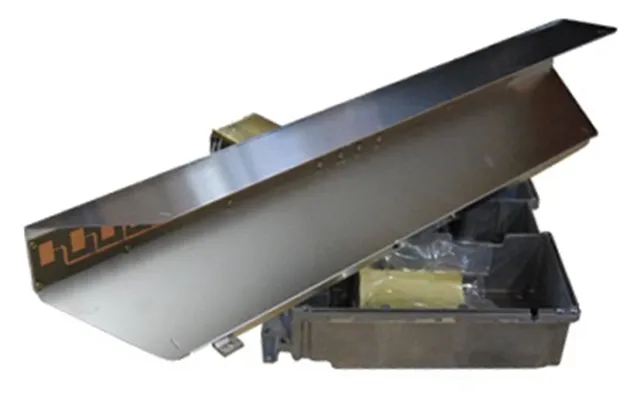
The supplied listing identifies a FURUNO product with the title “Furuno 008-476-610 Fur-assy Ant Radiator Rsb0071-058 Assy Ant Radiator Rsb0071-058.” The listing describes it as an antenna radiator assembly and gives the model references 008-476-610 and RSB0071-058.
The offer is associated with the brand FURUNO and is shown through the store named The Twister Group. The listed price is $666.12. The reference data does not provide a regular price, discount, shipping information, availability status, warranty details, installation instructions, or compatibility information.
Because the listing uses antenna-radiator terminology, shoppers should verify exactly how the item fits into their intended system before purchasing. The reference data places the offer in the Antenna Rotators category, but the product title itself refers to an antenna radiator assembly. That distinction matters. A radiator assembly may not be the same component as a complete motorized rotator with an indoor controller.
Start by checking whether the listed assembly is the part you need or whether your system requires a complete rotator package. Review the model number carefully, especially if you are replacing an existing component. The two identifiers shown in the listing are FURUNO 008-476-610 and RSB0071-058.
You should also confirm connector types, mounting requirements, electrical specifications, and compatibility with the rest of your antenna equipment. These details are not included in the reference data, so they should be confirmed through reliable product documentation or a qualified installer before you commit to a purchase.
A rotator can make a directional antenna more flexible. If one group of stations lies to the northeast and another lies to the southwest, you may be able to rotate the antenna between those directions instead of choosing only one. This can expand your viewing options when local geography makes a fixed position impractical.
Rotators can also reduce the need for repeated roof access. Adjusting an antenna by hand is inconvenient and may create safety risks. An indoor controller lets you make changes from inside the home, which is more practical for regular testing and channel searches.
There is a trade-off, though. Rotating the antenna takes time, and the antenna cannot face every direction simultaneously. If several televisions need different channels from different directions at the same moment, one rotating antenna may not be the ideal arrangement. In that situation, a different system design may be worth considering.
A fixed antenna may be enough if most desired broadcast towers are in the same direction. Once you find a reliable position, a fixed setup can be simple to operate because no adjustment is needed.
A rotating antenna is more appealing when towers are scattered across different directions or when you want to test reception from several angles. It offers flexibility, but it adds mechanical and electrical components that must be installed correctly.
Ask yourself a few practical questions. Are the channels you want located in multiple directions? Do you regularly need to rescan for stations? Is the antenna mounted somewhere that makes manual adjustment difficult? If the answer to these questions is yes, a rotator may provide useful control.
Good installation begins before any hardware goes onto the roof, tower, or mast. Identify the safest mounting location and consider how the antenna will be supported. The mount should be stable, and the rotating assembly must have enough clearance to turn without striking nearby objects.
Pay attention to cable routing. A cable that becomes twisted or pinched as the antenna rotates can eventually cause problems. The system should allow movement without placing constant strain on the cable or connectors.
Electrical planning also matters. The controller and motor need to work together, and the system must be installed according to the equipment’s instructions. Since the reference data does not list electrical specifications for the FURUNO assembly, do not assume compatibility based on appearance or brand name alone.
Roof and mast work can be hazardous. Keep antennas, tools, and ladders away from overhead power lines, and do not work in wet, windy, or stormy conditions. If the installation location is difficult to reach or requires specialized mounting, a qualified professional may be the safer choice.
Safety is not a minor detail. A perfect signal is not worth risking a fall or electrical accident. Plan the work, use suitable equipment, and stop if conditions become unsafe.
Once the system is installed, test several antenna directions rather than stopping at the first usable picture. A position that produces one clear station may not be best for another. Note which direction works for each channel group, then compare the results.
Run a television channel scan after positioning the antenna. If your television displays signal information, use it while making small adjustments. Picture quality alone may not reveal the difference between a barely stable signal and a strong one.
Keep a simple record of useful positions. You might label them by direction or by the stations they serve. This turns the rotator into a practical tool instead of a guessing game. If the controller provides position markings, use them consistently during testing.
One common mistake is assuming that a rotator will solve every reception issue. If the antenna is poorly mounted, the cable is damaged, or large obstructions block the signal, rotating may have limited value.
Another mistake is buying a component without checking whether it is a complete system. The FURUNO listing is described with antenna-radiator language, so shoppers should pay close attention to what is included. A motor, controller, mounting hardware, or cable may not be part of the offer unless the listing specifically says so.
Some users also rotate the antenna too quickly while scanning. Give the system time to settle in each position, then test the signal. Fast adjustments can make it difficult to identify the position that actually performs best.
Outdoor equipment faces sun, rain, wind, temperature changes, and seasonal debris. Inspect the antenna and mounting hardware periodically for visible damage, loosened connections, corrosion, or unusual movement.
Watch for symptoms such as inconsistent rotation, unusual motor noise, or a controller that no longer corresponds to the antenna’s actual direction. These signs may indicate a mechanical or electrical issue. Do not force the antenna if it appears stuck, since forcing movement could damage the system.
Cable connections deserve attention too. A loose or weather-damaged connection can weaken reception and make a rotator appear ineffective. Keep all maintenance within your comfort level, and use a professional when the equipment is mounted in a dangerous location.
Price is important, but it should not be the only comparison point. Start with the exact model number and product type. Then consider whether the offer matches your system, what components are included, and whether technical documentation is available.
The reference listing shows the FURUNO item at $666.12. That figure should be treated as the listed offer price in the supplied data, not as a guarantee that the price, availability, or terms will remain unchanged. ZoneOffer helps users compare information, but it does not sell the product or establish the seller’s policies.
When comparing offers, look for clear descriptions rather than relying on a product photo or a broad category label. A precise description can help you avoid purchasing an assembly when you need a complete rotator, or buying a part that belongs to a different antenna system.
The FURUNO listing may interest shoppers who are specifically looking for the referenced antenna radiator assembly and have confirmed its compatibility. Its model identifiers provide a starting point for research, while the brand and listed offer price help you narrow your comparison.
It may not be the right choice for someone who expects a clearly described, all-in-one antenna rotator kit. The available data does not confirm that a motorized rotator, controller, mounting hardware, or other accessories are included. That is why checking the exact contents is essential before making a decision.
In short, this product deserves careful technical verification. If the part matches your existing equipment, it could be relevant to your project. If you are building a new rotating antenna system from scratch, compare it with complete systems and confirm every required component first.
Antenna rotators can make directional television antennas more adaptable by allowing you to aim toward different broadcast sources from inside your home. They are most useful when towers are spread across multiple directions, but successful reception still depends on antenna placement, clear signal paths, sound cabling, and safe installation. The supplied FURUNO 008-476-610 and RSB0071-058 listing is shown at $666.12 through the twister group, but its antenna-radiator description means compatibility and included components should be verified carefully. Use ZoneOffer as a comparison resource, review the technical details, and choose equipment that fits your complete antenna system.