
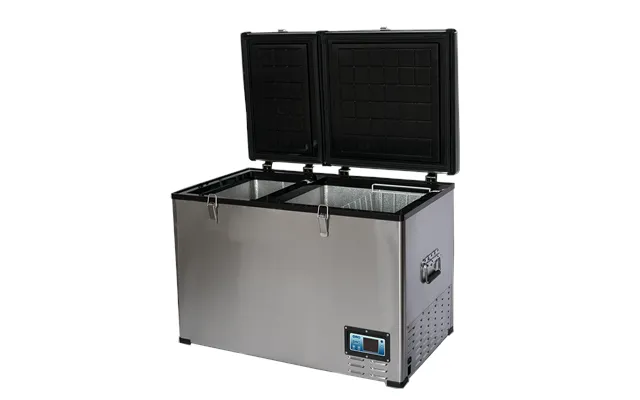
Ice Bins price list
Last updated Thursday, Oct 1, 2026
| Ice Bins | Price |
|---|---|
| Bcd-80-100-125 - Bcd-125 Lg Compressor-132 Quarts | $1,099.99 |




Loading...
Last updated Thursday, Oct 1, 2026
| Ice Bins | Price |
|---|---|
| Bcd-80-100-125 - Bcd-125 Lg Compressor-132 Quarts | $1,099.99 |
In a busy foodservice environment, ice is more than a simple ingredient. It supports beverage service, food presentation, cooling, and daily workflow. When ice storage is too small, poorly organized, or difficult to position, staff can lose time during every busy period. The right ice bin works like a dependable backstage assistant: it keeps a vital resource available while helping the service area stay organized.
Choosing an ice bin requires more than looking at capacity alone. You also need to consider the available floor space, electrical requirements, equipment weight, and the way your team expects to use it. A compact operation may value a smaller footprint, while a high-volume location may need a larger storage capacity. Comparing these details before buying can help you avoid choosing equipment that does not fit your operation.
The reference data features the Bcd-80-100-125 range from BODEGAcooler, listed by bodega cooler. The range includes three capacity options: BCD80, BCD100, and BCD125. The available specifications identify total capacities of 85 quarts, 106 quarts, and 132 quarts respectively.
The listed price for the Bcd-80-100-125 - Bcd-125 Lg Compressor-132 Quarts is $1,099.99. Since ZoneOffer is a comparison site rather than a store, shoppers can use this information as a starting point for comparing the featured product with other ice storage equipment and assessing whether the listed specifications match their needs.
The smallest option in the range is the BCD80, with a stated capacity of 85 quarts. The BCD100 provides 106 quarts, while the BCD125 offers 132 quarts. These differences may seem straightforward, but capacity can influence how often staff need to replenish ice and how much space the unit requires.
Think of capacity as the size of your operation’s reserve tank. A smaller tank may be suitable when demand is limited or space is tight. A larger tank can provide more room for storage, but it also comes with greater overall dimensions and weight. The best choice depends on your service pattern rather than on the biggest number alone.
The BCD125 is identified in the product title as the 132-quart option. The reference specifications list a 125-liter total capacity alongside the 132-quart measurement. For US foodservice planning, the quart figure is the most immediately useful measurement because it gives a familiar way to compare storage volume.
The listed refrigerator dimensions for the BCD125 are approximately 35 7/10 inches long, 21 9/16 inches wide, and 24 1/4 inches high, based on the supplied metric conversion data. The listed packing dimensions are approximately 37 1/4 inches long, 23 1/2 inches wide, and 26 inches high. These two sets of measurements are important for different reasons: refrigerator dimensions help with placement, while packing dimensions help you think about receiving and moving the unit into position.
A large ice bin can be useful, but only if it fits comfortably in the intended area. Before selecting the BCD125, measure the planned location carefully. Check the length, width, and height available, then think about how staff will move around the unit. An ice bin should support the workflow, not become an obstacle in a narrow service area.
It is also wise to consider nearby doors, counters, equipment, and walkways. Even when the unit fits on paper, a crowded placement can make scooping, cleaning, stocking, or general service less convenient. A few minutes with a tape measure can prevent a much larger setup problem later.
The BCD80, BCD100, and BCD125 offer a simple progression in storage capacity. The BCD80 is listed at 85 quarts, the BCD100 at 106 quarts, and the BCD125 at 132 quarts. This gives buyers a choice between a more compact storage option and a larger model designed for greater ice capacity.
The supplied data lists refrigerator dimensions for the range. The BCD80 is approximately 35 7/10 inches long, 21 15/16 inches wide, and 17 29/32 inches high. The BCD100 is approximately 35 7/10 inches long, 21 15/16 inches wide, and 21 1/16 inches high. The BCD125 is approximately 35 7/10 inches long, 21 9/16 inches wide, and 24 1/4 inches high.
With 85 quarts of stated capacity, the BCD80 is the smallest option in the range. Its listed height is approximately 17 29/32 inches, which is lower than the BCD100 and BCD125. That difference may matter when the equipment must fit beneath a counter, under a service area, or within a space where vertical clearance is limited.
The BCD80 is listed with a net weight of approximately 55.1 pounds and a gross weight of approximately 63.9 pounds. Net weight describes the unit itself, while gross weight includes the packed product information shown in the reference data. These figures can help with planning how the equipment will be positioned.
The BCD100 is listed at 106 quarts, placing it between the BCD80 and BCD125. Its refrigerator height is approximately 21 1/16 inches, giving it a taller profile than the BCD80 while remaining below the BCD125 in the listed range.
The BCD100 has a stated net weight of approximately 59.5 pounds and a gross weight of approximately 68.3 pounds. For an operation that wants more capacity than the smallest option without selecting the largest model, this middle configuration may be worth comparing against the available space and expected ice usage.
The BCD125 provides the highest stated capacity in this range at 132 quarts. Its listed net weight is approximately 63.9 pounds, and its gross weight is approximately 72.8 pounds. It also has the greatest listed height, so measuring vertical clearance is especially important.
Choosing the BCD125 may make sense when the priority is maximizing the stated storage volume among these three models. However, capacity should still be matched to real operating conditions. More storage is not automatically better if the unit occupies space your team needs for preparation, movement, or service.
The reference data lists a power supply of 100–240 volts AC for the BCD80, BCD100, and BCD125 models. This is a key specification to review before purchase because electrical compatibility is part of proper equipment planning.
The product title identifies the BCD125 as a large-compressor model. The supplied information does not provide additional compressor performance details, so buyers should avoid assuming specific cooling speeds, energy consumption, noise levels, or operating results beyond the listed specifications.
Before placing an ice bin into service, compare the stated 100–240-volt AC power requirement with the electrical setup at the intended location. If you are uncertain about compatibility, consult a qualified professional. Matching equipment to the correct electrical environment is a practical step that should happen before the unit is moved into a busy service area.
You should also account for the equipment’s physical position relative to outlets and other appliances. A good layout keeps cables managed and leaves enough room for staff to work safely and comfortably. The goal is a service station that feels smooth rather than cramped.
Dimensions influence nearly every part of installation. The BCD models share a listed length of approximately 35 7/10 inches, while the width is approximately 21 15/16 inches for the BCD80 and BCD100 and approximately 21 9/16 inches for the BCD125. Height varies more noticeably across the range.
That variation means a buyer should not treat the models as interchangeable from a layout perspective. A few inches of additional height can affect whether the unit fits below a counter or aligns with nearby equipment. It can also change how easily staff can access the ice during service.
The supplied packing dimensions are larger than the listed refrigerator dimensions. For the BCD80, the packing size is approximately 37 1/4 inches long, 20 43/64 inches wide, and 20 43/64 inches high. For the BCD100, the packing size is approximately 37 1/4 inches long, 23 1/2 inches wide, and 23 13/16 inches high. For the BCD125, it is approximately 37 1/4 inches long, 23 1/2 inches wide, and 26 inches high.
These measurements are useful when planning the path from the receiving area to the final location. Measure doorways, turns, corridors, and storage areas instead of checking only the final placement. A unit can fit perfectly in its destination yet still be difficult to move there if the route is too narrow.
The listed net weights range from approximately 55.1 pounds for the BCD80 to approximately 63.9 pounds for the BCD125. The BCD100 falls between them at approximately 59.5 pounds. Gross weights are higher because they reflect the packed product information supplied in the data.
Weight matters during setup, relocation, and floor planning. Consider the surface where the unit will stand and whether staff can move it without unnecessary strain. If the equipment will be positioned in a tight area, plan the installation before bringing it into the room.
It is also helpful to think about long-term convenience. An ice bin that is technically suitable but awkwardly placed may create friction every day. In contrast, a well-positioned unit can make routine service feel more predictable, like keeping your most-used tool within easy reach.
When comparing ice bins, start with the questions that affect your operation most. How much ice storage do you need? How much floor and vertical space can you spare? Is the listed electrical requirement compatible with your location? Will staff be able to access the bin without interrupting other work?
Next, compare the available capacity against the equipment footprint. The BCD80 offers 85 quarts, the BCD100 offers 106 quarts, and the BCD125 offers 132 quarts. If two models seem suitable, dimensions and weight can help you decide which one integrates more naturally into the workspace.
Product specifications are most valuable when you connect them to a real layout. Write down the available length, width, and height at the installation site. Then compare those measurements with the refrigerator dimensions and, separately, the packing dimensions. This simple process creates a clearer picture than relying on capacity alone.
Price is another part of the comparison. The featured Bcd-80-100-125 - Bcd-125 Lg Compressor-132 Quarts is listed at $1,099.99. Use that figure alongside capacity, dimensions, power supply, and weight to evaluate overall suitability rather than judging the product by price in isolation.
An ice bin becomes easier to manage when its location supports a consistent routine. Place it where authorized staff can access it without crossing unnecessarily busy paths. Keep the surrounding area orderly, and make sure the bin does not interfere with preparation or customer-facing service.
Good organization also means paying attention to how often the unit is used. A higher-capacity model may reduce the need for frequent replenishment, while a smaller option may be easier to fit into a compact workspace. There is no universal answer; the right balance depends on the operation’s layout and service rhythm.
Before selecting a model, review the exact capacity, dimensions, weight, and power information. The BODEGAcooler range provides three listed capacities and different height profiles, giving buyers useful points of comparison. Careful review helps ensure that the product you choose matches both the space and the intended workload.
Because product information can be updated, it is sensible to verify the current listing details at the time of comparison. ZoneOffer can help shoppers compare available product information, but it is not the seller or store for the featured equipment.
The BODEGAcooler BCD80, BCD100, and BCD125 models provide three stated storage capacities: 85 quarts, 106 quarts, and 132 quarts. The featured BCD125 listing is priced at $1,099.99 and includes a 100–240-volt AC power specification, multiple dimension details, and listed net and gross weights. By comparing capacity with floor space, height, electrical requirements, and everyday workflow, you can choose an ice bin that fits your foodservice environment instead of simply choosing the largest option.