

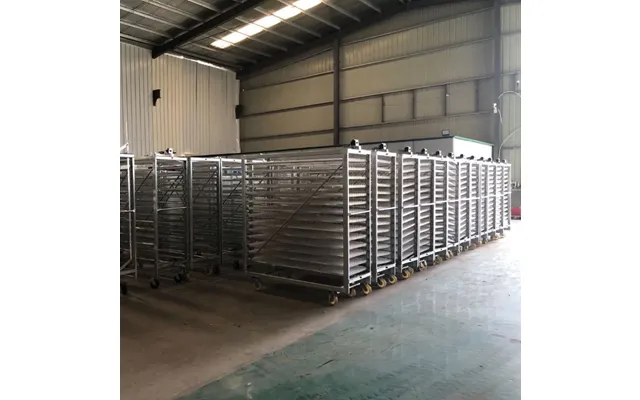
Egg Incubators price list
Last updated Tuesday, Oct 6, 2026




Loading...
Last updated Tuesday, Oct 6, 2026
Choosing an egg incubator is an important decision for anyone planning a hatchery, expanding an agricultural operation, or exploring more controlled egg incubation. The right machine can help organize the process, reduce manual work, and give you a dedicated environment for managing eggs. However, not every incubator suits every goal. Capacity, automation, operating habits, and budget all matter.
In the current comparison data, one notable listing is a fully automatic hatchery machine described as a chicken egg incubator with several possible capacity options, including 100, 200, 500, 5,000, and 10,000 eggs. The listed price is $3,320 through Alibaba. Because the listing presents multiple capacity figures in its title, you should confirm the exact configuration and final offer details before making a purchase.
ZoneOffer is a comparison site, not a store. Its role is to help you review product information and compare opportunities. Think of it as a map rather than the destination: it can point you toward a listing, while you still need to examine the seller’s current details, specifications, and terms.
Natural incubation can work well in some settings, but it depends heavily on the behavior and condition of the brooding hen. An incubator gives you a machine-based alternative. Instead of relying entirely on natural brooding, you can use an enclosed system designed for managed hatching.
For small agricultural projects, a suitable incubator may make planning easier. For larger operations, capacity becomes even more important. A machine designed for a few hundred eggs serves a different purpose from one marketed for thousands. The key question is simple: how many eggs do you realistically expect to incubate at one time?
Buying more capacity than you need may increase the initial cost and make the equipment unnecessarily large for your operation. On the other hand, choosing a machine that is too small can create bottlenecks. You may find yourself running several cycles when one properly selected machine could handle the workload more efficiently.
The featured listing is presented as a fully automatic chicken egg incubator machine for hatchery use. Its title references a broad range of capacities, from 100 eggs to 10,000 eggs, along with intermediate options. That range suggests the listing may cover different configurations rather than one single fixed-capacity model.
The listed price is $3,320, and the store shown in the comparison data is Alibaba. The offer identifies the product as new and includes wording about “1M new products” and exclusive perks of up to $500 off. These statements come from the supplied listing data, so they should be treated as listing information rather than a guarantee of a specific discount or purchasing outcome.
Since the brand field is blank in the supplied data, no brand should be assumed. Buyers should also verify whether the displayed price applies to the desired capacity, configuration, and quantity. When a product title includes several sizes or capacities, the headline price may not apply equally to every option.
Capacity is one of the first details to review when comparing egg incubators. A compact model may be suitable for a smaller project, while a commercial hatchery may need equipment designed for much larger batches. The featured listing mentions capacities of 100, 200, 500, 5,000, and 10,000 chicken eggs.
These figures can help you frame your search, but they do not automatically tell you which configuration is best. Consider your normal batch size, available floor space, labor, power setup, and ability to monitor the machine. A larger chamber is like a bigger kitchen: it can support more activity, but it also requires more planning.
Capacity options such as 100, 200, and 500 eggs may appeal to users who are scaling gradually or managing smaller production cycles. These sizes can offer a practical middle ground between basic home equipment and very large hatchery machinery.
Before selecting one, estimate how many eggs you can prepare, monitor, and manage during a single cycle. More capacity only helps when the rest of your operation can support it. You should also ask whether the listed capacity refers to the maximum number of eggs or the recommended working load.
The listing also references 5,000-egg and 10,000-egg capacities. Such figures indicate a much larger intended scale than a small poultry project. If you are considering one of these configurations, the machine’s physical requirements and operating needs deserve close attention.
At this scale, planning becomes just as important as the incubator itself. Think about placement, electrical requirements, cleaning routines, egg handling, and staff responsibilities. A large incubator can become the center of a hatchery workflow, so its capacity should match your overall system rather than stand alone.
The featured product is described as fully automatic, a phrase that can be attractive to buyers who want less manual intervention. Automation may be intended to simplify routine tasks, but the exact functions included are not specified in the reference data.
That means you should not assume which features are present. Ask for a complete specification sheet before purchasing. Useful questions may include: Does the machine automate egg turning? How are temperature and humidity managed? Are there alarms? Is the control system digital? What monitoring information does the operator receive?
Automation should support good management, not replace it. Even a machine promoted as fully automatic may still require inspection, cleaning, egg preparation, and attention to unusual conditions. A helpful way to think about automation is as a co-pilot: it can assist with routine control, but you still need to remain in the cockpit.
When reviewing incubators, avoid focusing on the headline price alone. A product can appear affordable until you discover that the displayed amount applies to a smaller configuration, while the capacity you actually need costs more. The featured offer is listed at $3,320, but the reference data does not identify which capacity that amount represents.
Start by matching the exact capacity to the exact price. Then review the equipment description, included components, power requirements, control features, and installation information. If any of those details are missing, request clarification before treating the listing as a final purchasing decision.
You should also compare the machine’s intended use with your own goals. A hatchery machine designed for large-scale use may be excessive for occasional batches. Conversely, a smaller incubator may not meet the needs of a commercial operation. The best value is not always the lowest number; it is the option that fits your workload without creating avoidable complications.
An incubator can only work with the eggs placed inside it. Preparation matters. Before loading eggs, create a consistent process for selecting, handling, labeling, and inspecting them. The reference data does not provide specific egg-handling instructions for the featured machine, so you should follow the manufacturer’s guidance for the chosen configuration.
Keep your process organized from the beginning. Record the date of each batch and identify which eggs belong together. Clear records can make it easier to monitor progress and evaluate results later. If you operate several batches, labeling becomes even more useful because it prevents confusion between different loading dates.
Handle eggs carefully and avoid treating the incubator like a simple storage cabinet. It is part of a biological process. Clean equipment, consistent preparation, and regular observation can help you manage that process more responsibly.
Maintenance is a major part of owning any incubator. A machine may have sophisticated controls, but dirt, residue, or neglected components can interfere with reliable operation. The supplied data does not specify a maintenance schedule for the featured listing, so consult the seller or manufacturer for the correct procedure.
Build a routine around inspection and cleaning. Check the chamber, trays, seals, vents, controls, and other accessible components according to the product instructions. Do not improvise with cleaning products or methods unless they are approved for the equipment. A careful routine is often easier than trying to correct a problem after several batches.
It is also sensible to keep notes about cleaning dates, operating cycles, and any irregular behavior. These records create a useful trail. If a problem appears, you have more information to share with the seller or technician instead of relying on memory.
Before purchasing a large or fully automatic incubator, confirm its power requirements. The reference data does not provide voltage, wattage, plug type, or backup power information for the listed machine. Those details are essential because an incubator must operate in an environment that can support its electrical needs.
Ask whether the selected configuration is suitable for your facility and whether additional installation work is required. If your location experiences interruptions, ask what the seller recommends for protecting the incubation cycle. Do not assume that a listing includes backup power or protective equipment unless the product information clearly says so.
Placement matters as well. Choose a clean, stable area with enough room for access and routine care. A cramped location may make loading and maintenance harder, while an unsuitable environment may create unnecessary operating challenges.
The listed price for the featured Alibaba offer is $3,320. That figure gives you a starting point for comparison, but it may not represent every possible configuration mentioned in the product title. Capacity, equipment options, quantity, and other order details can affect the final cost.
Use the price as one part of a larger evaluation. Consider whether the incubator matches your planned volume and whether you can support its operation. A lower initial cost may not be a good value if the machine lacks the capacity or functions you need. Likewise, a larger machine may not be economical if much of its capacity remains unused.
The listing description mentions exclusive perks of up to $500 off. Because the data does not explain the conditions, dates, eligibility, or exact application of that statement, confirm the details directly in the current offer. Promotional wording can change, so treat it as something to verify rather than something to assume.
Good questions can prevent expensive misunderstandings. First, ask which exact capacity is included at the $3,320 listed price. The title contains several capacity figures, so this clarification is especially important.
Next, request the full technical specification. Ask about automation functions, power requirements, control settings, included trays, dimensions, materials, and recommended operating conditions. The supplied reference data does not answer these questions, and they should not be guessed.
You should also confirm whether the listing is for one machine or a choice among multiple configurations. If you are comparing 100-egg, 500-egg, 5,000-egg, and 10,000-egg options, each may have a different price and operating profile.
Finally, review the current offer carefully before committing. Product titles can be broad, while the detailed listing usually contains the information needed to distinguish one configuration from another.
The right egg incubator depends on the balance between capacity, automation, budget, and practical responsibility. A small operator may value a manageable configuration, while a larger hatchery may focus on high-volume processing. Neither approach is automatically better. The best match is the one that fits your real workflow.
The featured fully automatic hatchery machine is worth examining because its listing references a wide capacity range and a price of $3,320. Still, the broad product title means careful verification is essential. Treat the listing as a starting point for comparison, then confirm the exact model and configuration before deciding.
When you compare products through ZoneOffer, focus on the details that affect your operation most. Capacity is the engine, automation is the assistant, and maintenance is the fuel that keeps the process moving. When those pieces fit together, your purchase decision becomes clearer.
In conclusion, the featured Alibaba egg incubator listing offers a fully automatic hatchery machine with capacity options referenced from 100 to 10,000 chicken eggs and a listed price of $3,320. Because the reference data does not identify the exact configuration behind that price, buyers should verify capacity, specifications, power needs, included features, and current promotional terms. Careful comparison can help you choose an incubator that supports your goals without paying for capacity or functions you do not need.