

Toy Abacuses price list
Last updated Wednesday, Oct 21, 2026



View 3 Offers
Loading...
Last updated Wednesday, Oct 21, 2026
Toy abacuses turn early math into something children can see, touch, and explore. Instead of treating numbers like mysterious symbols on a page, an abacus gives each count a physical form. A child can slide beads, group pieces, compare amounts, and discover simple patterns through play.
This guide explores three educational toy listings from the reference data: a multifunctional wooden math learning box, a mini wooden counting-bead abacus, and a wooden mathematics toy with counting sticks. Each option offers a different style of hands-on learning, so you can compare them according to your child’s interests, play habits, and stage of numeracy development.
Young children often learn best when an idea has a physical shape. An abacus gives them exactly that. Each bead can represent one item, making counting more concrete than simply repeating numbers aloud.
As children move beads from one side to another, they practice one-to-one correspondence—the idea that each object matches one number. This is a key foundation for counting. The toy also encourages children to slow down, observe what changes, and check their own answers.
Think of an abacus as a small playground for numbers. Children can experiment without needing a worksheet or a formal lesson. They can count forward, count backward, create groups, and compare which side has more or fewer pieces.
A toy abacus can support several early learning skills at once. Counting is the most obvious, but it is only the beginning. Moving beads or handling counting pieces can also encourage hand control, visual attention, and problem-solving.
Children can use beads or rods to connect spoken numbers with visible quantities. For example, they might move one piece while saying “one,” then move another while saying “two.” This simple rhythm helps numbers feel connected to real objects.
With adult guidance, children can also practice questions such as, “How many are here?” or “What happens if we add one more?” These prompts turn ordinary play into a relaxed math conversation.
Sliding beads and arranging counting pieces require controlled hand movements. Children use their fingers to grasp, push, separate, and organize the parts. These actions can make the toy engaging while giving little hands useful practice.
Fine motor development is not separate from learning. When a child becomes more comfortable manipulating small play elements, they may also find it easier to handle pencils, building pieces, puzzles, and other educational materials.
Abacus play invites children to watch what happens after every movement. They can see a row become fuller, emptier, divided, or rearranged. This visual feedback encourages concentration because the toy responds directly to their actions.
That immediate response can be especially helpful for children who enjoy active learning. Rather than listening to an explanation alone, they can test an idea and see the result in front of them.
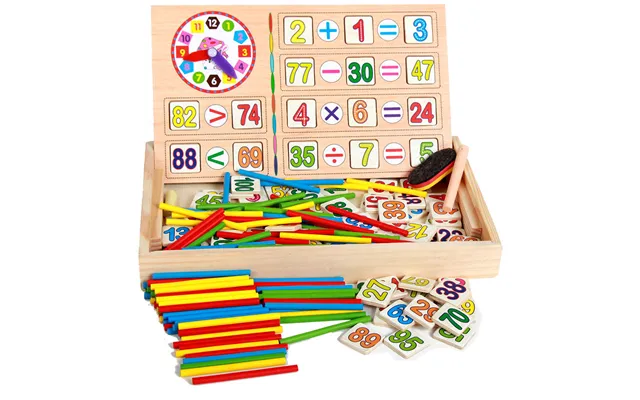
The Children Wooden Multifunctional Math Learning Box Digital Enlightenment Montessori Educational Toys For Kids is the broadest learning option among the three listed products. Its title presents it as a wooden learning box designed around multiple math activities and Montessori-style educational play.
A multifunctional format may appeal to families who want more variety than a basic bead abacus can offer. Instead of focusing on one repeated action, a learning box can become a flexible activity station for counting, sorting, matching, and number exploration, depending on how the child uses it.
The listing shows a price of 2.30 on Alibaba. The reference data does not provide a brand name or a regular price for this item, so shoppers should use the listing details to confirm the exact contents before comparing it with other options.
This product may suit children who like switching between activities. Some young learners lose interest when a toy offers only one type of movement. A multifunctional box can provide a wider playground for exploration, helping parents introduce different early math ideas in short sessions.
You might begin with simple counting, then move into sorting or matching when your child is ready. Keeping the activity playful is important. The goal is not to turn every moment into a test; it is to help children build confidence through repeated discovery.
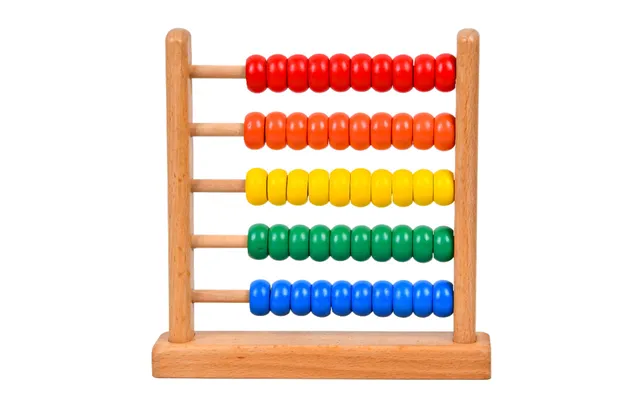
The Mini Wooden Children Early Math Learning Numbers Counting Calculating Beads Abacus Educational Toy is the most focused option in the reference data. Its title highlights counting beads, numbers, and calculating, making it a straightforward choice for children who are beginning to explore quantity and basic arithmetic.
A mini abacus can be easy to bring into short play sessions. Children can use it at a table, during a quiet learning period, or alongside number books and simple verbal games. Its bead-based design provides a direct way to demonstrate addition and subtraction: move pieces together to add, then move them away to take away.
The listed price is 1.25 on Alibaba. No brand is provided in the reference data, and no regular price is listed. As with any comparison, review the current product page for the details of the specific offer.
Try a “show me” game. Say a number and ask your child to move that many beads. Then reverse the activity by moving a group of beads yourself and asking your child to count them. This keeps the interaction active and gives children practice both producing and identifying quantities.
You can also ask comparison questions: “Which group has more?” “Can you make both sides equal?” or “What happens if we move two beads?” These questions encourage reasoning without requiring complicated instructions.
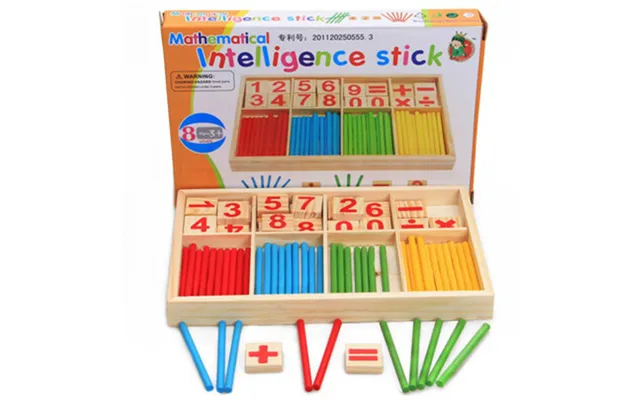
The Kids Wood Mathematics Toy Children Wooden Counting Stick Calculation Math Toys Early Learning Counting Rods Educational listing uses counting sticks or rods as its central learning feature. This makes it different from a traditional bead-focused abacus, while still supporting hands-on number practice.
Counting rods can help children build quantities physically. They may arrange pieces in rows, group them, compare lengths, or use them while saying numbers aloud. The tactile format can make early calculation feel more like building than solving a problem.
The listed price is 0.92 on Alibaba. The reference data does not include a brand name or regular price. Because the product title describes counting sticks and rods, shoppers should check the listing to understand the included pieces and activity format.
Start with sorting. Ask your child to place similar pieces together or arrange them from a smaller group to a larger group. Then count each group slowly. This encourages visual organization and helps connect groups with number names.
Next, create simple stories. “Here are three rods. If we add one, how many do we have?” A child can physically add the piece and count again. The story gives purpose to the movement, while the objects make the answer easier to understand.
All three listings focus on hands-on math learning, but they offer different starting points. The multifunctional wooden learning box is positioned as a broad educational toy. The mini wooden abacus concentrates on counting and calculating with beads. The counting-stick toy emphasizes rods or sticks for early mathematics practice.
For families looking for variety, the multifunctional learning box may be the most natural match. For a simple, direct introduction to counting beads, the mini abacus may be more suitable. For children who enjoy arranging objects and building groups, the counting-stick option may be worth considering.
Price can also be part of the comparison. The listed prices are 2.30 for the multifunctional learning box, 1.25 for the mini counting-bead abacus, and 0.92 for the counting-stick mathematics toy. These are the prices shown in the reference data, and the data does not provide regular prices or additional offer terms.
Start by thinking about how your child likes to play. Does your child prefer sliding pieces, sorting objects, or moving between several activities? The answer can help you choose a format that feels natural rather than forced.
Also consider the learning goal. If your main aim is counting practice, a bead abacus offers a direct visual tool. If you want broader activity options, a multifunctional box may provide more variety. If your child enjoys arranging pieces into groups, counting rods may be especially engaging.
Age guidance, piece details, and construction information are not included in the reference data. Before making a decision, review the individual listing for those specifics. This is particularly important when selecting an educational toy for a young child.
The best learning toy does not need to do all the work. A good abacus gives children room to try, make mistakes, and try again. Look for an option that can support open-ended play as well as simple adult-led activities.
You can introduce one idea at a time. Begin with counting, then move to more or less, equal groups, and basic addition. Like climbing a staircase, steady small steps can lead to stronger understanding than rushing through too many concepts at once.
Children do not need long lessons to benefit from an educational toy. A few minutes of playful counting can be enough to create a positive routine. Use everyday language and connect the activity to familiar experiences, such as sharing snacks, arranging toys, or counting steps.
Let your child lead sometimes. If they make a pattern or invent a game, follow their idea and ask questions about it. This approach keeps the toy from feeling like homework and gives you a glimpse into how your child thinks.
Stories can also make math more memorable. Pretend the beads are passengers boarding a bus, animals entering a barn, or stars moving across the sky. When numbers become part of a small adventure, children often stay engaged longer.
An abacus works well alongside picture books, drawing, building, and pretend play. After counting beads, a child might draw the same number of dots. After arranging rods, they might build a matching tower with blocks.
You can also pair the toy with movement. Ask your child to move three beads, then take three steps. This links the abstract number with both a visual object and a physical action. Variety helps keep practice fresh.
For older or more confident learners, introduce simple challenges without making speed the goal. Ask them to find two different ways to make the same total or to explain how they know one group has more. The explanation is often as valuable as the answer.
Product titles can provide a helpful first impression, but they do not always show every detail. Before choosing among these toy abacus listings, check the current product page for the exact design, included components, material information, and recommended age details.
The reference data identifies all three offers as being listed through Alibaba. It does not provide brand names for the products, and it does not include regular prices. Keep those limitations in mind when comparing value.
ZoneOffer is a comparison site, not a store. Its role is to help you review available product information and compare options. The actual listing should be checked for the latest details before you decide.
Toy abacuses make early math tangible, interactive, and easier to discuss. The multifunctional wooden math learning box offers a broad activity concept, the mini wooden counting-bead abacus provides a focused counting tool, and the wooden counting-stick toy brings calculation into a rod-based format. With listed prices of 2.30, 1.25, and 0.92 respectively on Alibaba, these three options give families different ways to explore hands-on learning. Choose the format that best matches your child’s play style, then keep the experience relaxed, curious, and fun.