


OUKITEL price list
Last updated Wednesday, Oct 14, 2026





| Store | Status | today | distance |
|---|
Loading...
Loading...
Last updated Wednesday, Oct 14, 2026
OUKITEL is a store focused mainly on portable power stations, solar generators, expansion batteries, and related accessories for customers in the US market. Its product range covers several needs, from keeping small devices charged during outdoor trips to supporting household appliances during a power outage.
The store also lists a few practical products outside its main power station range. These include a foldable cart, a solar extension cable, a flashlight, and a car jump starter. Still, portable energy storage remains the central theme. If you are comparing backup power options, OUKITEL gives you several capacity and output levels to consider in one place.
ZoneOffer is a comparison site rather than a store. The product details and prices discussed here come from the supplied OUKITEL reference data. Prices and availability can change, so check the retailer’s product page before making a purchase.
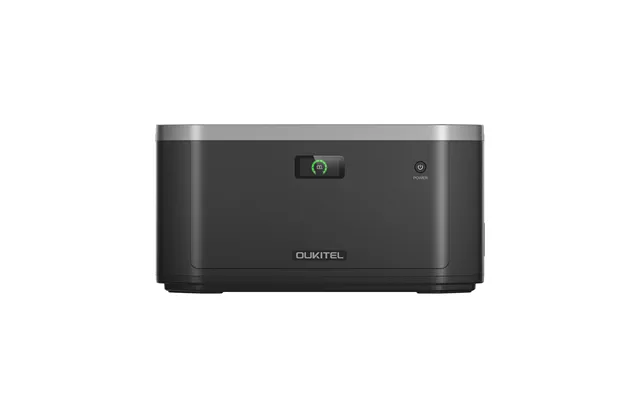
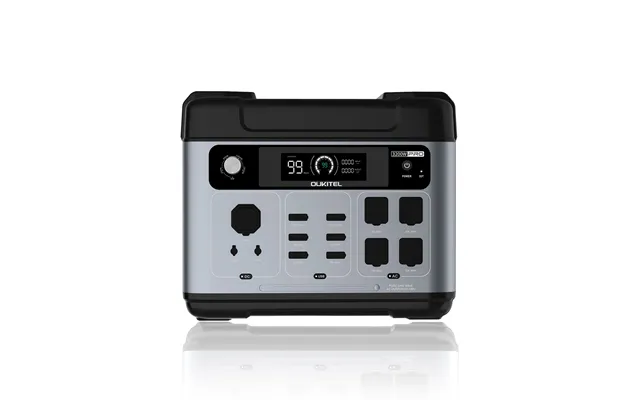
Portable power stations are rechargeable battery systems with outlets and charging ports. They can be useful at home, in an RV, at a campsite, or anywhere you need electricity away from a standard wall outlet. OUKITEL offers models with different capacities, output levels, recharge methods, and expansion options.
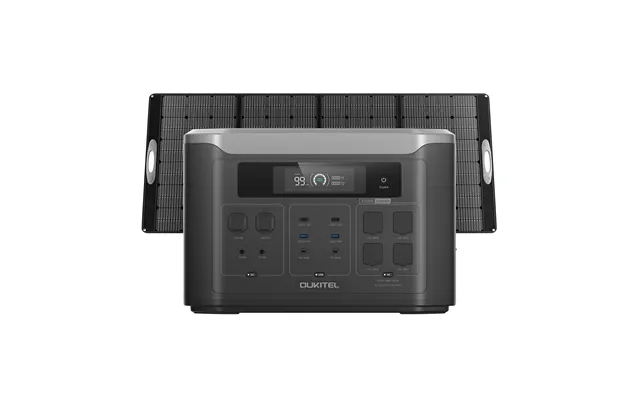
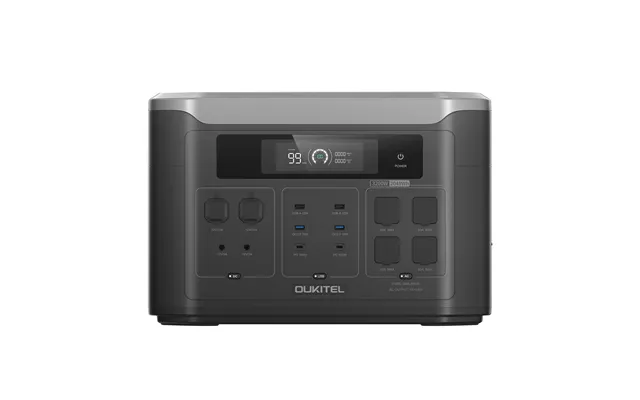
The smaller end of the range includes the P1201 Portable Power Station, which has a 960Wh capacity and a 1200W pure sine wave inverter. The reference data lists it at $799. The product is described as suitable for home blackouts, camping, and RV travel, while its maximum solar input is listed as 500W.
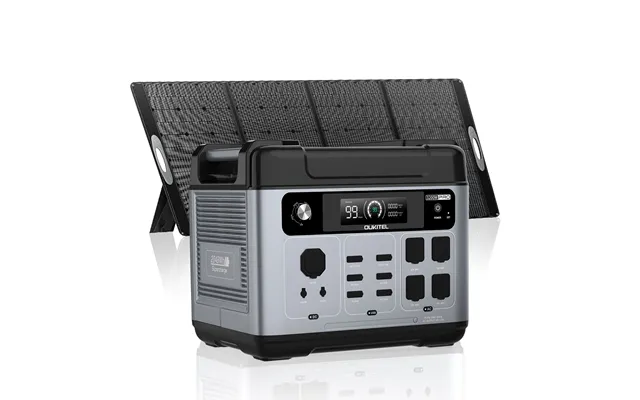
For more demanding use, the P2001 series provides 2000Wh of capacity and a 2000W pure sine wave inverter. The standard P2001 Portable Power Station is listed at $958 with a 200W solar panel. The data also describes up to 4000W of surge power and charging from a wall outlet, solar panels, a car port, or another generator.
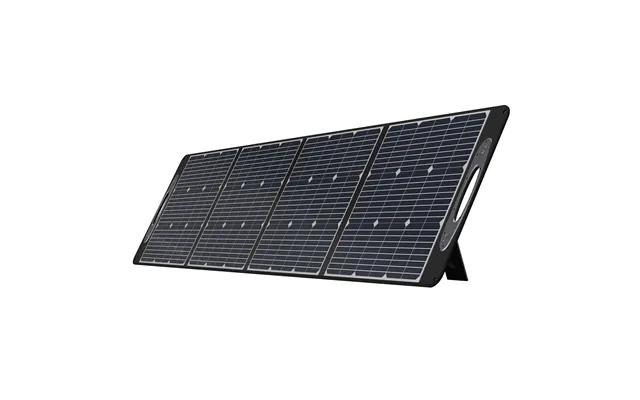
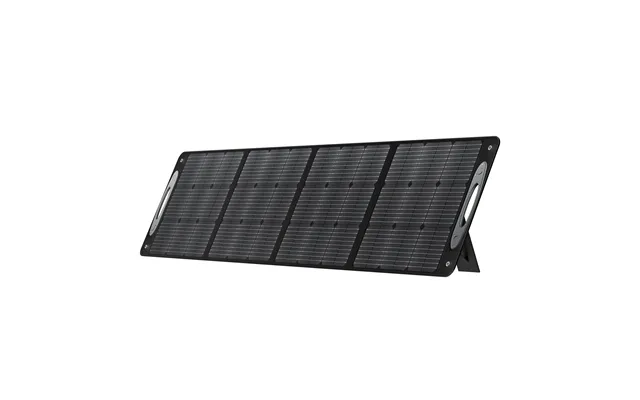
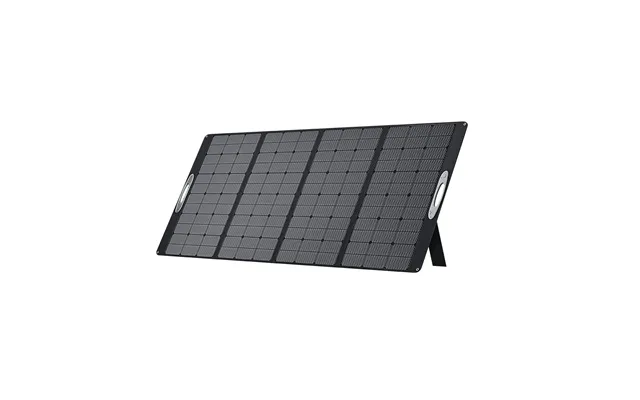
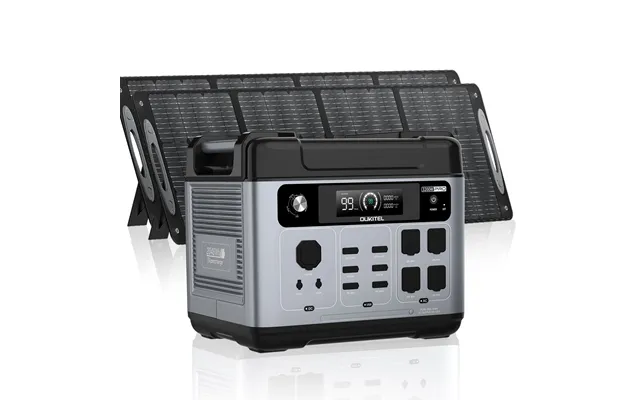
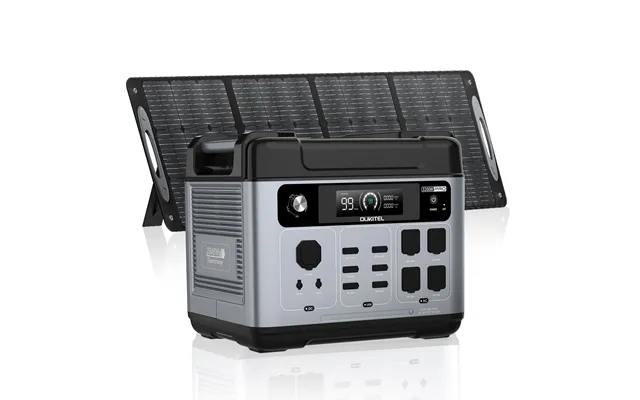
OUKITEL also sells solar generator packages that combine a power station with one or more solar panels. This format can make comparison easier because you can review the battery unit and solar equipment as one package instead of selecting every part separately.
For example, the P2001 Plus range includes versions with no panel, a 200W panel, 400W panels, or two 200W panels. The listed prices range from $749 for the P2001 Plus without a panel to $1,308 for the version with two 200W panels. The product description states that the unit has a 1800W AC input, adjustable output settings, a 4800W surge rating, and a maximum solar input of 500W.
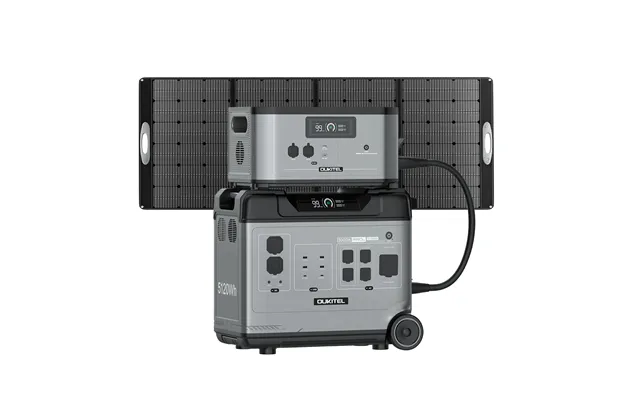
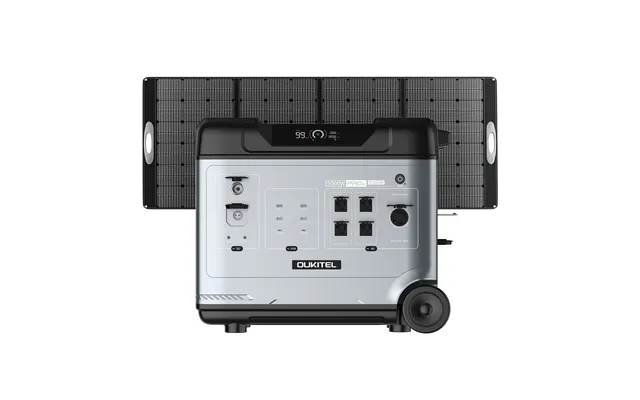
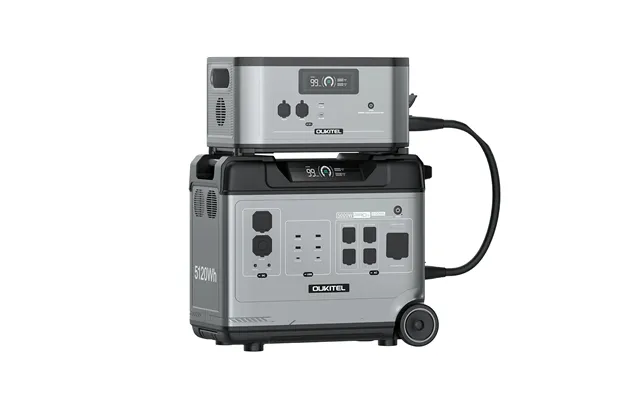
The P5000 range is designed for users who need substantially more stored energy. The P5000 Portable Power Station has a listed capacity of 5120Wh and a 2200W pure sine wave inverter. The version without a solar panel is listed at $1,199, while selected packages with 400W panels are listed at $1,499. Other bundles include two or three 400W panels.
Capacity and output are not the same thing, and understanding the difference helps you avoid buying the wrong system. Capacity, measured in watt-hours, describes how much energy the battery stores. Output, measured in watts, describes how much power the unit can provide at one time.
Think of capacity as the size of a water tank and output as the width of the pipe. A large tank may last a long time, but a narrow pipe cannot supply a high-demand appliance. In the same way, a power station with high capacity may still be unsuitable for a device that needs more output than its inverter can provide.
The P1201, with 960Wh and 1200W output, is positioned in the reference data as a more compact option. It may suit users who want power for items such as laptops, refrigerators, coffee makers, or other moderate loads, provided the total demand stays within the unit’s specifications.
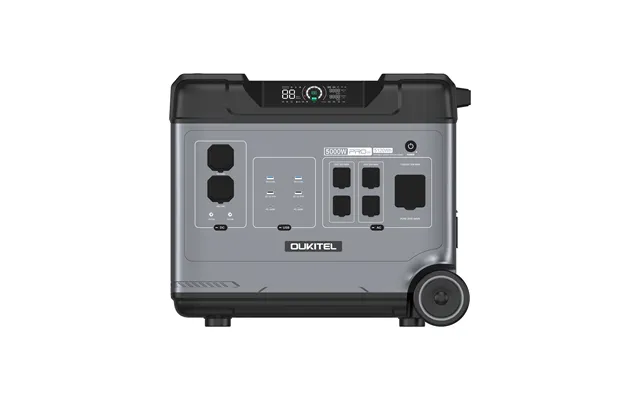
The P2001 family moves to around 2000Wh and 2000W output. This gives shoppers a higher-capacity option for longer use or more demanding equipment. The P5000 and P5000 Pro models go further, with 5120Wh capacity. The P5000 Pro models are listed with 3600W output, while the P5000 models are listed with 2200W output.
Before choosing a model, list the devices you want to run and check both their running wattage and startup demand. Motors, compressors, and power tools can require extra power when they start. A system that looks suitable on paper may not be enough if you only compare battery capacity.
The BP2000 series is built around a 2048Wh battery and a 2200W pure sine wave inverter. The reference data describes the system as expandable from 2kWh to 16kWh and lists several charging methods, including AC, solar, car, a generator, and an AC adapter.
The BP2000 also includes an emergency power supply function with a stated switchover time of less than 10 milliseconds. That feature is intended to help provide power quickly when an outage occurs. The data also describes a LiFePO4 battery with 3,500 cycles and a potential lifespan of up to 10 years.
Prices vary by configuration. The BP2000 unit alone is listed at $859, while a package with a 400W solar generator setup is listed at $1,269. Other versions include a B2000 battery and solar panels, with listed prices reaching $2,599 for a larger bundle.
The BP2000 Pro increases the AC output to 3300W and keeps a 2048Wh base configuration in the listed product variations. The data describes expansion up to 16,384Wh, 2000W emergency power supply performance, and charging from 0% to 80% in 55 minutes under the stated conditions. Listed prices range from $879 for a 3300W, 2048Wh version to $2,129 for a package with two B2000 expansion batteries.
The BP3000 is another high-output home backup option. It is listed with 3200W AC output and 2048Wh capacity. The system can expand to 16,384Wh using up to seven B2000L batteries, according to the product information.
The data describes 4000 cycles, a potential 10-year lifespan, a 10-millisecond backup response, and several recharge methods. It lists AC charging from 0% to 80% in 1 hour and 5 minutes, solar charging in 1 hour and 30 minutes, and dual AC and solar charging in 45 minutes under the stated conditions.
Several BP3000 configurations appear in the reference data. Prices range from $1,598 for a BP3000 with a B2000L battery to $2,698 for a version with two B2000L batteries and a PV400 panel. The product information also says that the B2000L is expected back in stock around September 25 and may ship separately from the BP3000. Because this is a time-sensitive note, confirm the current status before ordering.
For shoppers preparing for longer outages or higher household demand, the P5000 family is one of the largest options listed by OUKITEL. The P5000 has 5120Wh capacity, a 2200W pure sine wave inverter, up to 1000W solar input, and a stated 1400W uninterruptible power supply function.
The P5000 Pro raises the output to 3600W while keeping 5120Wh capacity. The reference data states that it can support dual-voltage AC output at 100V, 120V, and 200V–240V in selected configurations. It also lists split-phase output up to 3600W at 240V, 10-millisecond backup switching, and a LiFePO4 battery rated for 5000 charge cycles.
The P5000 Pro without solar panels is listed at $1,629. A package with two 400W solar panels is listed at $2,398, while a version with three PV400 panels is listed at $2,898. Another P5000 Plus listing includes 3600W output and 5120Wh capacity, with the standalone version priced at $1,799 in the reference data.
These systems are not aimed at every buyer. They are larger investments than compact power stations and may be more than you need for phones, laptops, or short outdoor trips. Their appeal is greater stored energy, stronger output, and a better fit for home backup planning.
The P1000 Plus offers a different balance. Its product description states that it weighs only 12kg and provides 1800W output. The unit has 1024Wh capacity, 1200W AC fast charging, 500W maximum solar input, and a noise level of 29 decibels.
Prices in the supplied data range from $439 for the P1000 Plus alone to $938 for a package with a 400W solar panel. Versions with 100W and 200W panels are also listed at $638 and $738 respectively.
This model may appeal to people who want useful power without moving a very large battery system. It can work as a middle ground between small travel equipment and full home backup. As always, compare the power needs of your devices with the stated 1800W output before deciding.
Many of the listed OUKITEL systems use LiFePO4 batteries. The reference descriptions connect this battery type with cycle-life figures such as 3,500, 4,000, or 5,000 cycles, depending on the model. Several products also state a potential lifespan of up to 10 years.
These figures are useful for comparing models, but they should not be treated as a promise of identical performance in every home. Actual battery life can depend on usage, storage, charging habits, temperature, and other conditions. Read the product specifications carefully and use the stated figures as a guide.
Fast charging is another repeated feature. The P1000 Plus is described as reaching 80% in 39 minutes with the stated AC input. The BP2000 Pro is listed as reaching 80% in 55 minutes, while the P2001 Plus and several other models are described as reaching 80% in about one hour.
Many products also include Bluetooth and Wi-Fi monitoring through a smart app. This can help users view battery information and manage the system from a phone. App features can differ by model, so check the listing for the exact unit you are considering.
OUKITEL’s US catalog is not limited to large battery systems. The OUKITEL B2000 Expansion Battery has 2048Wh capacity and is listed at $699. The data says it is compatible with the BP2000, BP2000 Pro, BP3000, and BP5000 Pro, although an adapter is sold separately.
The store also lists a 5-meter MC4-to-XT60 solar extension cable for $60. It is described as compatible with OUKITEL 200W and 400W portable solar panels and intended to give users more flexibility when positioning panels. The reference data notes that it applies to OUKITEL power stations except the P800.
For transport, the OUKITEL Foldable Cart is listed at $60. It has four dual ball-bearing wheels, a stated capacity of up to 220 pounds, and a three-level adjustable handle. When folded, the listed dimensions are 23 by 14 by 5 inches, with a stated weight of 5 pounds.
The C01 Car Jump Starter is listed at $169 in both white and black versions. The product information states a 1350A peak current, 80Wh capacity, 60W power delivery charging, up to 50 starts per full charge, and operation from -40 to 80 degrees. It also includes a multi-function LED light.
For outdoor or emergency lighting, the FL1 Multi-function Flashlight is listed at $100. It offers seven light modes, a magnetic design, water- and dust-resistant construction, and a stated runtime of up to 3.5 hours on strong light or 43 hours on low light.
OUKITEL operates in a competitive US market that includes many brands selling portable power stations, solar generators, and home backup batteries. At a general level, shoppers usually compare these stores by battery capacity, inverter output, solar input, portability, expansion choices, app control, and price.
OUKITEL’s supplied catalog stands out for its broad spread of configurations. Buyers can find compact 960Wh systems, mid-size 1024Wh and 2000Wh models, and large 5120Wh home backup units. The catalog also includes packages with different solar panel combinations, which lets shoppers compare a battery-only purchase with a ready-made solar bundle.
Expansion is another important theme. The BP2000, BP2000 Pro, BP3000, and selected other models are described as supporting additional batteries. This can be useful if your power needs may grow over time. Instead of buying the largest system immediately, you can begin with a base unit and review expansion options later.
However, comparisons should remain specific. Do not assume that every OUKITEL model has the same output, battery chemistry, solar input, or app features. The P1201, P1000 Plus, P2001, BP series, and P5000 series have different specifications. Compare the exact package, not only the product family name.
Start with your purpose. Do you need a small system for camping, a backup for essential appliances, or a larger setup for extended outages? Your answer will guide the capacity and output you need.
Next, check the package contents. A product name may include a power station, an expansion battery, and one or more solar panels. Other versions may include only the main unit. The listed prices vary significantly by configuration, so make sure you compare like with like.
Review the recharge methods and solar limits. A power station may support AC, solar, car charging, or dual charging, but the maximum input can differ. If you plan to rely on solar energy, check the panel wattage included in the package and the station’s maximum solar input.
Finally, confirm current delivery information, stock status, product specifications, and any applicable store terms directly with OUKITEL. The reference data does not provide general shipping details, and some product notes may change over time.
OUKITEL gives US shoppers a wide range of portable power solutions, from the compact P1201 and P1000 Plus to expandable BP systems and high-capacity P5000 models. Its catalog combines battery-only products, solar bundles, expansion batteries, and useful accessories. The best choice depends on the devices you need to run, how long you need power, and whether portability or maximum capacity matters more. Compare the exact specifications and package contents, and the right OUKITEL system becomes easier to spot.