


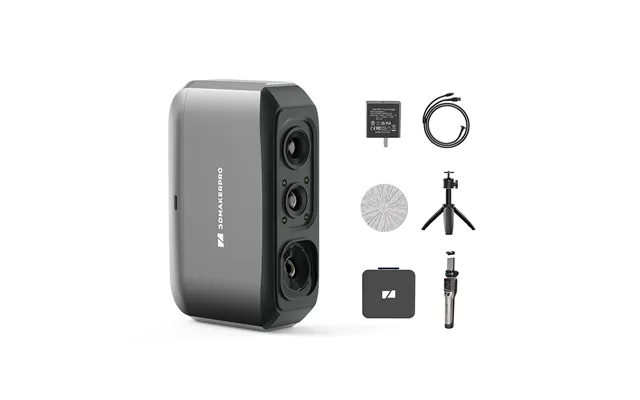
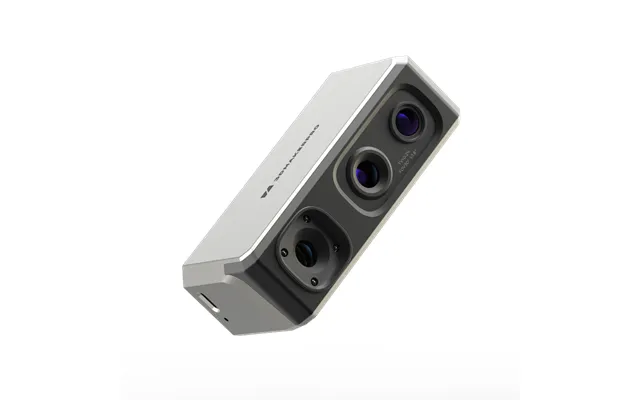
3DMakerpro price list
Last updated Saturday, Oct 17, 2026



/background.webp)
/logo.webp)
| Store | Status | today | distance |
|---|
Loading...
Loading...
Last updated Saturday, Oct 17, 2026
3DMakerpro has become a familiar name for people searching for affordable 3D scanners in the United States. The brand focuses on handheld scanners designed to capture real-world objects and turn them into digital 3D models. Its product range speaks to hobbyists, makers, educators, designers, engineers, artists, and small businesses that want professional-looking results without paying the price of a high-end industrial system.
The company grew during an important period for the 3D technology market. 3D printing had already moved from specialist engineering departments into homes, schools, workshops, and small studios. Yet one part of the process remained difficult: creating accurate digital models from physical objects. Many users could print a downloaded model, but they could not easily scan a broken part, a sculpture, a vehicle component, or a human figure. 3DMakerpro entered this gap with consumer-focused 3D scanning tools.
Although the brand sells internationally, the United States has been an especially important market. American customers tend to look for fast delivery, clear software support, flexible returns, and products that work with popular design and printing software. 3DMakerpro has built its US presence around these expectations through an online store, product education, customer support resources, and a growing range of scanners.
Its story is not simply about selling hardware. It is about making 3D capture less intimidating. Traditional 3D scanners often looked like laboratory equipment and required specialist training. 3DMakerpro helped bring the category closer to the everyday maker. That shift has helped the company attract customers who want to experiment, repair, design, and create without becoming scanning experts first.
3DMakerpro developed as part of the wider expansion of desktop 3D technology. As 3D printers became easier to use, demand increased for affordable 3D scanners that could support the same creative workflow. A scanner could act like a digital camera for shape. Instead of recording color alone, it could capture form, depth, and surface detail.
The brand’s early appeal came from offering compact scanners for users who did not need a large industrial setup. Its products were positioned between basic phone-based scanning applications and expensive professional systems. That middle ground proved valuable. A smartphone application may be fun for rough experiments, while a professional scanner can cost many thousands of dollars. 3DMakerpro aimed to provide more reliable detail at a price that made sense for serious hobbyists and smaller companies.
Over time, the company expanded its product family instead of relying on one universal scanner. Different objects need different tools. A small mechanical component may require fine detail and strong accuracy. A large statue or automobile part needs a wider scanning area. A human face or body requires a scanner that can capture shape comfortably and quickly. By developing multiple models for different tasks, 3DMakerpro made its store easier to explore.
The brand has also placed strong attention on software. Hardware captures the data, but software turns that data into a usable model. Scanning normally involves alignment, noise removal, filling holes, mesh generation, and export. If the software feels confusing, even a capable scanner can disappoint. 3DMakerpro’s software-centered approach reflects a simple truth: customers buy a complete workflow, not just a device in a box.
The United States has one of the world’s largest communities of 3D printing enthusiasts, product designers, engineers, educators, and digital artists. It also has a strong culture of online shopping. This creates a natural opportunity for a specialist brand with a direct ecommerce store. Customers can compare scanner features, read specifications, watch demonstrations, and order without visiting a specialist showroom.
US buyers also use 3D scanners in many different ways. A maker may scan an old replacement part and redesign it for printing. A cosplay creator may capture body armor shapes. A dentist or medical designer may need a digital reference model, although regulated medical applications require appropriate professional equipment and processes. A reverse engineer may inspect a manufactured object. An artist may scan clay sculptures or natural objects.
Because the use cases are so varied, 3DMakerpro must explain more than resolution and accuracy. Buyers want to know whether a scanner handles dark surfaces, shiny objects, hair, fine edges, large spaces, and moving subjects. They also want to understand the computer requirements and the time needed to process a scan. The company’s US-facing store therefore acts as both a shop and an educational starting point.
3DMakerpro’s US store centers on handheld and portable 3D scanners. Its lineup has included entry-level options for beginners, more advanced models for detailed work, and scanners designed for larger objects or faster capture. Product availability can change, so customers should check the current US store for the latest specifications, bundles, accessories, and delivery information.
Entry-level scanners are generally aimed at people who want to learn the basics. They can be useful for small objects, creative projects, reverse engineering experiments, and 3D printing workflows. They may not replace an industrial scanner, but they can offer a practical way to understand scanning without a huge investment.
Mid-range models appeal to users who want better detail, stronger tracking, or greater flexibility. These products are often attractive to designers, engineers, repair specialists, and serious hobbyists. A customer in this group usually wants more than a rough shape. They may need cleaner edges, improved alignment, higher-resolution textures, or a more dependable result across repeated scans.
Higher-end models focus on demanding work. They may provide improved accuracy, faster scanning, wider capture, or more advanced tracking features. These scanners can support professional workflows, but the final result still depends on the object, lighting, operator, calibration, and post-processing. No scanner magically produces a perfect model from every surface.
One of the most useful ways to understand the 3DMakerpro range is by object size. Small parts often need fine detail. Large objects need efficient tracking and a wider field of view. A scanner that performs well on a watch component may feel slow on a motorcycle panel. In the same way, a scanner designed for a large statue may not capture tiny grooves as effectively as a specialist small-object model.
Surface type also matters. Plain, dark, transparent, and reflective objects can challenge many 3D scanners. Users may need scanning spray, markers, controlled lighting, or repeated passes. This is not a flaw unique to 3DMakerpro. It is a basic reality of optical scanning. Light must interact with the surface in a way the scanner can read. Good preparation often matters as much as the hardware itself.
Revopoint is one of the closest competitors to 3DMakerpro in the US consumer and prosumer market. Both brands offer compact 3D scanners for makers, designers, educators, and small businesses. Both also focus on bringing useful scanning performance to customers who may not have the budget for industrial equipment.
Revopoint has built a broad reputation around portable scanners and a wide product range. It offers models aimed at small objects, full-body scanning, larger items, and professional users. Its long presence in the consumer scanning conversation gives it strong brand recognition. Customers may also find a large collection of tutorials, reviews, and community discussions online.
3DMakerpro competes by emphasizing accessible design, modern product presentation, and a range of scanner types that target different needs. Some shoppers may find its product pages easier to navigate, especially when comparing beginner and advanced models. The brand also attracts buyers who want a direct relationship with a specialist store rather than purchasing through a general marketplace.
Price comparisons can change quickly because both brands run promotions and sell different bundles. The best choice depends on the actual project. A Revopoint scanner may be appealing to someone who values a large user community and many product options. A 3DMakerpro scanner may suit someone who prefers its software workflow, design, support materials, or current package price. Reading independent reviews is wise before making a final decision.
Einstar, a brand associated with Shining 3D, is another important name in the US 3D scanning market. Einstar products are often discussed as affordable professional or prosumer tools, particularly for larger objects, people, vehicles, and design applications. Shining 3D also has a broader history in professional 3D scanning and metrology than many consumer-focused brands.
Compared with Einstar, 3DMakerpro may appeal more strongly to buyers who want a lighter entry into scanning or a product selected around a specific object size. Einstar can be attractive to users who want a powerful scanner for bigger subjects and who are comfortable working with more demanding hardware and software requirements.
Price is not the only difference. Computer performance, scanning distance, tracking method, calibration, accessories, and post-processing tools can change the experience. A buyer scanning a person or vehicle should think about speed and tracking. Someone capturing small mechanical parts should focus on detail and accuracy. Someone creating art may care more about color capture and ease of cleanup.
Shining 3D’s professional reputation may give it an advantage among businesses that need established technical workflows. 3DMakerpro, by contrast, can be appealing to individuals and small teams that want a capable scanner without stepping immediately into a costly industrial ecosystem.
3D Systems represents a different level of the market. Its scanners and related products are often connected with professional design, engineering, inspection, healthcare, manufacturing, and enterprise workflows. Companies operating in regulated or highly precise environments may need that kind of established support, advanced software, documentation, and integration.
Comparing 3DMakerpro directly with an industrial supplier is like comparing a high-quality workshop camera with a film studio camera. Both capture images, but they serve different jobs. 3DMakerpro is generally more approachable for makers, freelancers, schools, small workshops, and creative users. Industrial systems may offer stronger metrology features, formal accuracy verification, specialized inspection software, and enterprise support, but they can cost far more.
For a hobbyist who wants to scan a prop for 3D printing, an industrial scanner may be unnecessary. For an aerospace supplier checking tight tolerances, a consumer-oriented device may not be enough. The right choice begins with the required accuracy, documentation, repeatability, and business risk rather than the brand name alone.
A direct US store can make the buying process simpler. Customers can view products in one place, compare bundles, check available accessories, and review current shipping information. Buying directly may also make it easier to locate warranty details and contact the brand for technical questions.
Another advantage is product focus. General ecommerce marketplaces sell everything from kitchen equipment to computer cables. A specialist store is more likely to explain scanning terms and show how products fit different use cases. For first-time buyers, this guidance can prevent an expensive mismatch.
3DMakerpro also benefits from the visual nature of its products. Demonstration videos, sample scans, and workflow examples can show more than a list of technical figures. A number such as “accuracy” has meaning only when a customer understands how it affects a real object. Seeing a scan of a small part or a human figure helps set realistic expectations.
Before buying a 3D scanner from 3DMakerpro or any competitor, start with the objects you plan to scan. Measure them. Note their color, shine, transparency, texture, and level of detail. Then check whether the scanner is designed for that size and surface type.
Next, review the computer requirements. 3D scanning and mesh processing can be demanding. A weak laptop may cause slow previews, crashes, or long export times. Also check the connection type, operating system support, included cables, calibration process, and software licensing. These details are easy to overlook when a product page highlights headline specifications.
Finally, read the US store’s current policies for shipping, returns, warranty coverage, taxes, and technical support. Policies can change, and different bundles may include different accessories. A few minutes of research can save a great deal of frustration later.
The scanning process usually begins with preparation. Clean the object, control the lighting, and place it where you can move around it safely. For difficult surfaces, removable scanning spray or tracking markers may help. The scanner then captures multiple frames while software aligns them into a complete digital model.
After capture, users normally remove unwanted data, fill gaps, smooth rough areas, and export the model. Common file formats may include formats used by 3D printing, computer-aided design, animation, and digital sculpting software. The best format depends on the next step. A model for a resin printer may need a closed, watertight mesh. A model for engineering work may need additional redesign or conversion into a more editable format.
This workflow explains why 3D scanning is both technical and creative. The scanner gathers information, but the user guides the process. Move too quickly and tracking may fail. Hide part of the object and the model may contain gaps. Scan in poor lighting and the data may become noisy. Practice improves results quickly, much like learning to take sharp photographs.
3DMakerpro is a strong option for makers who want to move beyond downloaded 3D files. It can help people reproduce physical shapes, create custom accessories, digitize artwork, and support small-scale reverse engineering. It may also suit educators who want students to connect physical objects with digital design.
Freelancers and small businesses may find value in the brand’s balance between cost and capability. A product designer could use a scanner to capture an existing object before modifying it. A repair shop might scan a discontinued component as a reference. An artist could build a digital library of sculptures or found objects.
However, buyers should not assume every model fits every professional job. If a project requires certified inspection, extremely tight tolerances, medical approval, or enterprise-level service, a specialized professional system may be more appropriate. The smartest purchase is not always the scanner with the highest advertised specification. It is the one that matches the work.
The US 3D scanning market should continue to grow as 3D printing, digital manufacturing, virtual reality, gaming, and product customization expand. Customers increasingly expect tools that are portable, quick to learn, and compatible with existing creative software. This trend creates room for brands such as 3DMakerpro.
Future progress may focus on easier tracking, better scanning of dark and shiny surfaces, faster processing, improved color capture, and more intelligent software. Artificial intelligence could help fill gaps, remove noise, and guide users during capture. Yet improvements will need to remain practical. A feature matters only when it saves time or produces a better model.
For 3DMakerpro, continued success in the United States will depend on more than launching new devices. Clear support, reliable updates, honest product descriptions, fast fulfillment, and useful tutorials will matter just as much. Customers remember the full experience. A scanner that performs well but has confusing software can lose trust. A company that listens to users can build long-term loyalty.
3DMakerpro has earned attention in the US by making 3D scanning feel more approachable. Its products sit between casual mobile scanning and expensive industrial equipment, giving makers and small businesses a practical route into digital capture. Compared with Revopoint, Einstar, Shining 3D, and larger industrial suppliers, it offers a different balance of price, portability, features, and ease of use. The best choice depends on the objects, accuracy, workflow, and support a buyer needs. If you understand those factors before ordering, 3DMakerpro can be a useful bridge between the physical world and the digital one.