



View 5 Offers
View 5 Offers
Loading...
Your car’s factory audio system may be convenient, but convenience does not always equal impact. A motor vehicle amplifier works like the muscle behind your sound system, giving speakers and subwoofers more power so music can feel fuller, clearer, and more controlled. Whether you enjoy deep bass, detailed vocals, or energetic playlists, the right amplifier can help your audio system perform with greater confidence.
Choosing an amplifier is not simply about finding the biggest wattage number. You also need to consider the number of channels, power ratings, impedance, size, connectivity, and installation requirements. Think of it like choosing an engine: raw output matters, but it must also match the vehicle, the supporting components, and the way you plan to drive.
The reference selection includes compact two-channel amplifiers, a four-channel car amplifier, and versatile units designed for both car and home audio use. Prices range from $45.99 to $78.99 for the listed audio amplifiers. One additional listed product is a box mod rather than a motor vehicle amplifier, so it does not belong in a car-audio buying comparison.
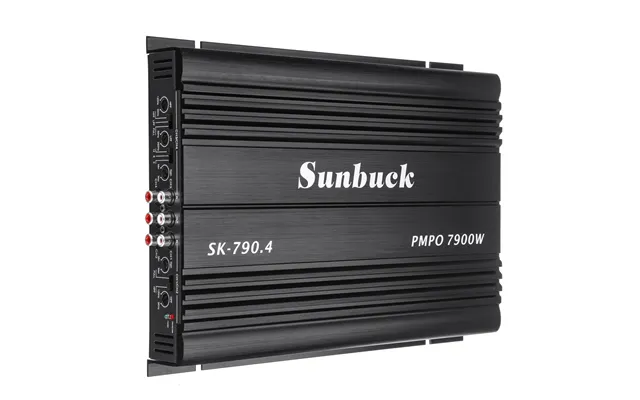
Several options stand out for different listening goals. The SK-790.4 is the most specifically car-focused model in the selection, with four channels, a stated 12-volt operating requirement, and support for speaker configurations involving 2- to 4-ohm impedance. Its listed price is $68.99.
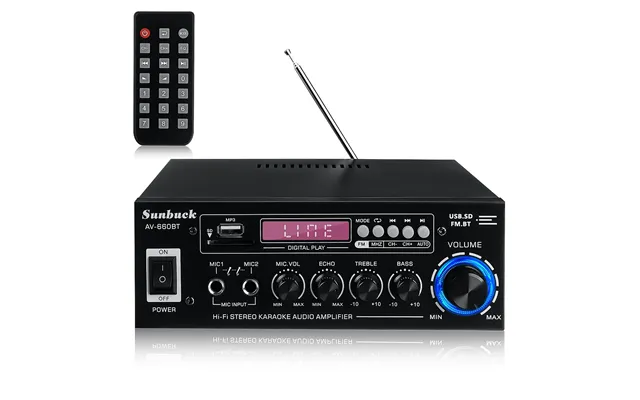
The Sunbuck AV-660BT focuses on broad functionality. It offers two channels, Bluetooth 5.0, FM radio, USB and SD interfaces, microphone inputs, and a five-band equalizer. The listing gives it a price of $78.99 and describes it as suitable for car or home use.
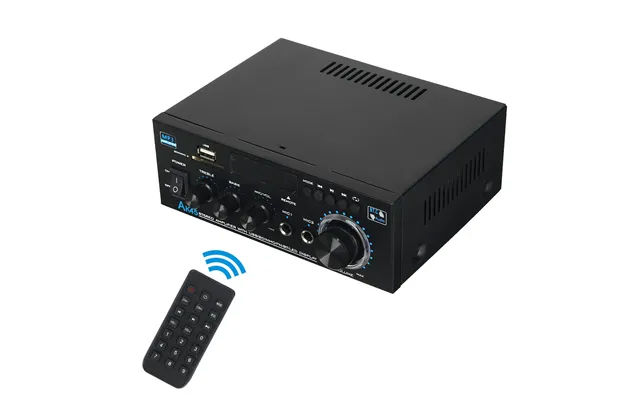
The AUTSOME AK45 is a smaller two-channel option with Bluetooth, USB, SD, and FM support. It is listed at $45.99, has a stated RMS rating of 40 watts by two, and supports 4- to 16-ohm impedance.
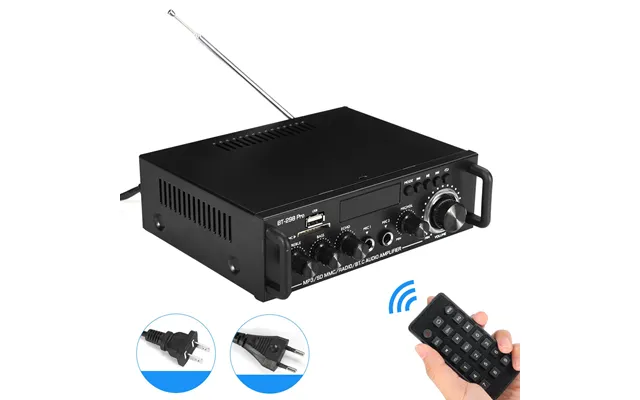
The AUTSOME BT-298Pro is another compact two-channel amplifier. Its listing includes Bluetooth, USB, SD, FM radio, two microphone inputs, a remote control, and a stated rated output of 50 watts by two. It is listed at $59.38.
The AUTSOME BT-298Pro lists a 12- or 220-volt rating, 50 watts by two rated power, a 20 hertz to 20 kilohertz frequency range, and an 85-decibel signal-to-noise ratio. Its compact listed size is approximately 6.97 by 5.31 by 2.09 inches.
The Sunbuck AV-660BT lists 115- or 230-volt conversion and 12-volt DC support, with 1,200 watts of rated power and 2,000 watts of peak power in the supplied specification. It also lists a 20 hertz to 20 kilohertz frequency range, a 90-decibel signal-to-noise ratio, and 4- to 16-ohm standard impedance.
The SK-790.4 lists four channels, 12-volt DC operation, 120 watts by four channels of RMS output, and a 20 hertz to 40 kilohertz frequency range. Its listing also states a 95-decibel signal-to-noise ratio and a 0.01 total harmonic distortion figure for RMS output.
The AUTSOME AK45 lists 40 watts by two RMS power, 90 watts by two peak power, two-channel operation, an 85-decibel signal-to-noise ratio, and a 10 hertz to 20 kilohertz frequency range. It supports 12 volts or 90 to 240 volts according to the supplied specifications.
If your goal is to power several door speakers from one amplifier, the SK-790.4 deserves close attention. Its four-channel layout is more naturally suited to a front-and-rear speaker arrangement than a two-channel design. The listing describes it as supporting four door speakers and a passive subwoofer, while also including stereo surround capability.
Its stated RMS specification is 120 watts by four channels, which is more useful for comparison than the much larger peak figure. RMS power generally provides a better picture of sustained output during normal listening. Still, you should compare the amplifier’s real output with your speakers’ own power-handling specifications before installation.
The SK-790.4 listing highlights an aluminum-alloy body, external heat sinking, ventilation openings, thermal overload protection, and speaker-short protection. These features are relevant in a vehicle because car amplifiers may operate in warm, enclosed spaces. Good airflow is still important, though. A protective circuit is a safety net, not a substitute for sensible mounting.
The amplifier is described as having a slim design, which may help when space is limited. Before buying, measure your intended mounting area and allow room for wiring and ventilation. A model that fits on paper may become awkward once power cables, speaker leads, and signal connections are attached.
The AUTSOME AK45 is the lowest-priced audio amplifier in the supplied selection at $45.99. Its two-channel layout keeps the design relatively simple, while Bluetooth, USB, SD, and FM features provide several ways to play music. For someone who wants a compact unit with more than one source option, it offers a practical feature mix.
The listed size is approximately 7.09 by 5.51 by 2.6 inches, and the stated weight is about 1.76 pounds. That compact footprint may appeal to users working with limited space. However, the product is described as supporting both DC 12 volts and AC 90 to 240 volts, so buyers should verify that the intended installation and power arrangement match their vehicle.
The AK45 lists 40 watts by two RMS power and 90 watts by two peak power. These numbers describe different types of output. RMS is the more useful figure for estimating continuous performance, while peak power refers to short bursts. When matching speakers, focus first on the RMS specification and impedance range rather than letting the peak number make the decision for you.
The Sunbuck AV-660BT is built around variety. The listing includes Bluetooth 5.0, FM radio, USB, an SD interface, two microphone inputs, a remote control, a five-band equalizer, balance adjustment, and controls for microphone reverb and delay. It also accepts DVD and auxiliary signals according to the supplied features.
This broad feature list makes the unit more than a basic amplifier. It could suit someone who wants music playback, radio access, microphone support, and tone adjustment from one device. Its two-channel design is described as suitable for a set of speakers, so it may be better for a straightforward stereo setup than for a complex multi-zone vehicle system.
A five-band equalizer gives you more control over the sound’s character. You can shape bass, midrange, and treble to suit your speakers and listening preferences. If your audio sounds boomy, reducing low frequencies may help. If vocals feel buried, a modest midrange adjustment could make them more noticeable. Small changes are usually better than turning every control to its maximum.
The listing states a 90-decibel signal-to-noise ratio and less than 0.5 percent total harmonic distortion. It also lists 4- to 16-ohm impedance support. As always, verify the actual requirements of your speakers before connecting them, especially if you plan to use multiple speaker pairs.
The AUTSOME BT-298Pro combines a small form factor with several convenient features. Its listing includes Bluetooth, USB, SD, FM radio, two microphone inputs, treble and bass adjustment, a volume control, and a remote control. The package is described as including the amplifier, a manual, a remote control, and a 12-volt power cord; the remote battery is not included.
The amplifier lists 50 watts by two rated power and an 85-decibel signal-to-noise ratio. Its listed frequency range is 20 hertz to 20 kilohertz, which covers the commonly referenced audible range. The approximate size is 6.97 by 5.31 by 2.09 inches, making it one of the more compact choices in the selection.
Two channels can be a good fit when you are powering a simple left-and-right speaker arrangement. It may also suit a small upgrade where you do not need separate front and rear control. On the other hand, a two-channel unit is not the obvious choice if you want independent power for four door speakers. In that case, a four-channel amplifier such as the SK-790.4 may be more appropriate.
Power ratings can look confusing because listings may mention rated, RMS, and peak output. The safest approach is to compare like with like. RMS ratings are generally more useful for estimating sustained output, while peak ratings describe brief maximum bursts. A large peak number does not automatically mean an amplifier will sound better in everyday use.
For example, the SK-790.4 lists 120 watts by four channels in RMS output, while the AK45 lists 40 watts by two RMS. These amplifiers are designed around different channel counts and power levels, so your decision should depend on the speakers and system layout rather than the largest number.
Impedance is expressed in ohms and affects how much electrical demand the amplifier sees. The listed models include impedance ranges such as 2 to 4 ohms for the SK-790.4 and 4 to 16 ohms for the AUTSOME and Sunbuck units. Your speakers should operate within the amplifier’s supported range. If the load is too demanding, the system may run hot or activate protection circuits.
Before purchasing, write down your speakers’ impedance and RMS handling. Then compare those figures with the amplifier specification. This simple checklist can prevent a frustrating installation and helps you avoid choosing an amplifier based only on marketing-style wattage.
Modern amplifiers often act as both power units and media hubs. Bluetooth can provide wireless playback, while USB and SD interfaces may support stored music. FM radio is useful when you want a built-in broadcast source. The AUTSOME AK45, AUTSOME BT-298Pro, and Sunbuck AV-660BT all list several of these connections.
More inputs can make an amplifier more flexible, but they can also add controls you may never use. Ask yourself how you normally listen. Do you stream from a phone, use radio, play files from a USB drive, or connect a traditional source? The best feature set is the one that fits your habits rather than the one with the longest list.
The BT-298Pro and Sunbuck AV-660BT listings include two microphone inputs. The Sunbuck model also lists microphone reverb and delay adjustment, while the BT-298Pro includes treble, bass, and volume controls. These features may appeal to buyers who want more than ordinary in-car music playback, but they are not essential for a basic speaker upgrade.
Keep your intended environment in mind. A feature that is useful for a social gathering may be unnecessary inside a daily commuter vehicle. Conversely, Bluetooth and a remote can be valuable if you want quick control without reaching for the amplifier itself.
Installing an amplifier requires more than connecting speakers. You need to think about power, grounding, signal input, speaker wiring, mounting, and ventilation. The SK-790.4 is explicitly listed as a 12-volt car amplifier. The other listed models include car and home terminology or multiple voltage specifications, so buyers should confirm suitability before using them in a vehicle.
Measure the available space first. The listed dimensions range from compact units around 7 inches wide to the Sunbuck’s approximately 7.9 by 2.8 by 7.5 inches. Leave enough room for connectors and airflow. Do not bury an amplifier under loose materials or place it where heat cannot escape.
A vehicle electrical system is not the same as a household outlet. Some listed products specify 12-volt operation, while others mention both AC and DC voltage options. Read the product specifications carefully and use an appropriate installation method. If you are uncertain about wiring or power requirements, professional installation is the safer route.
Also consider how the amplifier will receive an audio signal. The supplied data lists features such as audio cable input, auxiliary input, Bluetooth, USB, and SD support, but the exact installation approach depends on your existing stereo system. Compatibility should be confirmed before you buy.
For four door speakers, the four-channel SK-790.4 is the clearest match among the listed products. For compact two-channel listening with a broad collection of media inputs, the AUTSOME AK45 or BT-298Pro may be more suitable. If you want an equalizer, microphone inputs, radio, and multiple source options, the Sunbuck AV-660BT offers the broadest feature set in the supplied data.
Price may also guide your shortlist. The AK45 is listed at $45.99, the BT-298Pro at $59.38, the SK-790.4 at $68.99, and the Sunbuck AV-660BT at $78.99. These are comparison prices from the supplied listings and should not be treated as guarantees beyond the referenced offers.
ZoneOffer is a comparison site, not a store. Its role is to help you review available product information and compare options. Before ordering, check the current listing details, included accessories, voltage information, and compatibility for your specific vehicle and speaker system.
The best motor vehicle amplifier is the one that matches your speakers, available space, power system, and listening style. The SK-790.4 is the most directly car-focused four-channel option in this selection, while the AUTSOME AK45 and BT-298Pro provide compact two-channel designs with useful playback features. The Sunbuck AV-660BT stands out for its broad connectivity and sound-shaping controls. Compare RMS power, impedance, channels, dimensions, and installation requirements before choosing, and your amplifier upgrade can become the strong foundation your car audio system has been missing.