


Carbon Monoxide Detectors price list
Last updated Thursday, Oct 29, 2026





View 6 Offers
Loading...
Last updated Thursday, Oct 29, 2026
Carbon monoxide is often called an invisible danger because you cannot see, smell, or taste it. That makes a dependable carbon monoxide detector an important part of a home, boat, recreational vehicle, or other enclosed space where fuel-burning equipment may be present. The right alarm gives you an early warning when carbon monoxide levels become unsafe, helping you respond before the situation becomes more serious.
This guide explores the carbon monoxide detectors and combination alarms listed in the reference data. You will find options from MARETRON and SAFE-T-ALERT, including surface-mount and flush-mount designs, 12V alarms, a combination carbon monoxide and propane alarm, and models with a relay. ZoneOffer is a comparison site, so it helps you compare listed products and prices; it is not a store or seller.
Carbon monoxide can build up when fuel-burning systems do not operate or ventilate correctly. Because the gas is invisible and odorless, your senses cannot act as an early-warning system. A carbon monoxide detector works like a watchful guard, monitoring the surrounding air and alerting you when carbon monoxide becomes a concern.
Detection is especially relevant in enclosed areas that use fuel-burning appliances, engines, heaters, or other equipment. A detector does not replace proper installation, maintenance, or ventilation, but it adds an important layer of awareness. Think of it as a smoke alarm’s close cousin: it is designed to warn you about a threat you may not notice on your own.
The reference selection includes several products from SAFE-T-ALERT and one MARETRON detector. The SAFE-T-ALERT products are part of the 62 Series, with listed 12V specifications. Some use surface mounting, while others use flush mounting. Two versions include a relay, which may be useful in systems designed to connect an alarm to another control or safety function.
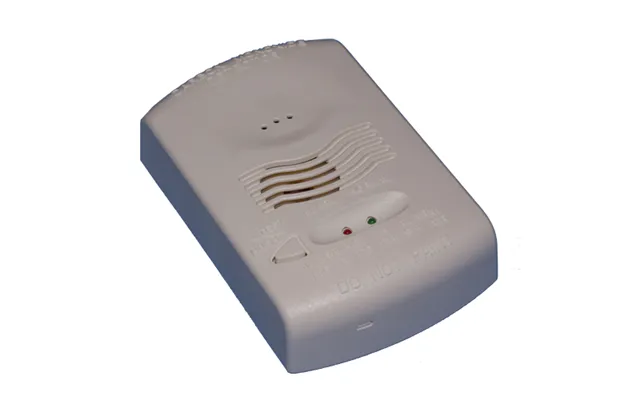
The MARETRON Co-CO1224T is listed as a carbon monoxide detector for SIM100-01. Its listed price is $242.12. The reference data does not provide additional installation, compatibility, or technical details beyond that product description, so shoppers should verify system requirements before making a decision.
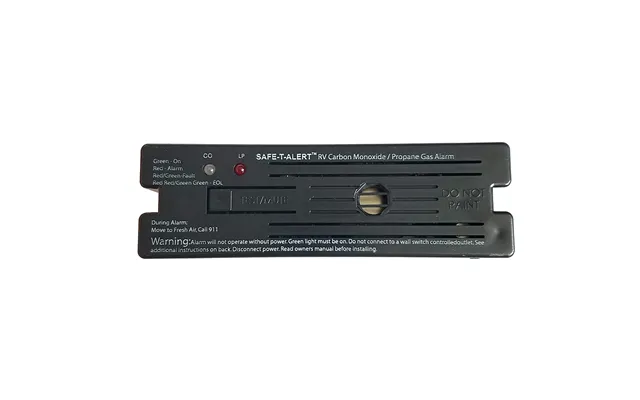
The SAFE-T-ALERT products offer a broader range of form factors and functions. The 35-741-BL is described as a combination carbon monoxide propane alarm with a black surface-mount design and a listed price of $71.12. The 62 Series options are listed at $58.12 each, with differences involving mounting style and relay functionality.
A surface-mount detector sits on the surface of the installation area. This approach can be practical when you want an alarm installed without creating a recessed opening. In the reference data, the SAFE-T-ALERT 35-741-BL is a black surface-mount combination carbon monoxide and propane alarm.
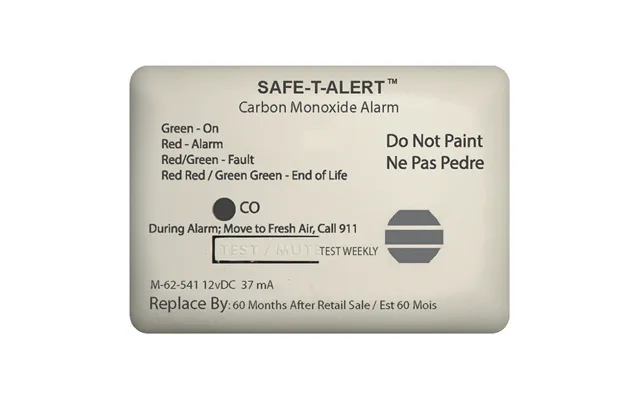
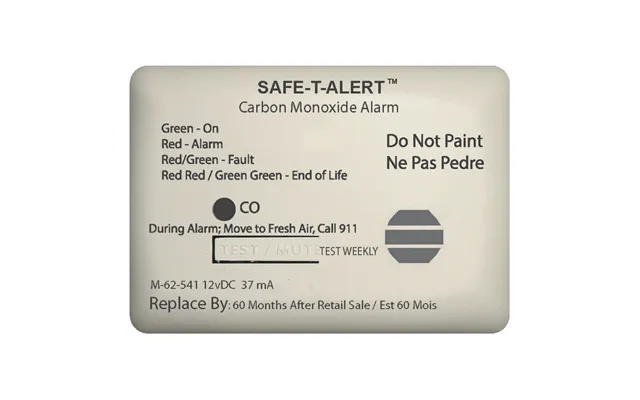
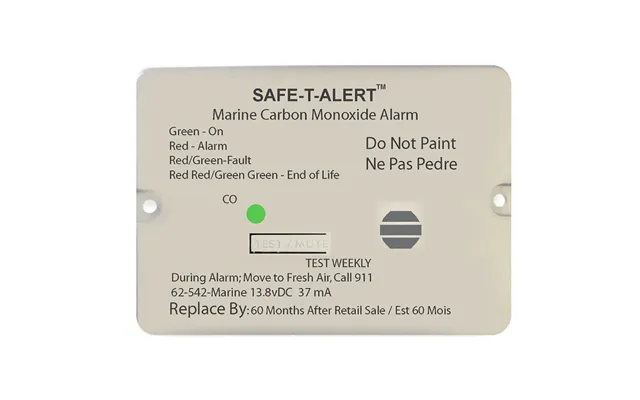
The SAFE-T-ALERT 62-541-WT-MARINE is also listed as a surface-mount carbon monoxide alarm. It is white, operates at 12V, and has a listed price of $58.12. The 62-541-MARINE-RLY-NC uses the same listed price and is described as a surface-mount 12V white alarm with a relay.
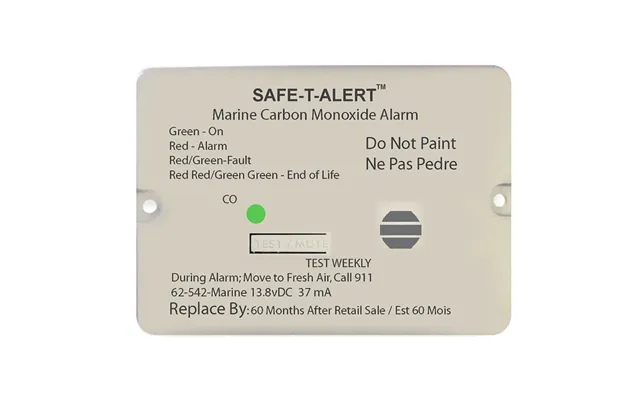
A flush-mount detector is designed to sit within a prepared opening rather than extending from the surface in the same way. This can create a more integrated appearance, although the installation area must be suitable for that design. The reference data lists the SAFE-T-ALERT 62-542-MARINE-WT as a white, 12V, flush-mount carbon monoxide alarm.
The flush-mount version with a relay is the SAFE-T-ALERT 62-542-MARINE-RLY-NC. It is also white, uses 12V power, and is listed at $58.12. Choosing between surface and flush mounting is less about which style is universally better and more about which design matches the available installation space.
The 62 Series models in the comparison share several listed characteristics. They are 12V carbon monoxide alarms, come in white, and are listed at $58.12. The main differences are the mounting format and whether the model includes a relay.
For a standard surface-mount configuration, the 62-541-WT-MARINE may be the straightforward option. If you need a surface-mount alarm with a relay, the 62-541-MARINE-RLY-NC is the matching alternative. For a flush-mount setup, the 62-542-MARINE-WT is the non-relay model, while the 62-542-MARINE-RLY-NC adds relay functionality.
This makes the range relatively easy to compare. First, decide whether you need surface or flush mounting. Next, consider whether a relay is part of your installation requirements. Finally, confirm that a 12V alarm is appropriate for your intended system. These three questions can narrow the choice quickly.
The SAFE-T-ALERT 35-741-BL differs from the 62 Series options because it is described as a combination carbon monoxide propane alarm. It has a black surface-mount design and a listed price of $71.12. If you want one listed product that addresses both carbon monoxide and propane detection, this model stands apart from the carbon-monoxide-only alarms in the comparison.
Combination alarms can simplify product selection when both hazards are relevant to your space. However, you should still review the installation instructions and intended application before choosing one. The reference data identifies this model as a surface-mount alarm, but it does not provide further details about power requirements, sensing technology, or installation limitations.
Start by considering where the detector will be installed. The listed product names include “marine” for several SAFE-T-ALERT 62 Series models, while the MARETRON detector is identified for SIM100-01. Those descriptions suggest that application and system compatibility deserve careful attention.
Do not choose an alarm based on appearance or price alone. A model that looks ideal may not match your power system, mounting area, or connected equipment. Use the product description as a starting point, then confirm the manufacturer’s technical information before installation.
The SAFE-T-ALERT 62 Series products in the reference data are listed as 12V alarms. That detail is important because the available power source must match the alarm’s requirements. A detector is only useful when it is correctly powered and installed.
The reference data does not list a power specification for the MARETRON Co-CO1224T or the SAFE-T-ALERT 35-741-BL. For those products, check the manufacturer’s documentation for electrical requirements and compatibility. A few minutes of verification can prevent an unsuitable purchase.
A relay can allow an alarm to interact with another part of a system, depending on the design and wiring arrangement. In this comparison, relay versions are clearly identified in the product names: the SAFE-T-ALERT 62-541-MARINE-RLY-NC is surface mount, while the SAFE-T-ALERT 62-542-MARINE-RLY-NC is flush mount.
If your installation does not require relay functionality, a non-relay model may be the simpler match. If a connected response or control system is part of your setup, a relay version may be worth considering. Because the reference data does not explain the relay’s electrical behavior or connection details, review the technical documentation before wiring anything.
Price can help you organize your shortlist, but it should not be the only deciding factor for a safety device. The MARETRON Co-CO1224T is listed at $242.12. The SAFE-T-ALERT 35-741-BL is listed at $71.12. Each of the four SAFE-T-ALERT 62 Series models is listed at $58.12.
Among the listed options, the 62 Series products share the same displayed price even though they differ in mounting style and relay configuration. That gives shoppers a simple way to compare features without a price difference in the supplied data. The 35-741-BL costs more than the 62 Series models but adds the listed propane-alarm function and uses a black surface-mount design.
The MARETRON model has the highest listed price in this selection. Its description identifies it as a detector for SIM100-01, so its suitability may depend heavily on the system with which it is intended to work. Always compare like with like: a dedicated system component should not be judged only against a general-purpose alarm.
Before installing a carbon monoxide detector, read the product instructions and identify the correct location for that specific model. Placement can affect how quickly an alarm detects a dangerous condition. The best position depends on the room layout, fuel-burning equipment, airflow, and the manufacturer’s instructions.
Avoid treating installation as an afterthought. The difference between surface and flush mounting affects how the unit fits into the space, while power requirements affect where it can be installed. Plan the mounting location, wiring route, and access for testing before beginning the work.
For 12V models, make sure the power source and wiring are suitable for the alarm. If you are unsure about electrical connections or the correct placement, use a qualified professional. A detector should be firmly mounted, powered as specified, and easy enough to test and inspect regularly.
A detector needs more than a one-time installation. Test it according to the manufacturer’s instructions and pay attention to warning sounds, indicator lights, and any fault signals. Regular checks are like checking the batteries in a flashlight before a storm: simple, quick, and valuable when you need the device to work.
Keep the alarm free from dust, moisture, paint, and anything else that could interfere with its operation, unless the instructions say otherwise. Do not cover the detector or place objects directly around it. If the alarm signals a dangerous condition, follow your safety plan, move to fresh air, and contact emergency services when appropriate.
The supplied reference data does not state testing intervals, sensor life, replacement schedules, battery requirements, or alarm thresholds for these products. For those details, rely on the relevant product manual rather than guessing. Safety equipment should always be maintained according to its specific instructions.
ZoneOffer helps shoppers compare products using the information available in a listing. It is not a store, and it does not manufacture or sell the alarms described here. The reference data lists the store associated with these offers as The Twister Group, along with the product title, brand, description, and displayed price.
When comparing the listings, focus on the details that affect compatibility: brand, model number, mounting style, voltage, relay option, and whether the alarm detects carbon monoxide alone or carbon monoxide and propane. This approach is more useful than simply choosing the lowest number on the page.
For example, the four 62 Series products all show a price of $58.12, but they are not identical. Two are surface mount and two are flush mount. One model in each mounting group includes a relay. That is exactly the kind of small difference that can make one product a better fit for your project.
Before selecting an alarm, write down the requirements of your installation. Do you need surface mount or flush mount? Is a 12V model suitable? Would a relay be useful? Do you need carbon monoxide detection only, or is a combination carbon monoxide and propane alarm more appropriate?
Next, compare the model numbers carefully. The difference between 62-541 and 62-542 relates to mounting style in the supplied descriptions, while the “RLY-NC” versions identify relay-equipped models. Small letters and numbers can carry more meaning than a product photo, so read the full title.
Finally, verify technical details with the manufacturer’s documentation. The reference data is useful for creating a shortlist, but it does not include every specification needed for installation. Confirm power, wiring, placement, compatibility, and maintenance requirements before purchase.
The best carbon monoxide detector is the one that matches your space, power system, mounting needs, and safety requirements. The comparison includes the MARETRON Co-CO1224T for SIM100-01, the SAFE-T-ALERT 35-741-BL combination carbon monoxide and propane alarm, and four SAFE-T-ALERT 62 Series 12V models. Compare surface and flush mounting, consider whether a relay is needed, and verify all technical details before installation. With careful selection and regular testing, a carbon monoxide detector can provide an important line of defense against an invisible hazard.